Crude Unit
Atmospheric (Crude) Distillation Unit (CDU)
Corrosion monitoring in crude distillation units traditionally focuses on the atmospheric tower’s overhead section (OVHD). While there are no fixed guidelines specifying exact locations for corrosion monitoring, there is some consensus on key focus areas, such as the OVHD main line and cooler outlets. The proper assessment of monitoring locations and the number of monitoring points will depend primarily on the type of OVHD system, considering its operating regime (1-drum, 2-drums) and the cooler piping system (balanced, unbalanced). Below, you will find guidelines for monitoring locations based on generic OVHD system types: 1 drum – balanced coolers; 1 drum – unbalanced coolers and 2 drums – balanced coolers.
OVHD System with 1 Drum and Balanced Cooler’s Piping
The main OVHD line, particularly after the injection points for water, inhibitors, and neutralizers, but before the stream splits between individual OVHD coolers (referred to as Location A, see Figure 1), is the most typical and common monitoring location regardless of the type of OVHD system.
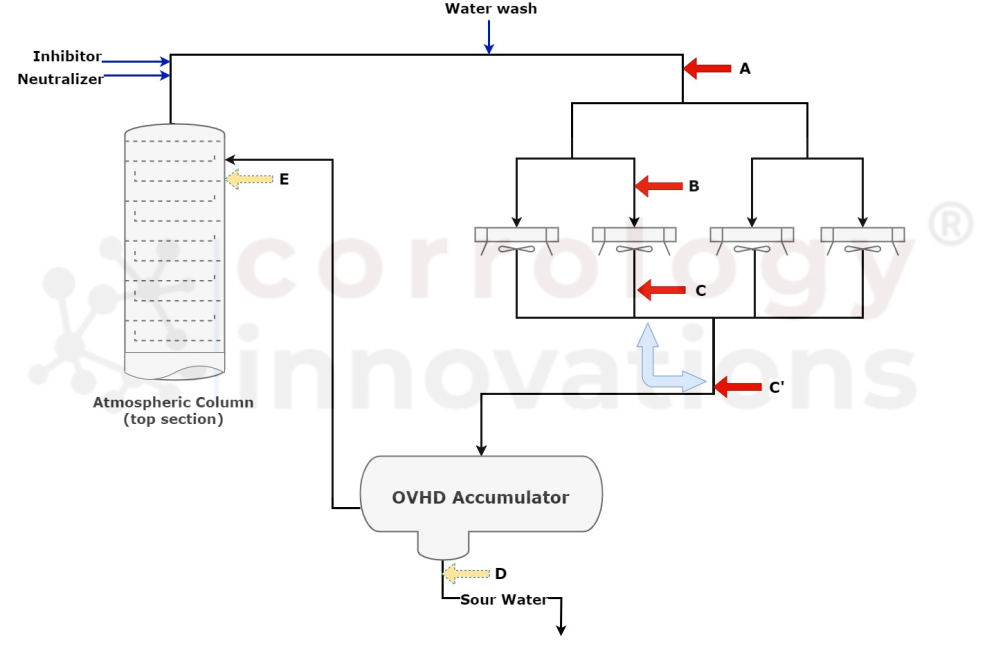
Figure 1 Atmospheric distillation - OVHD section with single drum system and balanced air coolers – potential corrosion monitoring locations marked by arrows.
Additional locations commonly selected for corrosion sensors include the section before the inlets to individual coolers (referred to as Location B). For single-drum systems with balanced piping on both the inlet and outlet, one can typically expect a relatively uniform flow distribution. This uniformity often results in an equalized corrosion rate across the system, allowing for a reduced number of monitoring points—typically limited to 1 or 2 points, depending on the number of coolers in operation.
On the outlets from the coolers, corrosion is generally very low. Monitoring points can be placed either on the outlet of individual coolers or on a common outlet line (referred to as Locations C and C’). Final justification should be supported by historical data from Non-Destructive Testing (NDT) inspections.
An isometric markup example for the inlet and outlet points (A, B, and C) is shown in Figure 2.
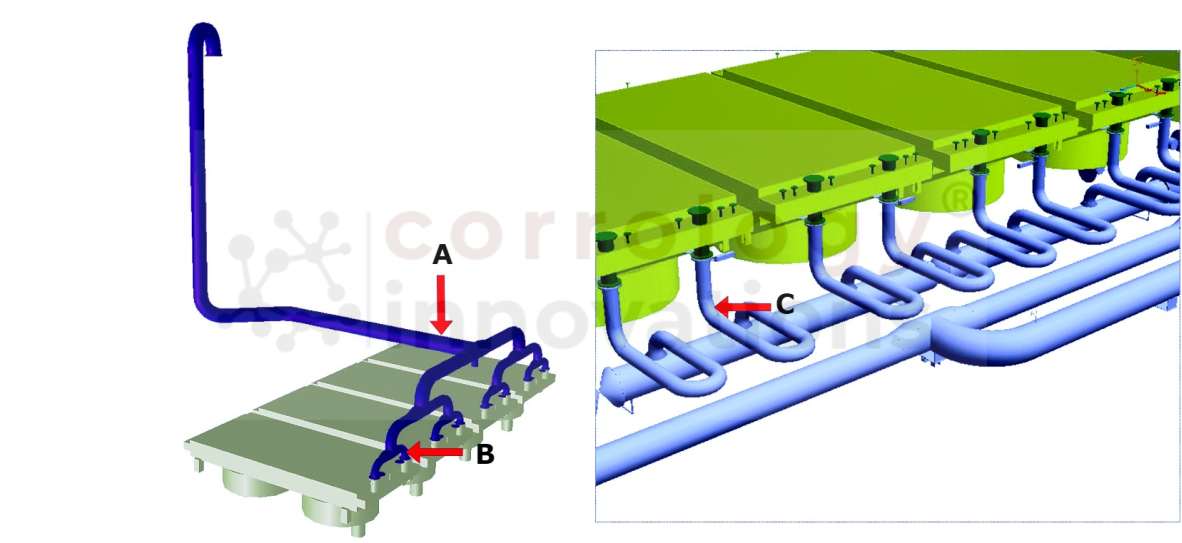
Figure 2 Schematic isometric markups of Inlet and Outlet corrosion monitoring points for balanced piping.
Corrosion monitoring on the sour water outlet from the OVHD accumulator (referred to as Location D) is generally considered unnecessary. The corrosion rate at this point is usually very low and does not pose a significant threat to the integrity of either the accumulator or the sour water piping. As a result, many operators choose not to monitor corrosion at this location.
Sometimes, cold reflux can cause shock condensation at the column top, leading to localized corrosion. Consequently, some operators may consider monitoring corrosion on the column shell near the reflux inlet (referred to as Location E). However, this approach is generally not recommended because the unpredictable flow distribution between trays and near the shell makes finding a suitable monitoring location difficult. Corrosion is likely to be highly localized and may shift based on column operating conditions (flow, temperature profile, pressure drop etc.).
OVHD System with 1 Drum and Unbalanced Cooler’s Piping
For unbalanced systems (Figure 3), Location A remains unchanged. However, because the flow distribution to the individual cooler inlets is highly unpredictable, it is recommended to place monitoring points on each cooler’s inlet.
Monitoring points on the outlet piping (referred to as Locations C and C’) are optional and can be used based on user preference. The final number of monitoring points on the cooler outlets should be determined based on the overall piping configuration and supported by historical inspection data. For Locations D and E, refer to the balanced system.
Figure 4 shows examples of specific locations for corrosion monitoring on a sour water line. Typically, monitoring points are located on the extrados of elbows and/or the tee section before the inlet to the sour water pumps.
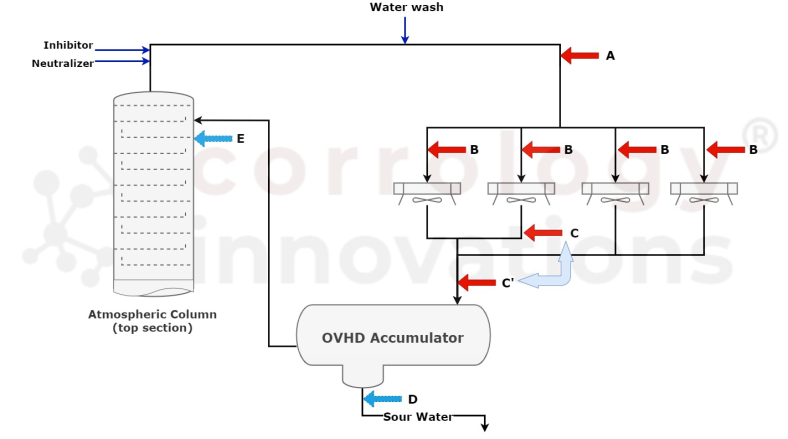
Figure 3 Atmospheric distillation - OVHD section with single drum system and unbalanced air coolers – potential corrosion monitoring locations marked by arrows.
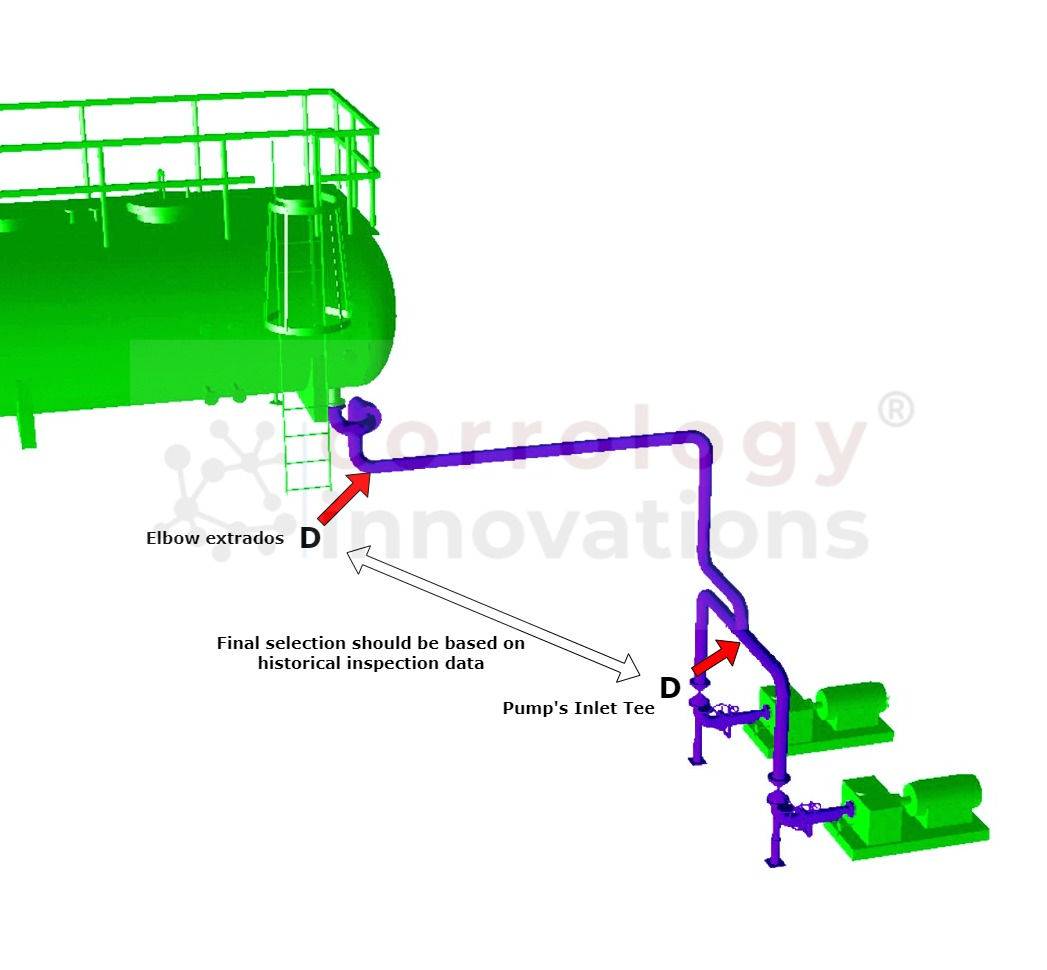
Figure 4 Atmospheric distillation - schematic markups of corrosion monitoring points in sour water lines.
OVHD System with 2-Drum and Balanced Piping
Figure 5 shows the 2-drum OVHD system. The most common configuration for these systems features balanced piping, at least on the inlet side. The inlet monitoring points before each cooling stage remain the same as in previous configurations, referred to as Locations A and A1.
Due to the temperature and fluid composition, elevated corrosion may still occur at the outlet of the first stage coolers. Therefore, it is recommended to place monitoring points at these outlets, referred to as Locations B and B1. Depending on user preferences, such as ease of access or historical corrosion data, monitoring points can be placed either on the individual outlet piping or on a common line, referred to as Locations B’ and B1’.
For monitoring points at Locations C and C1 (sour water), refer to the previous OVHD systems.
Since the reflux temperature should be above the dew point, shock condensation is unlikely, and there is no need to include an additional monitoring point on the column shell unless specific corrosion issues have been reported in the past.
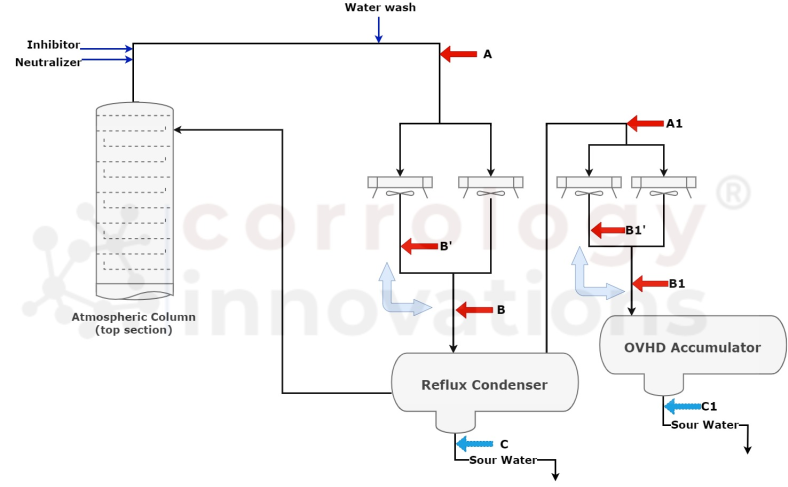
Figure 5 Atmospheric distillation - OVHD section with two-drum system and balanced air coolers – potential corrosion monitoring locations marked by arrows.
Atmospheric Column, Furnace and Side Strippers
When corrosion monitoring is used in the column shell, it is typically placed in areas where local temperature drops below the water dew point are likely, such as near the inlets of cold reflux or top pumparound (see Figure 6, Locations A and B). Alternatively, corrosion monitoring can be installed on the top pumparound return line instead of in the column shell (see Figure 6, Location C). This approach is effective if the temperature of the top pumparound return remains below the overhead (OVHD) water dew point, allowing water to condense and potentially cause acidic corrosion in the pumparound line.
Localized thinning due to sulfidation and naphthenic acid corrosion is a common type of damage in atmospheric furnaces, transfer lines, atmospheric towers, and side strippers. Corrosion typically occurs near weld joints, on the extrados of elbows, or in other areas where local turbulence may accelerate sulfidation and naphthenic acid (NAP) corrosion. Therefore, placing corrosion monitoring devices (whether intrusive or non-intrusive) in these pieces of equipment and pipelines may not provide sufficient information about corrosion degradation. Furthermore, in many cases, transfer lines and the bottom sections of columns are cladded with alloy materials (e.g., 316L or 317L), which can make spot corrosion monitoring purposeless.
If an operator wishes to install corrosion monitoring at the aforementioned locations, the most typical areas would include: the common outlet from the furnace, the atmospheric residue line after the pumps, and the hottest sections of the feed to the side stripper—refer to Figure 6 for Locations D, E, and F, respectively.
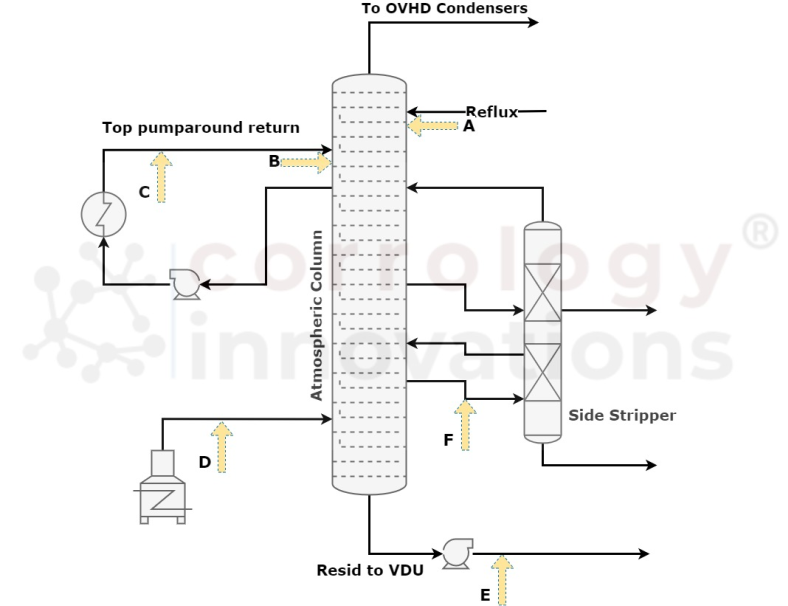
Figure 6 Atmospheric column alternative locations for corrosion monitoring.
Vacuum Distillation Unit (VDU)
Corrosion monitoring in the vacuum distillation section is not commonly applied across global refineries. Firstly, in a vacuum system, potential areas for air ingress should be minimized, making intrusive corrosion monitoring generally discouraged. Secondly, the metallurgy of vacuum units often consists of 9Cr materials or higher grades, including austenitic steels such as 316L or 317L, which are generally resistant to sulfidation and naphthenic acid corrosion. Lastly, sulfidation and naphthenic acid corrosion, the two major active damage mechanisms in VDU, typically manifest as localized rather than uniform thinning phenomenon. On rare occasions, intrusive corrosion monitoring can be employed on the VDU overhead line, following the steam ejectors - referred to as Location A in Figure 7.
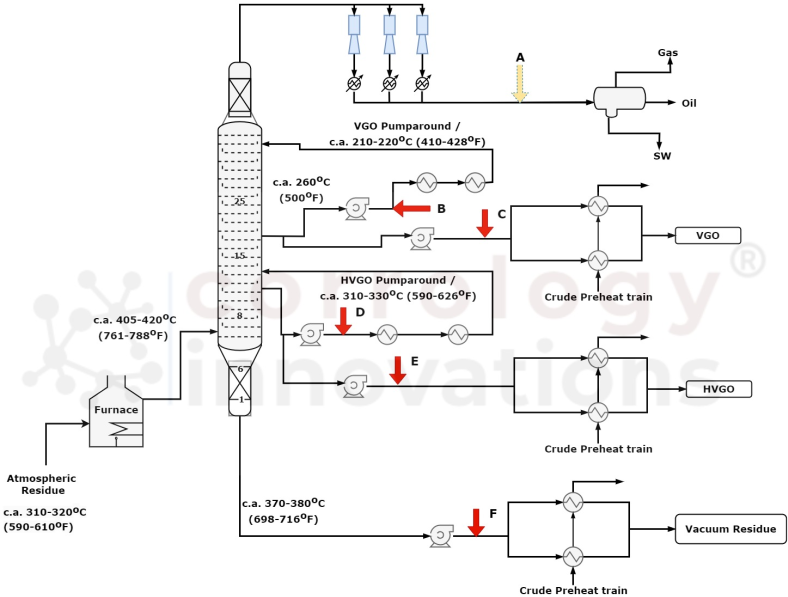
Figure 7 VDU schematic with typical locations for corrosion monitoring.
Recent advancements in the development of online, high-resolution ultrasonic thickness measurement technologies, capable of operating at temperatures up to 500-600°C, have made this approach to corrosion monitoring increasingly popular in VDU systems.
The most common locations for ultrasonic thickness (UT) monitoring points include the VGO and HVGO lines, where sulfidation and naphthenic acid corrosion are typically the primary concerns (referred to as Locations B to E in Figure 7). UT sensors are commonly positioned in areas with high turbulence, such as elbows near pumps, tees, and reducers. It should be emphasized that, due to the localized nature of sulfidation and naphthenic acid corrosion, a single UT monitoring point is insufficient to provide a comprehensive picture of fluid corrosivity. It is therefore recommended to use multiple sensors, with specific placement based on the component being monitored. For example, on elbows, sensors should be positioned at various critical areas such as the extrados, intrados, and weld protrusions, to increase the likelihood of detecting metal loss. The selection of exact monitoring points should be guided by historical inspection data and flow modeling.
Corrosion monitoring on the vacuum residue line is not commonly practiced, as low-molecular-weight and most aggressive naphthenic acids are typically degraded at temperatures above 370°C, and most active sulfur species are already distilled with VGO/HVGO. If corrosion monitoring is necessary, the same principle previously highlighted should be applied: position UT sensors in areas of highest turbulence (e.g., after Vacuum Residue pumps, referred to as Location F in Figure 7).
Summary
A comprehensive summary of corrosion monitoring practices for both Crude Distillation Units (CDU) and Vacuum Distillation Units (VDU) is presented in Table 1 and Table 2. These tables outline typical locations for monitoring, types of corrosion mechanisms addressed, and the recommended monitoring techniques for each unit.
Table 1 Atmospheric distillation corrosion monitoring techniques summary.
| Location | Typical CM Technique | Comments |
|---|---|---|
| OVHD line after water wash, before inlet to OVHD coolers | ||
| Coupons | • Coupons either separate or integrated (ER w/coupon holder) • Typical access nozzle ID: 1 inch (flat strip coupons) or 2 inch (disc coupon) • Useful for CDU Tower Top dual metallurgy corrosion control (e.g. carbon steel and brass cladding of the top section of CDU column) • Flange (typical Class 150) or 1” NPT threaded nozzle – based on local requirements • System: retractable, but retractor is not required as CDU pressure is not exceeding 10bar (c.a. 150psi) • Coupons in this location provide a valuable information on deposition rate and under deposit corrosion | |
| Electrical Resistance (ER) | • As a separate point (usually next to coupon) or integrated with coupon (strip coupon holder) • ER element: cylindrical (most common), less popular: wire-loop, ER element shall always be equipped with velocity shield. • ER probe body: typical 316L, for severe conditions (very high chlorides, heavy deposition and high Cl-Stress Corrosion Cracking potential) alloy C-276 should be used. • Typical access nozzle ID: 1 inch; 1.5 or 2 inch should be considered for easier retraction/ insertion System: retractable | |
| Ultrasonic Thickness Measurement (UT) | • Increasingly popular in recent years, especially with the advancement of wireless communication • Clamp mounting is recommended • High Temperature sensor required (>120°C) • Installation should be preceded by a detailed UT scan of the line segment to identify areas with the greatest thickness losses and establish a baseline thickness Historical inspection data can be used, but for higher precision, it is recommended to perform a scan immediately before installation | |
| Outlet from OVHD coolers | ||
| Coupons | • Normally not required due to relatively low corrosion and deposition • In rare cases with two cooler stages, where historical corrosion after the 1st stage is elevated, coupons may be used • Mounting system: same as the inlet | |
| Electrical Resistance (ER) | • ER element: cylindrical (most common), less popular: wire-loop • Due to low corrosion, thinner sensing elements (faster response time) may be required • ER element shall always be equipped with velocity shield – multiphase flow with high wall shear stress may damage the sensing element • Mounting system and probe body material: same as on the inlet | |
| Ultrasonic Thickness Measurement (UT) | • Due to low corrosion, response time may not be adequate for proper process-corrosion management Clamp mounting recommended Magnetic mounting: despite of relatively low process/skin metal temperature, during shutdowns and cleaning/steaming process temperature may exceed 100-120°C. Therefore, couplant used for magnetic sensors may be damaged and reinstallation/configuration of the sensor is required | |
| Linear Polarization Resistance (LPR) | • For high water wash rate systems, using of modern LPR systems may be feasible • FeS deposition and depolarization of electrodes may provide overestimated corrosion rate which requires correction by using actual Stern-Geary parameter (B-value) • Mounting: similar like ER • Electrodes: preferable flush. If finger electrodes used – velocity shield is mandatory | |
| Sour Water from OVHD separator/accumulator | ||
| Coupons | • Rarely used—if necessary, in combination with an LPR or ER probe (with a coupon holder on a velocity shield) • Installation may not be feasible on typical SW piping with an ID of 2-3 inches • For piping with an ID of 2-3 inches, disc coupons are recommended | |
| Linear Polarization Resistance (LPR) | • Modern LPR systems with capabilities for determination of actual Stern-Geary parameter (B) have been proven effective in acidic sour water corrosion monitoring. However, due to typically low corrosion rates, monitoring corrosion in this location is not commonly performed unless advised by historical inspection data • Mounting: Same as in previous locations • Finger electrodes should work well. A velocity shield is typically not required | |
| Electrical Resistance (ER) | • Rarely used. Very low corrosion requires a thin sensing element which reduces the effective service life of the ER probe • Conductive iron sulfides will cause “metal gain” effect | |
| Ultrasonic Thickness Measurement (UT) | • Rarely used due to overal low corrosiveness | |
| Atmospheric Column shell | ||
| Electrical Resistance (ER) | • Used as the first-choice technique when corrosion monitoring inside the column is required • Mounting, probe body, and sensing element: similar to the OVHD inlet • Due to the localized nature and high dynamics of corrosion damage on the column shell, spot ER monitoring is often ineffective | |
| Ultrasonic Thickness Measurement (UT) | • Rarely used • Mounting system: welded studs as typical column size and wall temperature prevents clamp and magnetic mounting • Similar to ER, spot UT monitoring is ineffective due to the localized nature of potential corrosion damage on the shell side | |
| Pumparound and reflux piping | ||
| Electrical Resistance (ER) | • Mounting system, probe body: see earlier system • Velocity shield mandatory • Cylindrical element preferable • Corrosion typically at high turbulent areas – proper flow modelling or historical inspection data feedback is required | |
| Ultrasonic Thickness Measurement (UT) | • Typically the first-choice monitoring technique • Clamp mounting is recommended due to pumparound temperature, which is normally 5-10 degrees above the OVHD water dew point (typically >120°C) and hence may generate problems with magnetic sensors couplant • A multi-point system is recommended; alternatively, a single-point system is acceptable but should be supported by either flow modeling or historical inspection data |
Table 2 Vacuum distillation corrosion monitoring techniques summary.
| Location | Typical CM Technique | Comments |
|---|---|---|
| VDU OVHD | ||
| Coupons | • Practically not used due to typically low corrosion and scaling. It will not provide any value-added information | |
| Electrical Resistance (ER) | • Practically not used, or rarely used, due to typically low corrosion and the long response time required for meaningful results | |
| Linear Polarization Resistance (LPR) | • Not used | |
| Ultrasonic Thickness Measurement (UT) | • Preferred over intrusive techniques as it will not compromise the unit’s vacuum. Nevertheless, it is rarely used due to low corrosion in the OVHD section | |
| VDU Side Cuts piping (VGO, HVGO) | ||
| Coupons | • Rarely used due to issues with high-temperature sealing in retractable systems • Typical problems include stuffing box seal failure and deposition on the insertion rod, making removal difficult or even impossible • Special ceramic washers are required for coupon separation • Disc coupons are preferable • Mounting system: same as in CDU | |
| Electrical Resistance (ER) | • More popular than coupons, but still rarely used due to issues with high-temperature sealing of the sensing element and FeS deposition causing ‘metal gain’ • Deposition of coke and hard FeS/oxide scale on the probe body can create issues during removal • Sensing element: cylindrical Hight Temperature (HT) with a velocity shield is recommended • Mounting: same as in CDU | |
| Ultrasonic Thickness Measurement (UT) | • Became the most popular system over the last two decades • Does not compromise the VDU vacuum • Mounting: clamps or welded studs • Multiple sensors may be needed to provide a complete corrosion picture, especially in areas like elbow profiles • In some cases, thickness gain has been reported, possibly due to failed temperature compensation |
Contact Us
For more details on corrosion monitoring solutions, feel free to contact us.
Our experts are ready to assist with your specific needs