Sulfidation (w/o H2)
General Information
High temperature sulfidation, or simply sulfidation, results from reactions between various sulfur species and metallic materials, typically occurring at temperatures above 230°C (446°F). Sulfidation has been a presence in the refining industry since its inception; however, over the last 30 years, intensified processing of sour crudes has amplified the scale of the problem. Often exacerbated by naphthenic acid corrosion, sulfidation is considered a key and active damage mechanism that critically impacts refinery operations.
Primarily associated with distillation units (CDU/VDUs) and sulfur recovery units (SRUs), sulfidation is also present in other units such as fluid catalytic cracking (FCC) or delayed coking units (DCU). Refinery operators typically do not observe critical sulfidation impacts on units downstream of CDU/VDU when processing sweet crudes ((Stotal <0.6wt%)). However, as the sulfur level in the processed crude oil increases, the risk of sulfidation rises, especially in units like FCC where e.g., furnace tubes, typically made of low alloy steels (typically 5% or less chromium). Therefore, if the total sulfur content in the feed (crude slate) increases, it is crucial to revisit the corrosion risk assessment, considering sulfidic corrosion not only in CDU/VDU but also in all units potentially affected by sulfidation. Table 1 provides a list of units and process areas likely impacted by sulfidation.
Table 1 shows units and process areas that are likely impacted by sulfidation1 .
Table 1 Sulfidation affected process areas.
| Process Unit | Operation area affected by sulfidation |
|---|---|
| Crude Distillation Unit (CDU) | • Hot section of crude pre-heat lines • Furnace (radiant and convection sections) • Transfer lines • Bottom part of atmospheric column • Side strippers operating above 230°C (446°F) • Atmospheric residue lines |
| Vacuum Distillation Unit (VDU) | • Vacuum furnace (radiant and convection sections) • Transfer lines • Whole vacuum column excluding top parts operating below 230°C (446°F) • Side cut lines (in particular: Vacuum Gas Oils (VGOs) – Light, Medium, and Heavy) • Vacuum residue lines |
| Delayed Coking Unit (DCU) | • Coke drums feed lines • Coke drums Feed Heater • Mid and bottom section of fractionation column • LCGO pumparound (Light Coking Gas Oil) at sections above 260°C (500°F) • HCGO pumparound (Heavy Coking Gas Oil) - whole loop • HCGO stripper • Feed lines to fractionator |
| Fluid Catalytic Cracking (FCC) | • FCC Feed Heater • Transfer lines from Heater to FCC Reactor • Reactor inlet nozzles • Riser section internals • Reactor internals • Reactor cyclone’s elements • Reactor overhead line to Fractionator • Fractionator bottom section • Heavy Cycle Oil (HCO) lines • Light Cycle Oil (LCO) lines |
| Hydroprocessing Hydrotreating/Hydrocracking (HP/HT/HC) | • Bottom section of stripper column • Feed/Effluent Exchangers • Charge Heater (radiant and convection sections) • HC/HT reactor wall and internals |
| Sulfur Recovery Unit (SRU) | • Combustion zone in waste heat boiler • Sulfur Converters • In-line Burners |
| Visbreaker Unit (VBU) | • Feed to VB Heater • VB Heater tubes (radiant/convection) • Transfer lines from Heater to main fractionator • Main fractionator from c.a. Mid-section to bottom • Heavy Gas Oil pumparound • Fractionator residue lines |
Mechanism
The detailed mechanism of sulfidation in the absence of H2 is not fully explained. Nevertheless, there is some consensus on specific reaction steps, which can be listed as follows:2
- Diffusion of sulfur compounds on the metal surface,
- Adsorption of sulfur compounds on the metal surface,
- Surface reaction leading to the formation of Fe-vacancies (iron-deficient iron sulfide),
- Diffusion of iron vacancies through the iron sulfide film,
- Interfacial reaction between the iron sulfide film and the parent metal.
The most complex element from the above list is the adsorption of sulfur compounds, their consecutive transformation into reactive species, and the subsequent surface reaction leading to the formation of Fe-vacancies.
Several generic conclusions from studies on thermal and thermo-catalytic dissociation of sulfur species are outlined:3 4
- Homolytic fission of the H-S bond in H2S (always present/dissolved in crude) will not cause significant sulfidation up to 400-500°C (752-932°F), considering that H2S conversion during thermal decomposition (gas phase) reaches approximately 15% at a temperature of 1000°C (1832°F).
- Catalytic decomposition of H2S may lower the temperature and increase decomposition yield but cannot be considered the leading mechanism, as some sulfur species (e.g., methyl mercaptan) are more reactive than H2S alone.
- Chemisorption appears to play an important role in the reactions between sulfur species and the metal surface.
- The reaction between organic sulfur species and iron-bearing alloys and steels results in ferrous sulfide with iron deficiency.
- The formation of positive (cationic) vacancies results from the reaction between excessive sulfur and Fe(II), resulting in ferric ions (Fe(III)) and said cationic vacancies to keep the system electrically neutral.
- Cationic vacancies, due to high potential energy, act as a trap for sulfur species molecules.
- The buildup of corrosion products forms a barrier between the parent metal and corrosive species. Once the metal surface is completely covered by iron sulfides, sulfidation becomes controlled by the diffusion of sulfur through the deposit.
- H2S evolution may occur as one of a few surface reactions (see probable reactions 1-5). Therefore, using this factor (evolved H2S) as an indicator for the ‘activity’ of sulfur species present in crude or side-cuts may not always be sufficient.

The mechanistic complexity of sulfidation becomes even more intricate when introducing additional process variables such as temperature, flow characteristics, and the variety of sulfur species. Each of these parameters may influence sulfidation at different levels, making the prediction of corrosion rates even more challenging.
Key Variables
There is a consensus that the major parameters influencing sulfidation include:5 6
- Temperature
- Sulfur species (types, concentrations)
- Material (especially impacted by amount of Chromium)
- Flow
- Presence of naphthenic acids
Temperature
It is commonly agreed that sulfidic corrosion in a refining environment initiates somewhere between 220°C (428°F) and 260°C (500°F). Arbitrarily, 230°C (446°F) is commonly assumed to be the starting point of sulfidation, with the note that up to 260°C (500°F), the corrosion rate remains at a very low level (<0.05mm/y or <2mpy). It’s crucial to remember that certain combinations of other parameters, such as active sulfur species types and flow, may eventually result in a sulfidation rate above the mentioned values
The upper temperature limit for sulfidation occurrence, like the lower one, is not fixed. Most authors tend to accept a range between 400°C (approximately 750°F) and 427°C (800°F) as the upper limit, beyond which the sulfidation rate is expected to diminish. This is due to the intensification of coke formation, providing an additional barrier between sulfur and metallic material. Of course, sulfidic corrosion still occurs at higher temperatures (>500°C), but such processes are rare in a typical refinery (except in coking units).
The impact of temperature is closely related to the type of sulfur species present in crude or side cuts and their thermal decomposition rate. Generic relationships between temperature and sulfidation rate, taken from modified McConomy curves, are shown in Figure 1.
Figure 1 Temperature-sulfur-corrosion relation for carbon steel.
Curves are generated using Gaussian approximation based on modified McConomy diagrams.6
For detailed sulfur-temperature relation for other materials see subscription options.
Sulfur species
Crude oil contains a variety of sulfur species that can lead to sulfidation upon contact with metallic materials and exposure to certain temperatures. Due to its atomic structure, sulfur can readily attach to hydrocarbon structures, forming corresponding organo-sulfur compounds. As a result, virtually every hydrocarbon compound present in crude oil has its sulfur-containing equivalent.7
The total concentration of sulfur species (Stotal), typically expressed in weight percentage (wt%), serves as the primary factor for classifying crude oil and its fractions in terms of sulfidation potential. Total sulfur concentration is commonly provided in crude assays, as illustrated in the example below:
Table 2 Typical part of crude assay with Total Sulfur values for whole crude and relevant sidecuts
| Cut Data | Whole crude | Fractions | ||||||||
|---|---|---|---|---|---|---|---|---|---|---|
| Light Naphtha | Heavy Naphtha | Kero | LGO | HGO | LVGO | HVGO | ||||
| Start (°C API) | IBP | C4-5 | 95 | 149 | 175 | 232 | 342 | 369 | 509 | 550 |
| End (°C API) | IBP | 95 | 149 | 175 | 232 | 342 | 369 | 509 | 550 | 585 |
| Yield on crude (% wt) | 100 | 5.30 | 8.80 | 4.90 | 10.55 | 24.45 | 5.20 | 22.70 | 4.75 | 3.15 |
| Yield on crude (% vol) | 100 | 6.50 | 9.80 | 5.35 | 11.05 | 24.50 | 5.05 | 21.25 | 4.30 | 2.85 |
| Total Sulfur (% wt) | IBP | 95 | 149 | 175 | 232 | 342 | 369 | 509 | 550 | 585 |
| Acidity (mgKOH/g) | 0.147 | 0.003 | 0.013 | 0.017 | 0.022 | 0.078 | 0.164 | 0.191 | 0.312 | 0.362 |
While total sulfur content is often reported in crude assays, it has been consistently highlighted that total sulfur alone cannot accurately determine sulfidation rates. Researchers have emphasized the need to link total sulfur concentrations with the specific properties of individual sulfur species.6 8 9 10
Over the last few decades, several studies have supported this notion and introduced the concept of ‘active sulfur’ or ‘active sulfur species’ as primary drivers for sulfidic corrosion.9 Subsequently, researchers have delved into each group of active sulfur compounds to establish mathematical relations between their concentrations, operating parameters (predominantly temperature), and sulfidation rates.
The main groups of sulfur compounds identified in crude oil and its fractions include:7
- Thiophenes
- Sulfides
- Thiols (mercaptans)
- Other (Sulfones/sulfoxides, Thiadiamandoids, S1Ox type compounds etc.)
Each exhibits varying levels of ‘reactivity’ towards sulfidation, and within them, researchers have distinguished several sub-groups characterized by different functional groups and hydrocarbon chain structures, leading to different sulfidation activities.
Among these, Thiols (mercaptans) with the generic structure R-S-H are identified as the most reactive (active) sulfur compounds and are responsible for the major sulfidation impact in refinery processes. Numerous studies on mercaptans’ reactivity and sulfidation rates have led to the following generic conclusions:2 4
- The activity of primary mercaptans generally diminishes with increasing chain length (i.e., increasing molecular weight):

- The branching of the hydrocarbon chain typically results in higher activity, and this is further influenced by the length of individual branches:

This phenomenon is explained by considering the stability of primary, secondary, and tertiary radicals, with the highest stability observed for tertiary radicals.
- Cyclic structures (such as cyclopentyl and cyclohexyl mercaptans) are less active than open-chain structures due to the stabilizing effect of the ring, which is further enhanced with unsaturation (e.g., phenyl mercaptan):

Thiols are typically recognized as the primary driver for sulfidation, despite their relatively low concentrations ranging from tens of parts per million (ppm) in crude oil to hundreds or thousands of ppm in different side cuts or condensates. The decomposition of sulfur species is primarily dependent on temperature and the specific structure of the sulfur compounds. Other elements, such as the presence of FxSy, bare metallic surfaces, or fluid dynamics, are also important but are generally considered of secondary importance.
While the decomposition of individual thiols has been extensively studied over the last century, with most researchers focusing on decomposition kinetics and mechanisms, the evaluation of multi-compound behavior and its impact on sulfidation rate has been less explored.11 12 13 14 15 16 Nevertheless, some generic conclusions regarding thiols decomposition can be formulated as follows:
Decomposition follows a free-radical chain reaction pattern.
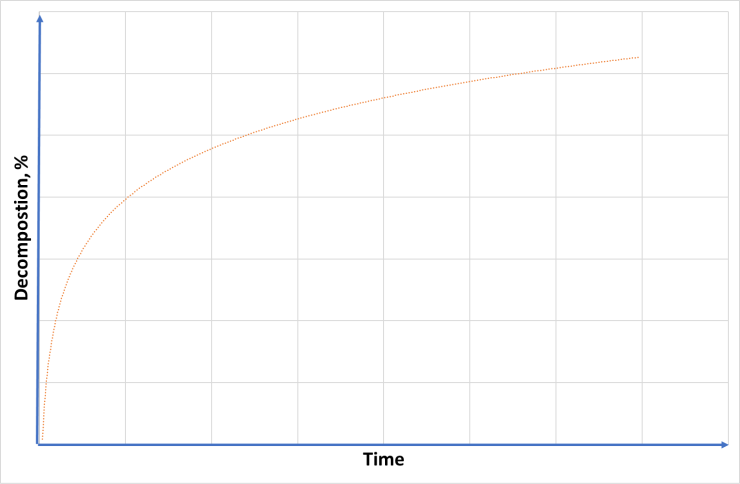
The temperature-decomposition relation typically follows a logarithmic pattern (see Figure 2).
Under certain conditions (pure reagents, short time), some authors have postulated that the decomposition of n-alkyl sulfides is a unimolecular reaction, meaning the decomposition rate does not depend on concentration.16
Under field, crude distillation process conditions, and the influence of other variables, the decomposition of thiols may not precisely follow the logarithmic pattern.
The main product of decomposition is mostly H2S, which may eventually be used for determining the “activity” of sulfur compounds in a given crude/fraction.6 12
Sulfides are the second-largest group concerning concentration in whole crude, varying from 2 to even 40% of total sulfur. Examples of simple sulfides and disulfides present in crude oil are shown below:7 17 18
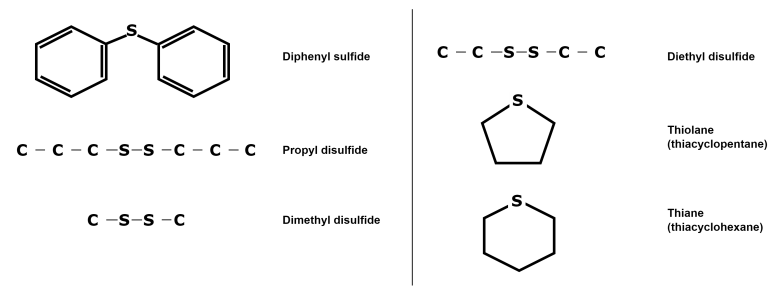
Sulfides may contain one or more sulfur atoms, making their reactivity toward decomposition and sulfidation even more complex than thiols. For example, with simple disulfides like dimethyl disulfide, decomposition can lead to the formation of respective mercaptans, H2S, and some polymeric sulfur-containing material.14 Therefore, more complex sulfides are likely to undergo far more complicated transformations, which may not be easily linked to sulfidation propensity.
Thiophenes represent a group of sulfur species present in the largest quantities, ranging from approximately 40% to almost 90% of total sulfur, in crude and side-cuts. Thiophenes come with a variety of structures and isomeric configurations. The two most common groups are benzothiophenes (BT) and dibenzothiophenes (DBT). See below for examples.
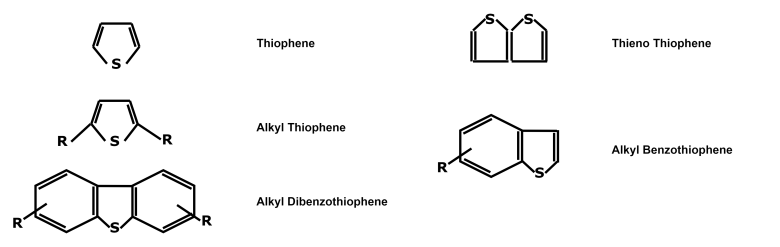
Traditionally, thiophenes are recognized as the least reactive sulfur species. This can be explained by the incorporation of sulfur into ring-stabilized structures, where the fission of C-S bond requires a substantial amount of energy. Consequently, the decomposition process is more likely to occur on hydrocarbon chains than on S-rings.
Flow
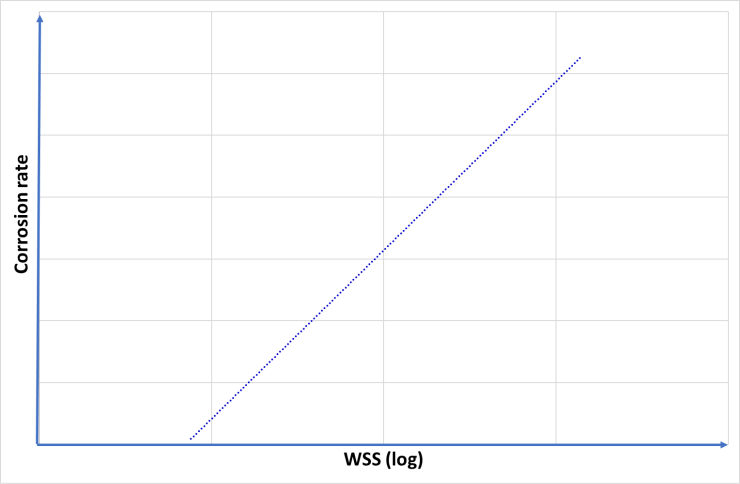
Fluid dynamics, typically expressed by flow velocity or more recently by wall shear stress (WSS)19 20 , significantly influences the overall sulfidation process. It is commonly accepted that fluid velocities below 6-7 m/s (20 ft/s) in 100% liquid phase lines are unlikely to result in flow-impacted sulfidic corrosion. This consensus, not exclusive to sulfidation, recognizes that local turbulences at weld protrusions, elbows, tees, or other flow restrictors generally increase the propensity for corrosion by removing loose surface scale/deposits or enhancing erosion phenomena.
Furthermore, phase transformations, such as those occurring in furnace tubes, which impact droplet impingement as the evaporation ratio increases, are additional crucial elements to consider when assessing sulfidation corrosion rates. Another complicating factor is the presence of naphthenic acids, as discussed in the next chapter, where the intensification of pitting corrosion may be observed under high velocitie.21 22
Presence of naphthenic acids
Naphthenic acids (NA) are a game-changer in determining sulfidic corrosion rates. In fact, two competing damage mechanisms are always at play. Low-acidic crudes (TAN < 0.2-0.5 mg/g) with total sulfur in the range of 0.6-2.5 wt% will experience sulfidation as the main mode of damage in the high-temperature sections of CDU/VDU. Therefore, an increase in sulfur concentration will typically trigger a higher sulfidation rate.23
Naphthenic acid concentrations above 0.5 mg/g in low-sulfur crude (< 0.6%) may turn NA corrosion into the dominant degradation mode. The above are simplified rules of thumb, as not only the concentration but also the distribution of individual naphthenic acids will impact corrosivity – for more details please refer chapter regarding Naphthenic Acid Corrosion.
Materials
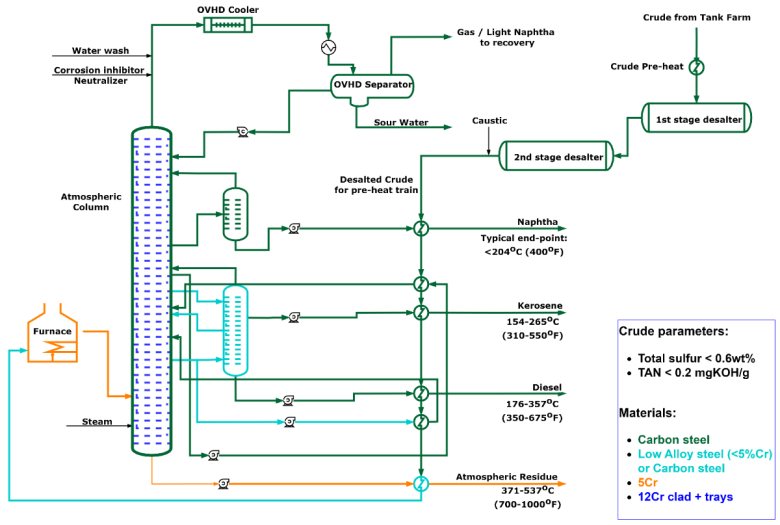
Sulfidation is a prevalent occurrence in virtually all common materials utilized in refinery operations. The specific corrosion resistance of a material involves a combination of various factors, such as the type and concentration of sulfur species, temperature, velocity/wall shear stress (WSS), and Total Acid Number (TAN). The complexity increases when a refinery handles diverse crude slates with a broad range of total sulfur and TAN values. In such instances, it is essential to examine not only the CDU/VDU but also downstream units for materials that resist sulfidation. Figure 3 illustrates a generic material diagram for the CDU unit processing sweet crudes with low TAN.
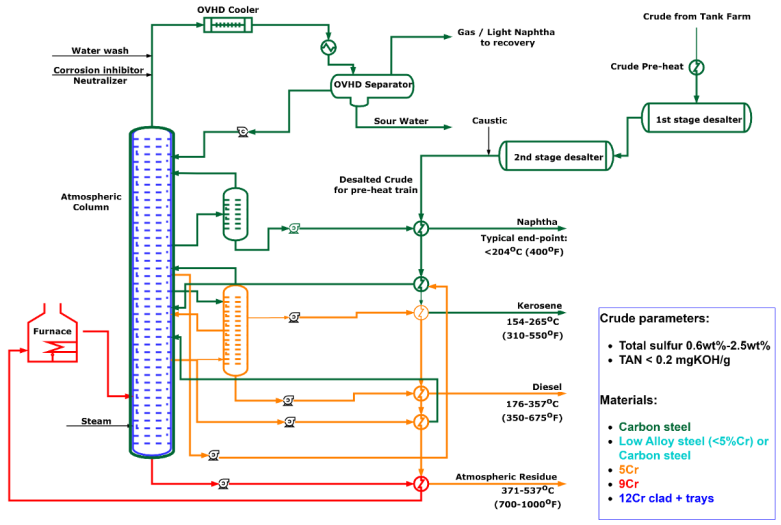
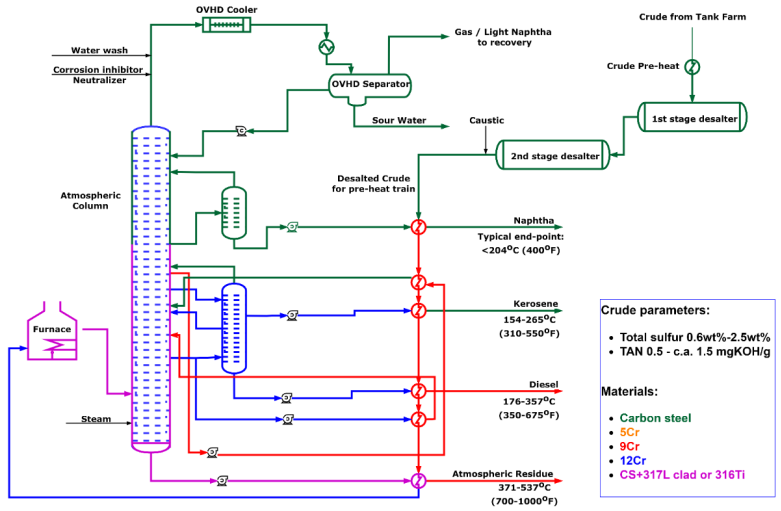
Figures 3 to 5 present generic material selection diagrams for CDU unit processing crudes with variations in TAN and Sulfur.
MSDs for VDU will arrive soon.
Tools
Below is a user-friendly calculator to estimate sulfidation rate.
Calculator
Calculator is based on modified McConomy curves.
To calculate sulfidation corrosion rate please select the material and provide the inputs for Temperature and total sulfur. Corrosion rate is displayed in mm per year.
Calculator provides basic sulfidation corrosion rates only. It does not include impact of other important parameters like fluid dynamics or naphthenic acid interactions. Please remember that total sulfur may not reflect actual corrosivity due to distribution of specific sulfur species as highlighted earlier in the text.
NOTICE: The provided tool is for advisory purposes only. Corrology Innovations Limited and its employees shall not be held liable for any damages, resulting from the use or inability to use the information provided.
References
This Article has 23 references.
1:American Petroleum Institute Recommended Practice – API RP 571, latest edition
2:T. Sakurai, K. Sato, K. Ishida - Reaction between sulfur compounds and metal surfaces at high temperatures - Bul. Of The Japan Petrol. Inst., Vol 6, June 1964
3:Startsev AN - The Reaction Mechanisms of H2S Decomposition into Hydrogen and Sulfur - Application of Classical and Biological Thermodynamics - Journal of Thermodynamics & Catalysis, 2017, 8:2
4:Husen C. - High-temperature corrosion by organic sulfur compounds - High temperature metallic corrosion of sulfur and its compounds, Edited by Z.A. Foroulis, Corrosion Div. The Electrochemical Society Inc., New York, 1969, p187
5:Rebak R.B. - Sulfidic corrosion in refineries – a review - Corrosion Rev, 29 (2011) 123–133
6:API Recommended Practice 939-C, Guidelines for Avoiding Sulfidation (Sulfidic) Corrosion Failures in Oil Refineries - latest edition
7:Q. Shi, J. Wu - Review on Sulfur Compounds in Petroleum and Its Products - State of-the-Art and Perspectives - Energy Fuels 2021, 35, 14445−14461
8:C. H. Samans - Review of high-temperature sulfidic corrosion in petroleum refining - Proceedings of a Symposium High-temperature metallic corrosion of sulfur and its compounds, Edit. Z. A. Foroulis, Electrochemical Society, Corrosion Division, Detroit, Michigan, 1969.
9:O. Yepez - Influence of different sulfur compounds on corrosion due to naphthenic acid - Fuel 84 (2005) 97–104.
10:R.D. Kane, M.S. Cayard - A Comprehensive Study on Naphthenic Acid Corrosion - NACE Corrosion Conference 2002, paper no. 02555.
11:A.K. Vasiliou, D.E. Anderson, T.W. Cowell, J. Kong, W.F. Melhado, M.D. Phillips, J.C. Whitman - Thermal Decomposition Mechanism for Ethanethiol - J Phys Chem A. 2017 July 06; 121(26): 4953–4960.
12:C. J. Thompson, R. A. Meyer, J. S. Ball - Thermal Decomposition of Sulfur Compounds. II. 1-Pentanethiol - J. Am. Chem. Soc. 1952, 74, 13, 3287–3289.
13:P.E. Gagnon, J.L. Boivin, D.C. Watson - Thermal Decomposition Of 1-Hexanethiol - Can. J. Chem. Vol. 37 (1959).
14:J.A.R. COOPE, W.A. BRYCE - The Thermal Decomposition Of Dimethyl Disulphide - Can. J. Chem. Vol. 32 No. 8 pp. 768–779 (1954).
15:J.L. Boivin, R. MacDonald - Pyrolysis Of Ethyl Mercaptan - Can. J. Chem. Vol. 33 No. 8 pp. 1284–1285 (1955)
16:W.M. Malisoff, E.M. Marks - Thermal Behavior of Sulfur Compounds in Hydrocarbon Solvents - J. of Industrial and Engineering Chemistry, Vol. 23, No. 10, pp. 1114-1120.
17:W.L. Orr, J.S. Sinninghe Damsté - Geochemistry of Sulfur in Fossil Fuels - Chapter 1, 1990, 2-29 ACS Symposium Series, Volume 429, (1990).
18:H. Al-Rabiah, L. Al-Ostad, T. Al-Shamary, A. Al-Hendi, H. Al-Henayyan, R. Khazemi - Sulfur speciation of Kuwaiti crude oils fractions using two-dimensional gas chromatography - Arabian Journal of Chemistry (2020) 13, 3615–3623.
19:V.V. Lagad, K.M. Yap, S. Srinivasan - Effect of Flow on Corrosion - Experimental Findings and Empirical Correlations - NACE Corrosion Conference 2012, paper no 1194.
20:K.D. Efird - Jet Impingement Testing For Flow Accelerated Corrosion - NACE Corrosion Conference 2000, paper no 00052.
21:S. Tebbal, R.D. Kane - Review of critical factors affecting crude corrosivity - NACE Corrosion Conference 1996, paper no 607.
22:R.D. Kane, M. Cayard - A comprehensive study on naphthenic acid corrosion - NACE Corrosion Conference 2002, paper no 02555.
23:D. Farrell, L. Roberts - A Study Of High Temperature Sulfidation Under Actual Process Conditions - NACE Corrosion Conference 2010, paper no 10358.