Ammonium Chloride Corrosion
General Information
NH4Cl corrosion is virtually present at any refinery process unit where gaseous HCl and NH3 are stream components. Table 1 shows most common areas affected by NH4Cl corrosion.
Table 1 Potential locations for NH4Cl corrosion in process units.1 2 3 4 5
| Process Unit | Affected Area |
|---|---|
| Crude Distillation Unit (CDU) | Atmospheric tower top Atmospheric tower overhead (OVHD pipelines and commonly 1st stage exchangers) |
| Catalytic Reforming Unit (CRU) | Product separator Debutanizer section (OVHD) |
| Fluid Catalytic Cracking (FCC) | Main fractionator top section and OVHD system Stripping columns |
| Hydroprocessing Hydrotreating/Hydrocracking | REAC and surrounding pipelines (inlet, REAC tubes, outlet manifold) HP/LP separators Recycle Hydrogen lines |
| Delayed Coking Unit (DCU) | Fractionator OVHD section Coke drums blowdown system |
The primary effect of NH4Cl is deposition, which leads to fouling or plugging. This issue significantly impacts process operations by increasing pressure drops across the exchangers and disrupting heat flux. The secondary problem arises as a consequence of the first; when the solid deposit (which is virtually noncorrosive - if dry) becomes wet. In this scenario, the area beneath the deposit becomes “enriched” with Cl- and H+ from the dissociation of NH4Cl and water. As a result, under-deposit HCl corrosion is initiated, leading to the rapid degradation not only of carbon steel but also a wide range of corrosion resistant alloys (CRAs).
Surprisingly, despite the significance of NH4Cl corrosion (under-deposit), there is limited published data detailing the mechanism, parametric impacts, or predictive approaches. The primary challenge lies in effectively simulating deposit formation and controlling or measuring under-deposit corrosion under dynamic flow conditions. Some recent publications have attempted to address this issue; however, they do not efficiently account for the impact of flow, especially in multiphase systems like partially condensed overhead (OVHD) environment.6 7
It is important to note that aside from ammonium chloride, the formation of amine hydrochlorides may also occur if amine-based neutralizers are used (as shown in Reactions 1 and 2).
\(\ce{R1NH2 + HCl <=> R1NH2HCl}\) (1 - gas phase)
\(\ce{R1NH2HCl <=> R1NH3 + Cl-}\) (2 - liquid phase)
This further complicates the overall assessment of corrosion in the OVHD system because corrosion under deposits of amine hydrochlorides is even less understood than that caused by ammonium chloride. However, the corrosion resulting from amine hydrochlorides falls beyond the scope of this chapter.
Mechanism
Chemically, NH4Cl formation is a simple salt creation resulting from the reaction of an acid (HCl) with a base (NH3). This reaction can take place in both gas and liquid phases, following straightforward reactions 3-6.
\(\ce{HClg + NH3g -> NH4Clsolid v}\) (3 - gas phase)
\(\ce{HCl + H2O <=> H3O+ + Cl-}\) (4 - liquid phase)
\(\ce{NH3 + H2O <=> NH4+ + OH-}\) (5 - liquid phase)
\(\ce{NH4Cl <=> NH4+ + Cl-}\) (6 - liquid phase)
It is important to note that each reaction reaches its equilibrium based on factors like temperature, concentrations, phase makeup, and pressure. In a simple scenario with only HCl and NH3 in the vapor phase, any NH4Cl formed stays in that phase until the temperature surpasses a specific equilibrium point for reaction (3) shown in Figure 1.
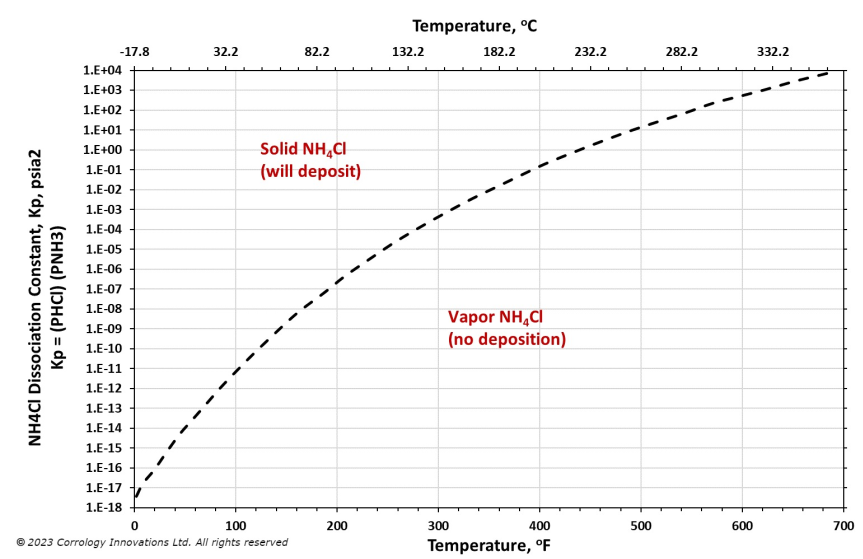
The dissociation constant, Kp, for NH4Cl is directly calculated from NH3 and HCl concentrations in the vapor phase, expressed as partial pressures using Equation 1.
\(\ce{Kp = [NH3pp] * [HClpp]}\) (Equation 1)
The partial pressures of individual components are determined as per Equations 2-3:
[NH3pp] = (nNH3 vapor phase) / (n total vapor phase) × P (Equation 2)
[HClpp] = (nHCl vapor phase) / (n total vapor phase) × P (Equation 3)
Here, nNH3 – represents the mole fraction of ammonia in the vapor phase; nHCl – represents the mole fraction of HCl in the vapor phase; ntotal – indicates the total moles in the vapor phase, and P denotes the total pressure.
For NH4Cl salt point calculator, please see Calculation Tool section (for subscribers only).
It is important to note that while thermodynamic equilibrium describes changes in equilibrium states, it does not provide insights into reaction kinetics (the speed of reaction). Reaction kinetics are generally influenced by the concentration of components and temperature.
Once conditions favor the formation of solid, undissociated NH4Cl, it tends to deposit on the metal surface, causing fouling or plugging in the OVHD exchanger’s tubes. The exact deposition spot is challenging to predict, influenced by several factors like flow dynamics, phase composition (e.g., liquid hydrocarbon, water, gas hydrocarbon), or localized temperature changes. Usually, fouling in the exchanger becomes evident through increased pressure drop across the equipment and a decline in heat exchange efficiency.
The gases in the overhead process stream, especially from the distillation unit, can contain as much as 2-3% volume of water. When the operating temperature hits the water dew point, water droplets form and get absorbed by the highly hygroscopic NH4Cl deposit. Under the wet NH4Cl deposit the concentration of chloride ions rises, prompting the generation of H+ (or H3O+) from the dissociation of water, in line with Le Chatelier’s Principle. Consequently, as the concentration of hydronium ions increases, the pH drops to extremely low levels (<2), triggering rapid HCl attack. Given that temperatures in the OVHD system typically range from 90-120°C (194-248°F) before cooling to 20-30°C (68-86°F), the HCl attack can cause rapid degradation in virtually any of the commonly used corrosion-resistant alloys
Key Variables
The fundamentals of ammonium chloride corrosion hinge on factors like the concentration of corrosive elements (HCl, ammonia), temperature influencing salt formation, water presence impacting the dew point and wash rate, and flow affecting phase separation and areas prone to deposition. Other parameters that contribute to NH4Cl corrosion include the presence of H2S, which might offer some surface protection by forming a FeS layer, the type of hydrocarbon phase (heavier fractions potentially enhancing the surface’s hydrophobic nature), and the use of amine neutralizers instead of ammonia, which eliminates NH4Cl corrosion from one side but triggers potential amine hydrochlorides corrosion. Given this multifaceted complexity, accurately predicting NH4Cl corrosion remains a challenging endeavor.
Temperature and Concentration
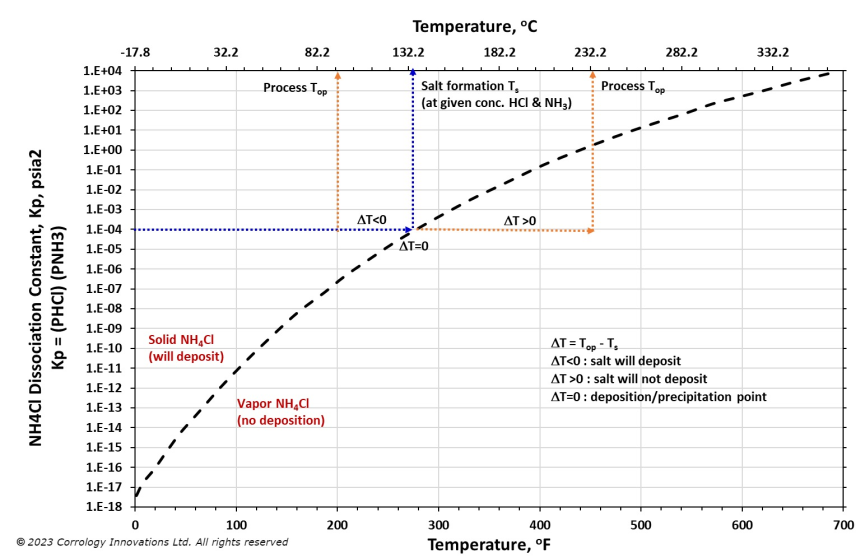
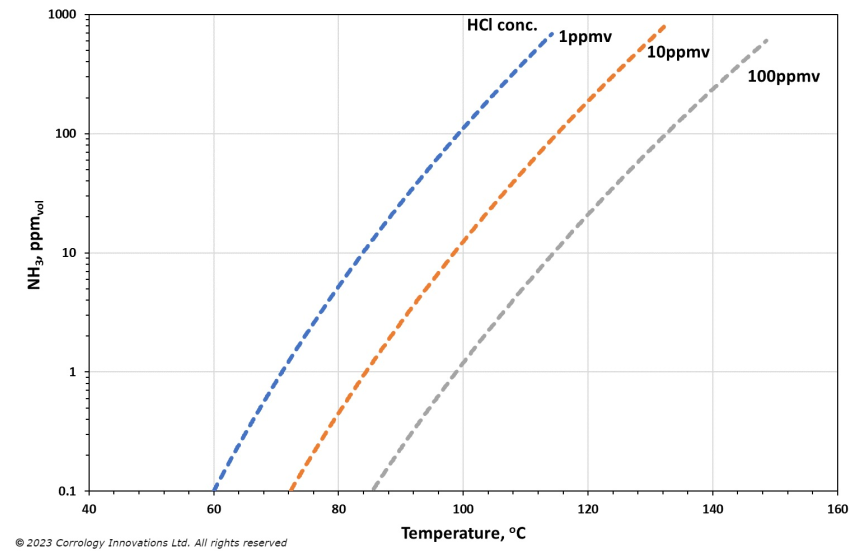
The relationship between the NH4Cl dissociation constant and temperature, as depicted in Figure 1, serves as the primary guiding principle for assessing the propensity for NH4Cl corrosion. Generally, operating temperatures should exceed the salt formation temperature (as shown in Figure 2) to ensure that the NH4Cl formed remains in the vapor phase. However, in practical processes, maintaining a consistently higher temperature than the salt point can be challenging—such as when there are fluctuations in HCl and NH3 concentrations, thereby affecting the specific salt point - as shown in Figure 3.11
Hence, an industry rule of thumb advises keeping the operating temperature (Top) above the salt formation temperature (Tsalt) by a certain margin, typically a few degrees (around 10-20°).12 This approach helps accommodate potential fluctuations in the salt point due to variations in HCl and NH3 concentrations. Various process modelling software are commonly employed to calculate salt points under different operating scenarios.13
For NH4Cl salt point calculator based on partial pressures or gas-phase concentrations of HCl and NH3, please refer to the Calculation Tool section.
Controlling and maintaining the process temperature above the salt point is a relatively straightforward task. However, accurately determining HCl and NH3 concentrations in the vapor phase – and, consequently, calculating the salt point as a reference to the operating temperature – is complex. The typical source for NH3 and HCl concentrations is a heat-material flowsheet usually prepared by a process designer or licensor for various operating scenarios (shutdown/start-up/normal operation/winter-summer operating regime, etc.). In many older units, where several process modifications have taken place and under fluctuating feed parameters, the heat-material flowsheets may not be available or may not be relevant to the current operating scenario.
Some operators resort to back-calculation of vapor phase concentrations of these species based on their concentration in OVHD separator boot-water (CDU, FCC fractionation, etc.) or from water leaving pressure separators in hydroprocessing units. However, this is a very complex exercise that requires sophisticated ionic modeling, making it susceptible to errors, such as if one phase component is omitted or under/over-estimated.
Flow
Flow plays an important role in NH4Cl corrosion. While the flow does not directly impact the reaction of NH4Cl formation, as this is governed by thermodynamics, it does play a crucial role once salt particles are formed in the vapor phase. The accumulation, settlement, and formation of deposits are influenced by the flow pattern. This becomes particularly significant after water injection. In a multiphase environment, with growing water and hydrocarbon droplets, as well as salt particles, proper flow distribution (flow pattern) may either enhance or diminish NH4Cl settlement and, consequently, under-deposit corrosion.14 15 16
There is no strict rule governing specific flow rates to prevent NH4Cl deposition in overhead (OVHD) condensers or REAC (reactor effluent air cooler) systems. The industry-established limits primarily stem from operational experience and may vary depending on the process. This variability is crucial as it can impact not only NH4Cl deposition but also other elements such as deposition of FeS or/and coke, etc.
Typically, for CDU OVHD vapor lines, the recommended velocity falls within the range of 12-15 m/s (40-50 ft/s). Velocities exceeding 20 m/s (65 ft/s) are generally considered unacceptable, as they may significantly accelerate flow-induced corrosion or corrosion-erosion.12 17 It’s essential to note that linear velocities might not fully capture the flow impact. During discussions involving other damage mechanisms like NH4HS and sulfidation, it has been emphasized that Wall Shear Stress (WSS) is a preferable parameter over velocity for describing flow impact.
Water Wash
Water wash is one of the most common methods for mitigating NH4Cl deposition and under-deposit corrosion.17 18 Water is injected continuously (most commonly) or intermittently (infrequently). The specific locations of injection points may vary based on the type of process unit.20 In the Crude Distillation Unit (CDU) overhead (OVHD), where primary stress is typically placed on reducing HClaq corrosion, wash water commonly contains the relevant amine-type neutralizer. Injection points are located, for example, in the OVHD line (vertical or horizontal sections) or close to the inlet of the OVHD exchangers.17 19 20 Table 2 summarizes typical wash water injection systems for different refinery process units.
Table 2 Water wash systems for different process units (NH4Cl cases only).
| Unit/Area | Location | Type | Purpose | Rate | Ref |
|---|---|---|---|---|---|
| Hydroprocessing | REAC inlet | Continuous | To dilute NH4HS | Ensure 20-25% excess to be left in liquid phase | 10,20 |
| Hydroprocessing | REAC/ area upstream the salt point temp. | Intermittent | To remove NH4Cl deposit | Ensure 20-25% excess to be left in liquid phase | ibidem |
| Atmospheric Distillation | OVHD Line (popular) Upstream OVHD Condenser (infrequent) | Continuous | To dilute HCl To prevent/remove NH4Cl deposits | 20-30% excess to be left in liquid phase (common) | 17,19,20 |
| FCC Light Ends Recovery | Upstream to main fractionator OVHD condenser | Continuous | Primary: to dilute gas contaminants, prevent NH4HS corrosion Secondary: prevent NH4Cl fouling | Unit dependent | 20,21 |
| Catalytic Reforming | Upstream to reactor effluent (may vary) | Continuous or Intermittent (unit based) | To dilute HCl and prevent NH4Cl fouling | Unit dependent | 20 |
The design of wash water systems lacks fixed rules and is typically uniquely specified for each unit and operating regime. Nonetheless, several generic guidelines or rules of thumb can be outlined:10 17 19 20
- Maintain free water by always using excess water above vapor equilibrium, typically ranging from 10-30% (rarely 10-50%).
- Ensure a double interlocking/valve system for intermittent injection systems to eliminate accidental leakage.
- Treat intermittent injection points as dead legs during corrosion risk assessment.
- Design injection points to be self-draining.
- Optimize spray nozzle parameters (spray angle, droplet size) to ensure maximum water dispersion in the process stream.
- Conduct flow modeling for salt point and dew point to accurately determine water injection locations.
- Uphold the proper quality of wash water:
- avoiding cyanide
- maintaining low chlorides (max 100ppm, desired 5-10ppm),
- limiting oxygen (10-15ppb, max 50ppb),
- sustaining a neutral or slightly alkaline pH (7-9.5), and
- keeping total hardness low (below 1ppm as Ca).
Materials
In the case of ammonium chloride corrosion, the selection of resistant materials becomes very challenging. Under-deposit corrosion caused by NH4Cl, ultimately driven by Cl- ions (HCl), can degrade almost any common metallic material, ranging from carbon steel up to sophisticated high Cr/Ni/Mo alloys. The very basic, qualitative ranking of materials (from the least resistant—carbon steels—to the most resistant—titanium) provided by API norms should be used with caution.1
carbon steel/low-alloy steels < 300-type ss < duplex steels/alloys 400/800/825 < 625/C-276 < Ti
The presence of Cl- ions at high concentrations and temperatures above 100°C (212°F) necessitates the use of corrosion-resistant alloys (CRAs) with a minimum Pitting Resistance Equivalent Index (PREN) of 38-40.2 5 This requirement limits the choice of suitable materials to super duplex stainless steels such as 2507 (PREN=38), alloy 625 (PREN=46.5), C-276 (PREN=64), or C-22 (PREN=61). However, it does not guarantee immunity to NH4Cl corrosion (or chloride-stress corrosion cracking “Cl-SCC” as secondary damage mechanism).22 Failures of super duplex and super-austenitic 6%Mo alloys were reported due to Cl-SCC.2
The cost of exotic Cr-Ni-Mo alloys, even when applied as an overlay, still encourages the utilization of carbon steel in overhead systems susceptible to NH4Cl corrosion. This is viable with properly implemented mitigation measures such as water wash, salt point and dew point/relative humidity control, inhibitors, and overall process control
Minimizing NH4Cl corrosion - guidelines
To effectively address NH4Cl corrosion, the industry employs a range of rules and approaches, each varying in relevance and applicability. The following section will succinctly outline some of the most pertinent methods, as highlighted by several authors. These approaches prove instrumental in controlling the ammonium chloride corrosion phenomenon. Table 3 presents a list of selected mitigation measures, accompanied by generic comments and references from the literature.
Table 3 NH4Cl corrosion mitigation measures with comments. NOTE: these guidelines for advisory purposes only.
| Unit/Area | Mitigation | Comments | Ref |
|---|---|---|---|
| CDU OVHD | |||
| Chloride source control: <3-3.5ppm (<1PTB) of salt in desalted crude Max. 10ppm, (3ptb) | Most popular way to control NH4Cl, in many cases barely achievable, requires high performance desalting systems Cl- content in OVHD water can be used as a rough indicator of NH4Cl/amine hydrochlorides and HCl: Rule-of-thumb: if Cl in boot water <20ppm – likely a low propensity to corrosion in OVHD >20ppm – likelihood for OVHD corrosion is increasing | 23,25 | |
| Caustic treatment: Typical dose: 1-3ptb | Converting Ca/Mg chlorides into thermally stable NaCl and hence reducing overall amount HCl in OVHD Caustic treatment may be limited because of Na-concentration restrictions in downstream units | 18 | |
| Water wash: Required 10-50% excess water beyond vapor-liquid equilibrium to maintain free liquid water Injection point min 3m (9.8ft) from tower outlet and min 5-10xpipe ID upstream to any flow restrictions (elbow, tees etc.) | Water amount and quality are critical Rule of thumb: 3-5% water based on total OVHD stream, but this may be misleading because of “moving” dew point. It is recommended to support the wash water system with ionic modelling | 24,26,27 | |
| Neutralizer addition | Primarily: to reduce the HClaq corrosion Ionic modeling should assist the neutralizer selection. | 5,8 | |
| Hydroprocessing | |||
| REAC tubing and headers, Inlet piping (especially dead legs) Upstream exchanger or air cooler tubing Possible in HHPS/HLPS | Design: Tube velocity: 3-6 m/s Balanced system (inlet-outlet) | Typical design setup for NH4HS, will also somewhat mitigate NH4Cl corrosion but not completely. | 5,13,14,22 |
| Chloride source control: Install “chloride trap” | Complete elimination of chlorides from feeds to hydroprocessing units is not feasible “at source” (hydrogen system, organic chlorides from crude, chlorides from make-up water) – hence the risk for NH4Cl cannot be neglected. | ibidem | |
| 20-30% water should remain in liquid phase at the injection point Wash water: preferable stripped sour water | Water distribution plays a crucial role in proper dissolving of any NH4Cl deposit. Ionic modelling of salt point/dew point/ionic dew point is critical to support water wash system Water quality: Oxygen: 50ppb (25ppb preferred) pH: 7.0-9.5 TDS: 250ppm (BFW); other water types: 10ppm Dissolved Fe: 1ppm Chlorides: 50ppm H2S: 1000ppm NH3: 1000ppm Free Cyanide: 0ppm | ibidem | |
| Temperature control: Above salt point: at least 10-20° | Avoid dead legs | ibidem |
Tools
Below is a user-friendly calculator to estimate the NH4Cl salt point temperature by considering the concentrations of HCl and NH3.after10
Calculator
NOTICE: The provided tool is for advisory purposes only. Corrology Innovations Limited and its employees shall not be held liable for any damages, resulting from the use or inability to use the information provided.
References
This Article has 27 references.
1:American Petroleum Institute Recommended Practice – API RP 571, latest edition
2:A. Singh, C. Harvey - Corrosion Management In Fractionator Feed Preheat Exchangers In Hydroprocessing Units - NACE Corrosion Conference 2000, paper no. 687
3:S. Kapusta, J.W. Buijs, Deyuan Fan, W. Fort III - Systematic Approach To Controlling Fouling And Corrosion In Crude Unit Overheads And Hydrotreater Reactor Effluents - NACE Corrosion 2001, paper no. 1535
4:P.R. Petersen, A. de Jong, W.F. Minyard, J.L. Sigmon - Impact of Ammonium Chloride Salt Deposition on Refinery Operations - NACE Corrosion Conference 2001, paper no. 1540
5:C. Shargay, J. Turner, B. Messer, Deyuan Fan, W. Fort - Design Considerations To Minimize Ammonium Chloride Corrosion In Hydrotreater REAC's - NACE Corrosion Conference 2001, paper no. 1543
6:K. Toba, K. Kawano, J. Sakai - Corrosion of Carbon Steel and Alloys in Ammonium Chloride Salt - NACE Corrosion Conference 2014, paper no. 4007
7:J. Howing, K. Picker, J. Eidhagen - Corrosion Properties of UNS N08935 In Crude Distillation Unit Overhead Service Conditions - AMPP Corrosion Conference 2021, paper no. 16833
8:W. Giesbrecht, G. Duggan, D. Jackson - Effective Corrosion Control Techniques for Crude Unit Overheads - NACE Corrosion Conference 2002, paper no. 02477
9:B.D. Chambers, S. Srinivasan, K.M Yap, R.D. Kane - Corrosion In Crude Distillation Unit Overhead Operations A Comprehensive Review - Eurocorr 2009, paper no. 8232
10:American Petroleum Institute Recommended Practice – API RP 932-B, latest edition
11:E. Vainio, P. Yrjas, L. Hupa, M. Hupa - Cold-end corrosion caused by hygroscopic ammonium chloride in thermal conversion of biomass and waste - Fuel, 346 (2023) 128061
12:G. Duggan, R. Rechtien, L. Roberts - Multiple Corrosion Mechanisms In A Crude Distillation Overhead System - NACE Corrosion Conference 2009, paper no. 9332
13:A. Sun, D. Fan - Prediction, Monitoring, And Control Of Ammonium Chloride Corrosion In Refining Processes - NACE Corrosion Conference 2010, paper no. 10359
14:K. Toba, H. Ishimoto, Y. Murakami, T. Asotani, T. Uegaki - A New Approach To Prevent Corrosion Of The Reactor Effluent System In HDS Units - NACE Corrosion Conference 2003, paper no. 3653
15:J. Zhang, F. Zhang, Yan Li, Y. Zhao, G. Sheng - Crystallization Behavior of Ammonium Chloride in High-Pressure Heat Exchanger of Hydrotreating Unit - Mathematical Problems in Engineering Volume 2021, Article ID 5056631
16:H. Jin, X. Chen, J. Ren, X. Wu, Z. Zheng, G. Ou, Y. Ye - Modeling Of Multiphase Flow In An Air-Cooling System Using The CFD-FSCA Approach - Brazilian Journal of Chemical Engineering, Vol. 35, No. 03, pp. 1051-1062, 07-09, 2018
17:NACE Technical Committee Report - Crude Distillation Unit-Distillation Tower Overhead System Corrosion - 2009, publication 34109
18:J.R. Rue, J.G. Edmondson - Control Of Salt-Initiated Corrosion In Crude Unit Overhead Systems - NACE Corrosion Conference 2001, paper no. 1538
19:K.A. Wills, K.O. Sarpong - Survey on Crude Unit Overhead Corrosion Control Practices - NACE Corrosion Conference 2019, paper no. 13109
20:NACE Technical Committee Report - Refinery Injection and Process Mixing Points - 2001, publication 34101
21:R. Sadeghbeigi - Catalytic Cracking Handbook – second edition - Gulf Professional Publishing, 2000
22:S. Mahajanam, F. Addington, A. Barba, B. Copple, N. Cuenca, J. Folse, Y. Mao, J. White, K. Williamson - Ammonium Chloride Corrosion in the Refining Industry - NACE Corrosion Conference 2017, paper no. 9574
23:A. Bagdasarian, J. Feather, B. Hull, R. Stephenson, R. Strong - Crude Unit Corrosion And Corrosion Control - NACE Corrosion Conference 1996, paper no. 615
24:J. Gutzeit - Problems With Injection Facilities For Process Additives Or Wash Water - NACE Corrosion Conference 1996, paper no. 591
25:J. Gutzeit - Controlling Crude Unit Overhead Corrosion – Rules of Thumb for Better Crude Desalting - NACE Corrosion Conference 2007, paper no. 7567
26:K. Armistead, D. Leslie, R. Strong - Crude Unit Overhead Corrosion Control Successfully Driven by Ionic Modeling - NACE Corrosion Conference 2015, paper no. 6010
27:M. S. Saab, O. C. Dias, F. M. Faqeer - Damage Mechanisms and Corrosion Control in a Crude Unit Overhead Line - NACE Corrosion Conference 2005, paper no. 5566