Hydrochloric Acid Corrosion
General Information
Hydrochloric acid finds widespread use across various industries, serving as a crucial component in chemical manufacturing, food production, pharmaceuticals, rubber manufacturing, metal cleaning, and well activation (acidizing), among others. In the refining industry, HCl typically emerges as a by-product during the decomposition reactions of both inorganic and organic chlorides in the crude distillation process, impacting the integrity of the overhead (OVHD) section of the atmospheric distillation tower. Additionally, HCl is present in reforming and isomerization units where it either emanates from Cl-containing catalysts or forms during the regeneration of catalysts through the addition of chlorinated compounds. Moreover, HCl is also employed as a bulk chemical, serving as a neutralizing agent in tasks such as water treatment plants or within caustic treatment units.
The Cl- ions in aqueous HCl solutions can penetrate and break down the passive oxide layer of many CRAs (Corrosion-Resistant Alloys), resulting in accelerated corrosion. For instance, UNS S31603 (316L) may corrode at a rate similar to carbon steel under such conditions. Therefore, only a few alloys, such as molybdenum-rich C-276 (UNS N10276) and B-3 (UNS N10675), have demonstrated relatively good resistance — although not complete immunity — to HCl across a wide range of temperatures and concentrations.1 2 When using material selection tables for HCl, which are commonly employed in the industry, caution is advised as the data mostly originates from laboratory experiments in controlled environments. The presence of oxidizers like O2 from the air or ions such as Fe3+ or Cu2+ may significantly alter the behavior of the alloy.3 4
Choosing resistant materials for HCl is challenging, so the practice of lining internal steel pipelines/vessels with polymeric materials has become a popular strategy to reduce bulk HCl corrosion in specific regions.5 6 This method is effective but demands highly skilled personnel for assembly, maintenance, and inspection of internally lined systems. Table 1 outlines typical areas susceptible to HCl corrosion.
Table 1 Potential locations for HCl corrosion in process units.7
| Process Unit | Operation area affected by hydrochloric acid corrosion |
|---|---|
| Crude Distillation Unit (CDU) | • Atmospheric tower overhead |
| Catalytic Reforming Unit (CRU) | • Product separator • Debutanizer section (OVHD) |
| Isomerization (ISO) | • Stabilizing column OVHD • HCl scrubbing (caustic treatment) |
| Hydroprocessing Hydrotreating/Hydrocracking | • Inlet to REAC (relatively low probability as HCl will predominantly form NH4Cl in reaction with NH3) |
| Utility & Storage | • Condensate polishing unit (neutralization section) • Caustic unit (neutralization) • HCl tank, vapor lines/scrubber • Wastewater primary treatment (for alkaline wastewater) |
Mechanism
Dry HCl is not corrosive to carbon steel up to c.a. 200-250°C (392-482°F). When dissolved in water HCl is fully dissociated and react with iron according to a well-known reaction (1):
\(\ce{Fe + 2HCl(aq) -> FeCl2(aq) + H2}\) (1)
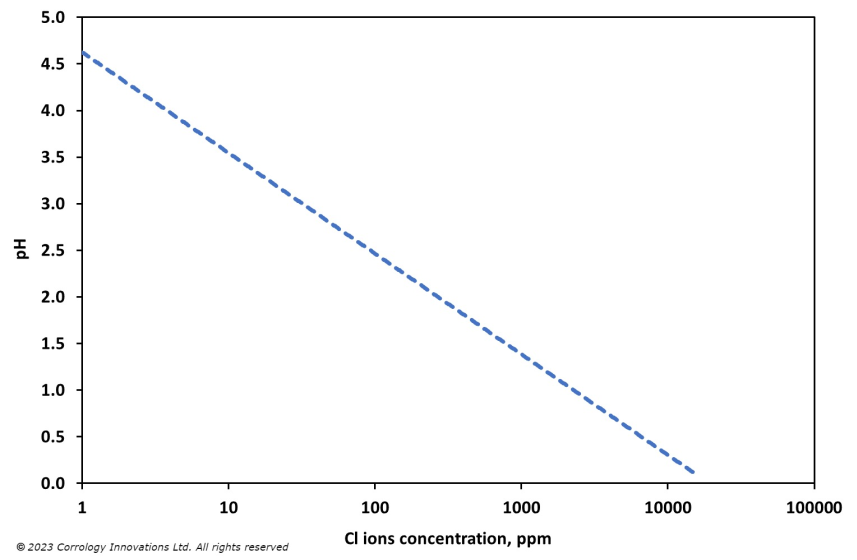
As HCl in an aqueous environment completely dissociates into H3O+ (or more traditionally, H+) and Cl-, the rate of the above reaction is directly linked to the concentration of hydronium ions expressed by pH (see Figure 1).
The chloride ions have the ability to disrupt the protective oxide layer in Corrosion Resistant Alloys (CRAs), resulting in swift instances of pitting corrosion or stress corrosion cracking. While base stainless steels like 304L, 316L (with Mo below 2%), and those with higher molybdenum content such as 317L or duplex 2205 are recognized for their corrosion resistance in various environments,it is important to highlight their susceptibility to corrosion by hydrochloric acid. In such conditions, they may corrode at rates comparable to carbon steel.
Key Variables
The corrosion of steels by hydrochloric acid in aqueous environments is mainly influenced by the concentration of the acid and the temperature. Additionally, the presence of impurities like oxygen, Fe3+, or Cu2+ can notably affect the performance of various CRAs. In the subsequent section, the relationship between acid concentration, temperature, and the performance of commonly used metallic materials will be discussed.
Concentration (pH) and Temperature
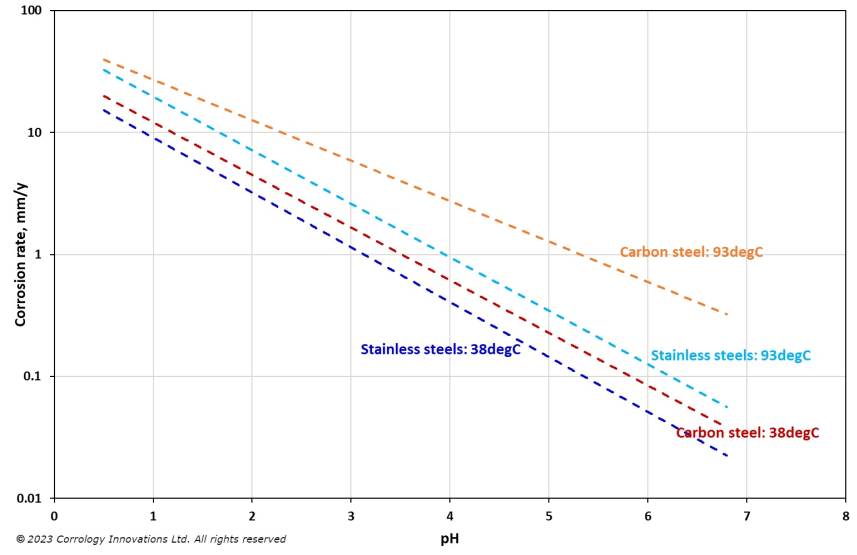
Carbon steel and standard austenitic stainless steels (304L, 316L, 321, 347) experience significant corrosion when exposed to HCl solutions, regardless of the concentration. In general, the pH of the HCl solution serves as a representative measure for acid concentration, particularly in dilute systems.11 At extremely low pH levels (<2), both carbon steel and standard austenitic stainless steels exhibit similar corrosion rates with minimal temperature dependency (refer to Figure 2). As the pH rises (between 2-6), stainless steels show slightly better performance than carbon steel. For access to an HCl corrosion calculator tool, please refer to the end of this chapter or explore the Tools section (available for Pro-subscribers only).
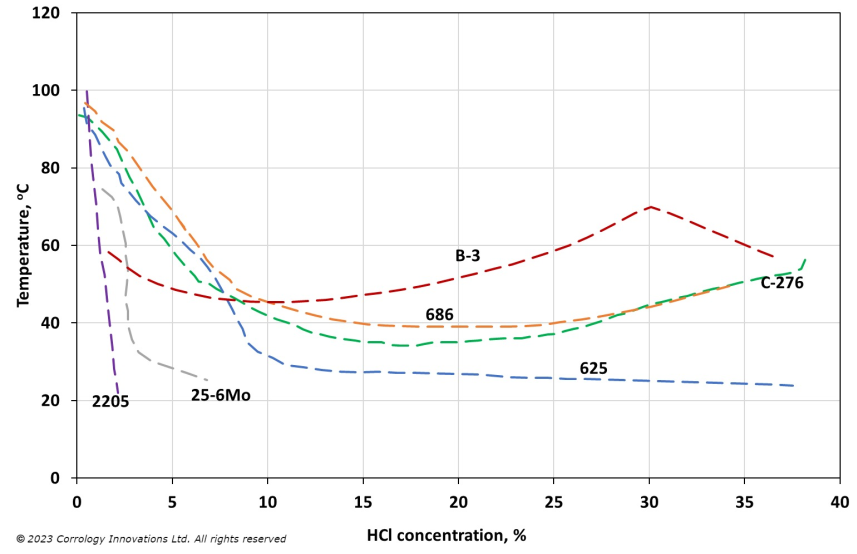
The impact of HCl concentration on the behavior of CRAs becomes notably more intricate, particularly when considering the influence of temperature, especially at elevated levels. Iso-corrosion diagrams serve as a common method to illustrate how CRAs perform in concentrated acids at varying temperatures.1 These curves are usually provided by steel and alloy manufacturers, particularly upon the introduction of new materials, serving as a rapid and convenient means to compare material behavior. Typically, corrosion rates of 0.1-0.13mm/year (4-5mpy) and 0.5mm/year (20mpy) are established as major demarcations for iso-corrosion curves. Figure 3 illustrates an example of typical iso-corrosion lines.
Using iso-corrosion diagrams for material selection, although correct, should be approached cautiously. These curves depict somewhat ideal laboratory-controlled conditions applied to the parent metal (typically) without considering factors like welding, post-weld heat treatment (PWHT), joint impurities, flow, and other influences. Additionally, it’s possible that data published by different laboratories may significantly vary even under similar testing conditions.
Certainly, most of the CRAs commonly used in concentrated HCl service (e.g., C-276, B-3, 686), within the temperature range of about 20-30°C (68-86°F) and an acid concentration ranging from approximately 10% to 30-35%, exhibit relatively stable resistance to HCl. However, at elevated temperatures (>30°C) the corrosion rate may rapidly switch to the range of 0.1-0.5mm/y and could be further intensified by the presence of contaminants (see the next section). Therefore, during material selection and corrosion risk assessment, it is advisable to consider factors such as the potential impact of local surface heating due to sun exposure and consequently higher corrosion rates, periodic oxygen ingress, etc.
Flow
The corrosion resistance of carbon steel and basic austenitic stainless steels in HCl solutions remains generally unaffected by flow conditions. Metal-chloride salts formed during reactions with HCl dissolve readily in water and don’t develop any protective scale that could hinder the corrosion reaction. Conversely, corrosion-resistant alloys generate a robust passive oxide layer that remains intact even under high turbulence.
Contaminants
Contaminants or impurities (mainly Cu2+, Fe3+ and O2) in the HCl solution significantly influence the corrosion resistance of various special alloys such as B-3, C-2000, or 686. It’s important to note that the detailed impact of impurities like Fe3+ hasn’t been fully disclosed, and the available iso-corrosion diagrams that incorporate the influence of impurities might not accurately reflect reality. Among the most common contaminants found in concentrated HCl handling systems is ferric ion, which undergoes reduction to ferrous ion according to cathodic reaction (2):3 12
\(\ce{Fe^3+ + e- -> Fe^2+}\) (2)
It will run parallel to standard cathodic reaction of hydrogen evolution (3):
\(\ce{2H+ + 2e- -> H2}\) (3)
Therefore, the reduction of ferric ions (which requires additional electrons) could potentially redirect the anodic dissolution of alloying metals (such as Ni, Mo, Cr) toward generating electrons and corresponding cations, as illustrated in reaction (4). This aligns with Le Chatelier’s Principle, ultimately leading to a higher corrosion rate:
\(\ce{Ni -> Ni^2+ + 2e-}\) (4)
Figure 4 displays the impact of Fe3+ concentration on the behavior of alloy B-3 at different HCl concentrations and temperatures. Even small amounts of Fe3+ (around 50ppm) can significantly accelerate the corrosion of the B-3 material. However, other alloys like C-22 and C-2000 exhibit different behaviors. Observations indicate that initially, their corrosion resistance improves with increasing Fe3+ concentration. After reaching certain concentration levels, the corrosion rate decreases, as illustrated schematically in Figure 5.2 13
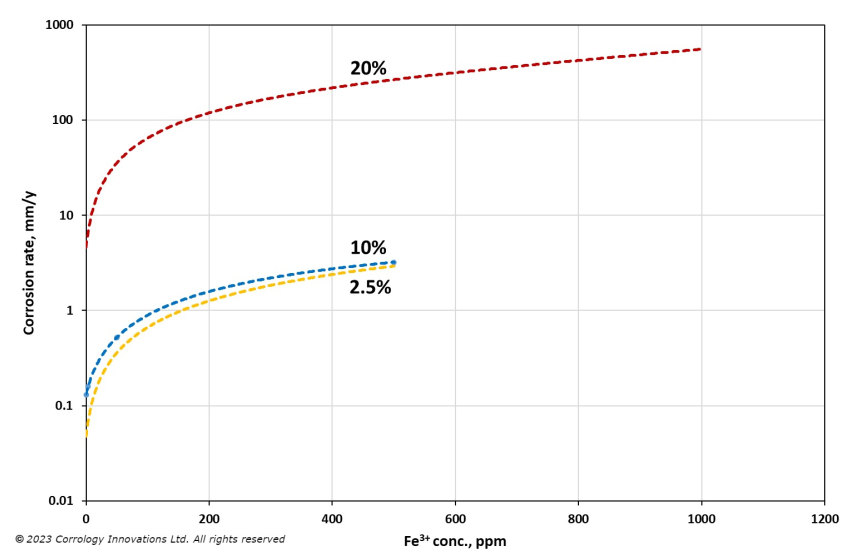
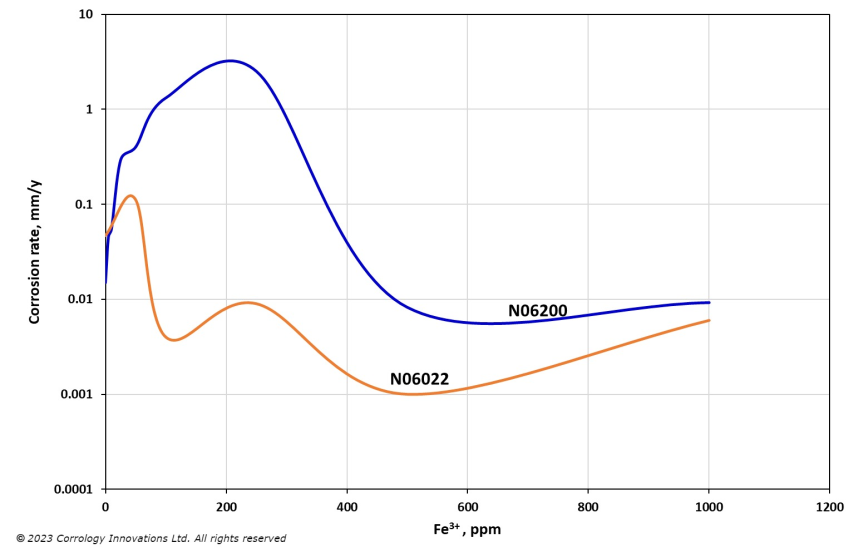
The aforementioned data clearly demonstrates that ferric ions have a detrimental effect on the alloy’s behavior in HCl solutions, although this effect might not always be evident at Fe3+ ion concentrations below 1000ppm. AAnother common contaminant found in HCl is oxygen, and its impact on corrosion behavior varies depending on the alloy type. The published data from tests using diluted HCl under deaerated and aerated conditions indicate increased corrosion for B3, reduced corrosion for C-2000, and no notable changes for 868 when comparing aerated acid to deaerated acid.13 14 The majority of immersion tests used to determine a material’s behavior in HCl were conducted in the presence of naturally aerated solutions, assuming that, under given conditions, the acid is fully saturated with oxygen. This approach helps in maintaining the passive Cr/Ni/Mo oxide layer. However, at elevated temperatures, oxygen saturation may change and can impact the alloy’s corrosion performance.
Materials
Material selection for HCl systems, as previously highlighted, is not a straightforward process and demands meticulous consideration of how diverse parameters might affect the corrosion resistance of the materials involved. Table 2 presents the relative resistance rankings of popular CRAs at different HCl concentrations. For detailed data on relevant corrosion rates and testing conditions, please refer to the respective literature sources.
Table 2 Information on corrosion behavior (relative ranking) of CRAs in HCl at different concentrations.
| Conc., % | Material / Ranking | Comments | Ref. |
|---|---|---|---|
| 0-8 | N10362≈N06200>N06022>N10276≈N06035>N10675 | 0.1 mm/y iso-corrosion Immersion tests, reagent grade HCl | 15 |
| 8-15 | N10362>N06200≈N06022>N10675>N10276>N06035 | 0.1 mm/y iso-corrosion Immersion tests, reagent grade HCl N10675 resistance is increasing with HCl concentration | 15 |
| 15-20 | N10675>N10362>N06200≈N06022≈N10276>N06035 | 0.1 mm/y iso-corrosion Immersion tests, reagent grade HCl | 15 |
| <5 | N06044 | Stay below 60°C for 5%HCl; batch, immersion tests, no specific info about testing procedure | 16 |
| 25-31 | N10675≈N10362>N10276>N06200>N06022 | 0.25 mm/y iso-corrosion Immersion tests, reagent grade HCl Naturally aerated | 17 |
| 31-35 | N10675>N10362>N06200>N10276>N06022 | 0.25mm/y iso-corrosion Immersion tests, reagent grade HCl Naturally aerated | 17 |
| 2.5 | N10362>N06200>N06686>N10276>N06022>N06059 | Boiling conditions Based on corrosion rates from immersion tests Corrosion of weldments (GTAW) | 4 |
| 10 | N10362> N06059≈N10276>N06200≈N06022 | Boiling conditions Based on corrosion rates from immersion tests Corrosion of weldments (GTAW) All alloys showed CR >1 mm/y | 4 |
| 5 | N10276>S35115≈N08367>S32750>S32205 | Welded samples Immersion tests at 30°C & 60°C Alloys resistance order same in both temp. | 18 |
| 20 | N10276>N08367>S35115>S32750≈S32205 | Welded samples Immersion tests at 30°C & 60°C Alloys resistance order same in both temp. | 18 |
| 1 | S32205>S32003>S31703>S31603 | Immersion tests Boiling conditions | 19 |
| 20 w/ 1000ppm Fe3+ | N06035≈N06200>N06022»N10276 | Immersion tests at 52°C Reagent grade HCl | 20 |
| 20 w/ 1000ppm Cu2+ | N06035>N06200>N06022≫N10276 | Immersion tests at 52°C Reagent grade HCl | 20 |
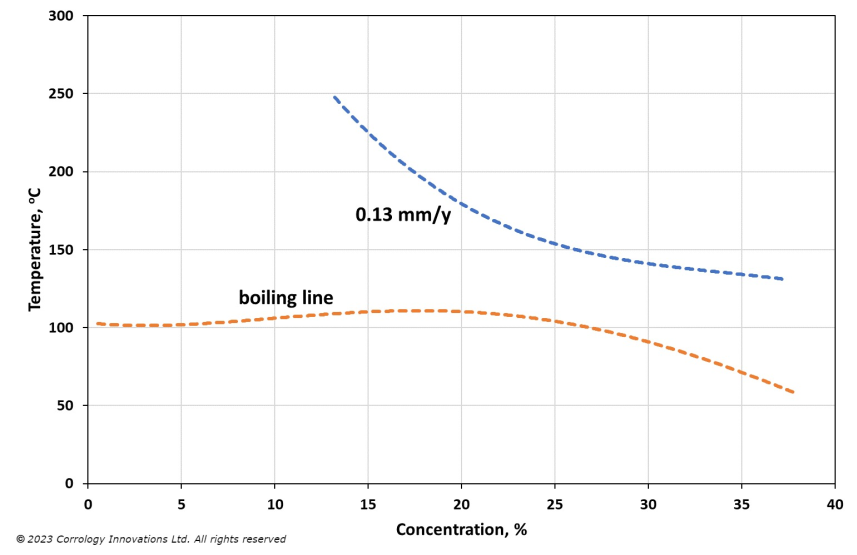
Nickel-molybdenum-chromium alloys are frequently used to handle concentrated HCl at ambient temperatures. However, temperatures above 60-70°C (140-158°F) render the HCl environment highly aggressive, even to highly corrosion-resistant Ni-Mo-Cr alloys. In such high-temperature HCl conditions, zirconium is often considered the most resistant material.21 22 Up to approximately 120°C (248°F) zirconium demonstrates outstanding resistance to HCl (less than 0.1 mm/y corrosion rate) regardless of acid concentration (Figure 6). Nevertheless, this superior resistance can be significantly affected by various factors such as surface roughness, impurities in the parent metal (e.g., Fe, Cr), the presence of oxidizers (e.g., Fe3+) and others.21 22 23 Furthermore, stress corrosion cracking stemming from the fabrication process (heating, cooling, cold work) is also frequently observed in zirconium.22 Overall, using zirconium in an HCl environment requires extreme caution, including but not limited to minimizing applied stress, reducing welding and heat treatment, employing post-weld treatments like pickling, minimizing surface roughness, and limiting or eliminating contact with other metals (galvanic corrosion).
Polymeric materials
The steep cost associated with specialized alloys tailored for low-to-moderate temperature (<40°C / <104°F) concentrated HCl applications has turned attention toward polymeric materials. Commonly, polyethylene/polypropylene bottles store diluted HCl, while fluorinated polymers like PTFE (polytetrafluoroethylene) line laboratory equipment and small-bore tubing handling HCl. However, employing polymeric materials in industrial settings for concentrated HCl encounters challenges due to limitations in mechanical properties, susceptibility to UV aging, unpredictable strength loss from delamination or swelling, permeability, flammability, and other factors. Additionally, selecting polymeric materials faces the hurdle of inadequate reliable performance data beyond manufacturer-provided information. While generic resistance guidelines exist in books or websites, their reliability warrants caution. Most polymer resistance charts/tables depict short-term performance (days to a few weeks), failing to reflect temperature, concentration, or impurity fluctuations. Hence, choosing polymeric materials for HCl service requires not just compatibility/resistance charts but also insights from literature detailing long-term industrial experiences with these polymers. Yet, some materials have been tested under industrial conditions and have proven suitable for HCl service.
One such material is natural rubber, notably effective as a lining for concentrated (>30%) HCl storage tanks. When the acid contacts the rubber, it chlorinates the rubber’s hydrocarbon constituents, forming an impermeable membrane (rubber crust). This membrane reduces HCl permeation, preserving the rubber lining. As tank operations, temperature shifts, and flow occur (filling/refilling), the rubber crust may crack, allowing HCl to reach fresh rubber layers, restarting the chlorination process and re-establishing the rubber crust. This gradual process continues through the rubber thickness until fully consumed. Under stable temperatures and thick rubber linings, this process could take years. Approximating 0.39mm (0.016”) of rubber chlorination in about 3 months, a standard 4.8mm (0.19”) rubber lining might degrade in about 3 years under immediate damage scenarios. Yet, practical degradation of the formed rubber crust is slower. For concentrated HCl, approximately 1/3 of the rubber thickness might degrade over 10 years.24 Industry experience confirms rubber-lined storage tanks’ safe operation for 10+ years. In contrast, diluted acid’s lower chlorination tendency coupled with water permeation makes rubber resistance to diluted HCl relatively ineffective.
The second material, or rather group, is fiberglass reinforced plastic (FRP). FRP’s mechanical strength range suits tank and vessel designs, and its epoxy resin binders (typically crosslinked vinyl ester type) generally resist HCl up to concentrations of approximately 32%.25 26
PTFE (polytetrafluoroethylene) and its various alternatives represent the third most widely utilized category of polymeric materials in concentrated HCl service.6 Typically, PTFE lining is used for HCl injection/mixing skids where acid concentration may swing from 0% to max. concentration (e.g., 30-37%). Application of PTFE requires skilled and experienced manpower for maintenance and inspection activities.
Tools
Below is a user-friendly calculator to estimate the HCl corrosion of carbon steel and some CRAs.
Calculator
NOTICE: The provided tool is for advisory purposes only. Corrology Innovations Limited and its employees shall not be held liable for any damages, resulting from the use or inability to use the information provided.
References
This Article has 26 references.
1:C.M. Schillmoller ed. - Alloys to resist chlorine, hydrogen chloride and hydrochloric acid - Nickel Development Institute Technical Series no 10 020, 1988.
2:A.K. Mishra, N. Ebrahimi, D.W. Shoesmith, P.E. Manning - Materials Selection for Use in Hydrochloric Acid - NACE Corrosion Conference 2016, paper no. 7680.
3:N.S. Meck, P. Crook, D.L. Klarstrom, R.B. Rebak - Effect Of Ferric Ions On The Corrosion Performance Of Nickel Alloys In Hydrochloric Acid Solutions - NACE Corrosion Conference 2004, paper no. 4430.
4:N.S. Meck, P. Crook, P.E. Manning - A New Corrosion-Resistant Ni-Mo-Cr Alloy For The Most Versatile Environments - NACE Corrosion Conference 2010, paper no 10336.
5:D. W. Poland, N.L. Hall, D.G. Chandler - Design, Fabrication And Assembly Of A Hydrochloric Acid Scrubbing System Utilizing Thermoplastic Materials - NACE Corrosion Conference 2000, paper no. 546.
6:P. Fossati, G. Biressi, G. Maggi, B. Neubauer, A. Rapetti, A. Sanguineti - Performance of fluoropolymers in harsh environments - Eurocorr 2008, paper no. 1138.
7:American Petroleum Institute Recommended Practice – API RP 571, latest edition
8:R. Muro, M. Neighbor, L. Shoemaker, J. Crum - An Advanced Super-Austenitic Stainless Steel Offers Economical and Technical Advantages Over Nickel-Base Corrosion-Resistant Alloys in the Process Industries - NACE Corrosion Conference 2010, paper no. 10337.
9:Special Metals Corporation publication - High-Performance Alloys for Resistance to Aqueous Corrosion - SMC-026, 2000.
10:Haynes International, Inc. publication - HASTELLOY® B-3® alloy - 1995.
11:American Petroleum Institute Recommended Practice – API RP 581, latest edition
12:N.S. Meck, L. Pike, P. Crook - Corrosion Performance Of A New Age-Hardenable Ni-Cr-Mo Alloy - NACE Corrosion Conference 2008, paper no. 8181.
13:R. Rebak - Corrosion Rate of Nickel Based Alloys Measured by Electrochemical Techniques and Immersion Tests. Effect of Temperature, Alloying Elements and Electrolyte Composition - NACE Corrosion Conference 1999, paper no 219.
14:P. Crook, N.S. Meck, N.E. Koon - The Corrosion Characteristics of a Uniquely Versatile Nickel Alloy - NACE Corrosion Conference2008, paper no. 8190.
15:A. Mishra - Performance of Corrosion-Resistant Alloys in Individual and Mixed Acids - NACE Corrosion Conference 2017, paper no. 9401.
16:Y. Daigo, K. Sugahara - Corrosion Properties of N06044 Alloy in Several Kinds of Acidic Solutions - NACE Corrosion Conference 2017, paper no. 9052.
17:S. Divi, D. Spiller - Corrosion Performance of Nickel Based Alloys in Highly Concentrated Hydrochloric Acid - NACE Corrosion Conference 2017, 9639.
18:R. W. Ross, J. R. Crum - New Fe-Cr-Ni-Mo-Si-N Alloy for Corrosion Control in the Chemical Process Industry - NACE Corrosion Conference 2009, paper no. 9371.
19:B. Ozturk, J.J. Dunn, J.F. Grubb - Corrosion Properties of Duplex Stainless UNS S32003 Alloy - NACE Corrosion Conference 2008, paper no. 8186.
20:A. Mishra - Materials Performance in an Oxidizing Acid and Corrosive Solution containing Oxidants - NACE Corrosion Conference 2019, paper no. 12991.
21:R. Morach, F. Galliano - Zirconium in HCl Service - NACE Corrosion Conference 2007, paper no. 7185.
22:Te-Lin Yau - Factors Affecting the Use of Zirconium in HCl Services - NACE Corrosion Conference 2008, paper no. 8183.
23:P.A. Snow, S.D. Sparkowich, M.L. Bozzello - Effects of Heat Treatment and Surface Condition on the Corrosion Resistance of Zirconium in Hydrochloric Acid - NACE Corrosion Conference 2008, paper no. 8185.
24:R. DePastine - Material Selection of Elastomeric Linings - NACE Corrosion Conference 2001, paper no. 1434.
25:G. Hopkins - Large Diameter FRP HCl Storage Tanks: Report After 8 Years Of Service - NACE Corrosion Conference 2006, paper no. 6541.
26:P. Pradyawong, S. Aoki, M. Kubouchi, T. Sakai - The Effect of Cyclic Temperature of Corrosive Process Fluid on Flexural Property of Matrix Resin - NACE Corrosion Conference 2014, paper no. 4216.