Hydrofluoric Acid Corrosion
General Information
Hydrofluoric acid (HF) finds application in diverse industrial processes, serving as a crucial component in the production of fluorinated compounds. Moreover, it plays a key role in the electronics industry, where it is employed for the precision etching of glass and silicon. Additionally, HF is instrumental as a catalyst in specific chemical reactions, particularly in the alkylation process. The following chapter is mostly oriented to refining applications (alkylation), however some information is common for other process industries.
Hydrofluoric acid (HF), belonging to the family of halide acids alongside HCl or HBr, generally exhibits lower aggressiveness towards metallic materials, particularly carbon steel, when in its dry form. In comparison to dry HCl, dry HF is typically less corrosive. Nevertheless, it is crucial to acknowledge that even dry HF can induce corrosion in carbon steel. Therefore, caution should be exercised, and the potential for dry HF corrosion should not be underestimated.
It is also important to highlight that HF environment may also generate potential for cracking, especially on welds between dissimilar metals exposed to HF.1 Atomic hydrogen, generated as a byproduct of the reaction between hydrofluoric acid (HF) and steel, has the potential to diffuse through the crystal matrix of the metal. Following recombination into molecular hydrogen, the resultant hydrogen can induce typical cracking phenomena and associated damages, including stress-oriented hydrogen-induced cracking (SOHIC) and stepwise cracking (SWC).2
Both dry (anhydrous) hydrofluoric acid (HF), with water content typically less than 400 ppm, and aqueous HF, often shipped in concentrations of 49% and 70%, exhibit extremely hazardous properties. These substances have the potential to cause severe burns to skin tissue, eyes, and lungs. Therefore, specialized safety precautions and handling procedures are necessary when dealing with hydrofluoric acid due to its high toxicity and corrosive nature.3 4
Due to its extreme health hazards, corrosion prevention and mitigation in HF alkylation units constitute a critical aspect of the overall process safety approach for these units. Table 1 shows the most common areas in alkylation unit that are prone to HF corrosion.
Table 1 Potential locations for HF corrosion in HF-alkylation units.1 2
| Process Unit | Operation area affected by hydrofluoric acid corrosion |
|---|---|
| Piping and equipment | • High corrosion observed over 65°C (150°F) • Dead legs (PSVs loops, drains etc.) |
| Rerun/Regenerator internals | • The primary factors: temperature and contaminants • O2, oxygenates and sulfur species may promote corrosion |
| Main fractionator/iso-stripper | • Feed line • Top column section above and close to inlet • OVHD condensers and pipelines • Feed/bottoms exchanger tubes |
| Depropanizer | • Feed line • Top column section above and close to inlet • OVHD condensers and pipelines • Feed/bottoms exchanger tubes |
| Acid Relief System (ARS) | • ARS pipelines (in particular: flare lines after scrubber) • Dead legs |
| Acid Regeneration/Rerun System | • Regeneration Tower • OVHD piping • Drain lines |
| C3-C4 Rundown Systems | • Pipelines and condensers (upstream and downstream) of defluorination |
| All areas | • Flange face corrosion (carbon steel) |
Mechanism
In terms of acidity, hydrofluoric acid (HF) is generally considered weaker than e.g., hydrochloric acid (HCl). The strength of an acid is determined by its ability to donate protons (H⁺ ions) in a solution. Hydrochloric acid fully dissociates in water, releasing hydrogen ions, while hydrofluoric acid does not dissociate completely – see reactions 1 and 2:
\(\ce{HCl -> H+ + Cl-}\) Reaction 1 - complete dissociation
\(\ce{HF <=> H+ + F-}\) Reaction 2 - partial dissociation
Hydrofluoric acid forms a stable equilibrium between molecular HF and hydrogen ions (H⁺) and fluoride ions (F⁻). Hydrofluoric acid (HF) is also not easily categorized as a strong reducing or oxidizing agent in the way that some other acids might be. While HF does not readily undergo standard redox reactions, it can exhibit both reducing and oxidizing properties under certain conditions. This is particularly crucial from the standpoint of HF corrosion because, as observed, the presence of oxidizers, especially oxygen, enhances the corrosivity of HF. It is possible that oxygen or oxygenates (electron acceptors) may shift the equilibrium of Reaction 2 to the right-hand side.
The attack of hydrofluoric acid (HF), or more specifically, fluoride ions, on a passive metal surface bears some resemblance to the action of other halide ions, such as chlorides. However, unlike chloride attack, fluoride attack tends to be uniform (general corrosion) rather than localized (pitting corrosion). This particular behavior of fluoride is likely attributed to its higher complexing capabilities. Consequently, fluoride ions do not need to accumulate on the surface, as chlorides do, which leads to localized corrosion.5 6 Of course, this does not preclude the possibility of localized attacks, which may occur on some materials under specific conditions.5 For standard HF-alkylation materials such as Monel 400 (UNS N04400) and carbon steel, general corrosion is expected to be the predominant damage mechanism.
The typical reaction scheme of hydrofluoric acid (HF) with carbon steel initially involves a high corrosion rate, which diminishes over time as dense iron fluoride deposits form, protecting the bare metal from further rapid degradation. Additionally, the presence of oxidizers (such as O2 or other compounds) will also impact the corrosion rate. Parametric relationships between process variables and HF corrosion will be discussed in the next section.3 7 8
The formation of atomic hydrogen during the reaction of HF with iron may lead to hydrogen-induced damages such as hydrogen-induced cracking (HIC), stress-oriented hydrogen-induced cracking (SOHIC), or stepwise cracking (SWS). This phenomenon will be discussed in the Materials section.3
Key Variables
Corrosion induced by hydrofluoric acid (HF) is primarily influenced by acid concentration and temperature. As mentioned earlier, dry HF generally does not cause rapid corrosion, even with carbon steel. However, the situation changes when moisture/water and, for example, oxygen are present, leading to accelerated corrosion of carbon steel and CRAs.
The following sections will delve into the impact of various parameters, such as temperature, oxygen content, flow rate, etc., on HF corrosion. While the main focus will be on the HF-alkylation process, certain aspects of parametric relationships regarding HF corrosion are universal and can be applied to other processes as well.
Temperature and Concentration
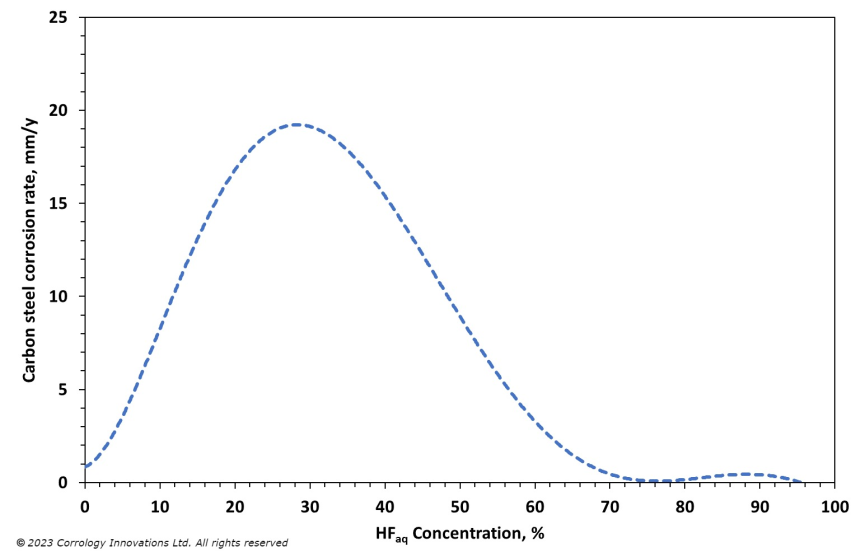
Similar to other acids, the aggressiveness of hydrofluoric acid (both anhydrous and in aqueous solution) is primarily determined by a combination of its concentration and temperature. Naturally, the specific temperature-concentration range will vary depending on the material in question. Figure 1 presents corrosion rate of carbon steel versus HFaq concentration in temperature range of 21-38°C.3 9
Based on the experience of alkylation units, two generic temperature boundaries are typically established:9
- For carbon steel: max 65°C (150°F); recommended low limit: 38-43°C (100-110°F)
- For Monel 400: max 149°C (300°F)
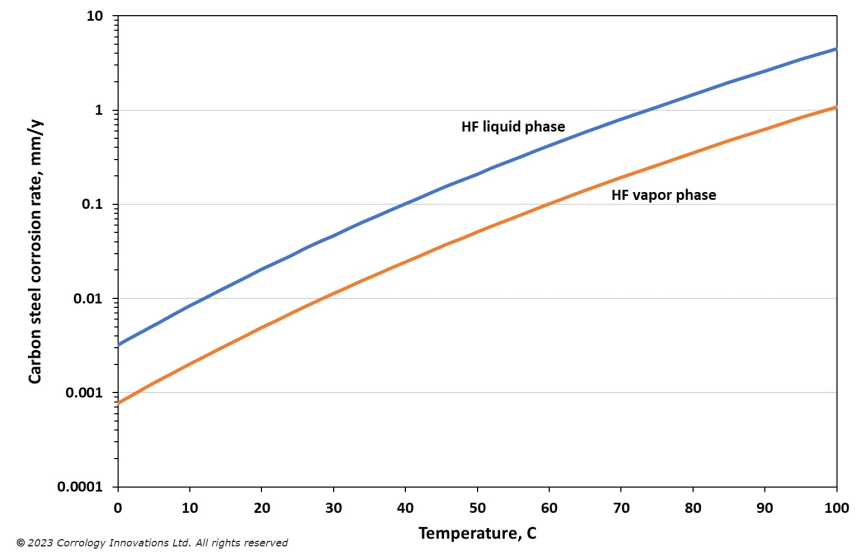
Of course, these can be used as generic indicators only, as the actual corrosion rate will also depend on other factors such as velocity or the steel’s residual elements. Additionally, the corrosion rate of carbon steel will be influenced by the different phase compositions (vapor/liquid), as illustrated in Figure 2 based on experience from HF-alkylation.8
The impact of temperature and concentration on corrosion resistant alloys (CRAs) can be estimated using standard iso-corrosion diagrams typically published by alloy manufacturers. A generic diagram displaying iso-corrosion curves of 0.51 mm/year (20 mpy) for various alloys is shown in Figure 3.
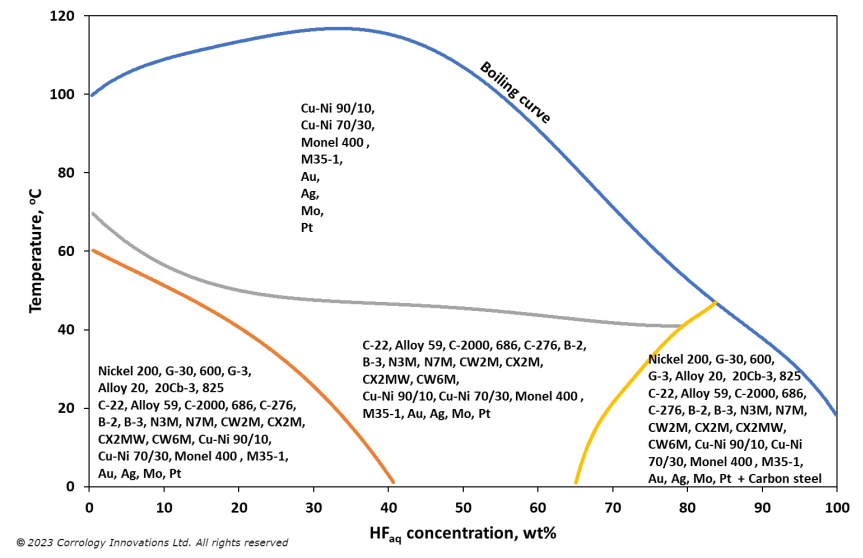
As it was repeatedly emphasized, iso-corrosion diagrams depict somewhat idealized corrosion scenarios, neglecting the influence of impurities or flow. Hence, they should be approached with caution at all times.
Aeration
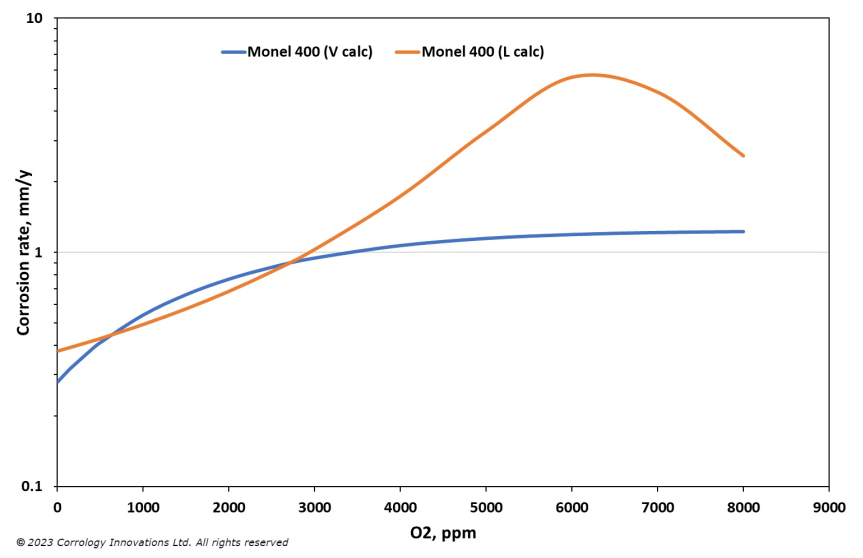
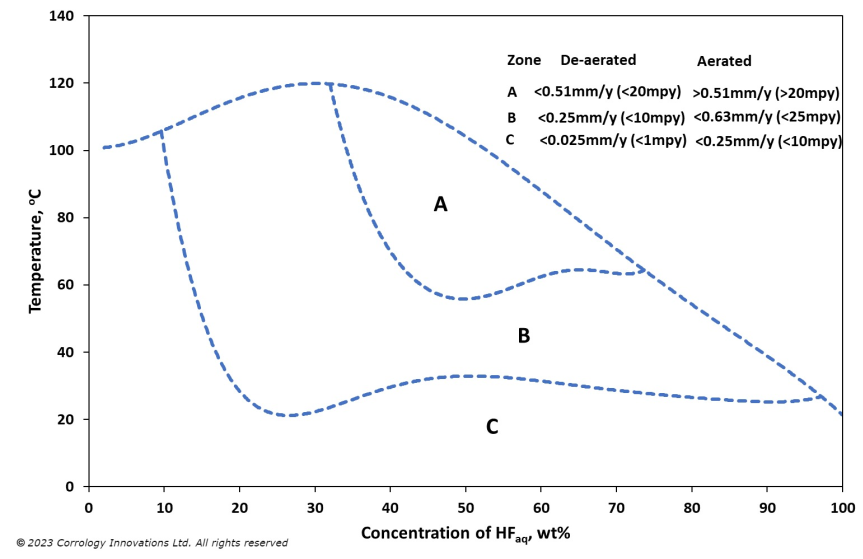
The phenomenon of elevated corrosion of steels corrosion resistant alloys in the presence of oxidizing species (in particular – oxygen) is observed in the case of several acids (e.g. alloys B2 (UNS N10665) / B3 (UNS N10675) behavior in aerated HCl). Hydrofluoric acid is not an exception to this rule. The presence of oxygen significantly increases the aggressiveness of hydrofluoric acid (HF) towards carbon steel and corrosion-resistant alloys. Even Monel 400, known for its exceptional resistance to HF, rapidly corrodes in the presence of oxygen, as shown in Figure 4.7 At concentrations below approximately 400 ppm, the impact of oxygen on the corrosion rate of Monel 400 is negligible. However, once this threshold is exceeded, the corrosion rate steadily increases, with a rapid acceleration in the liquid phase when the oxygen concentration exceeds 2000-3000 ppm.
Similar behavior was observed for 90/10 Cu-Ni and 70/30 Cu-Ni.7
The aggressiveness of aerated HFaq can be somewhat restricted as long as the solution temperature does not exceed approximately 30°C (86°F). Beyond this threshold, aerated HFaq can corrode Monel 400 at a rate of up to >0.63 mm/year (25 mpy), as depicted in Figure 5.
Main sources of oxygen typically include blanketing nitrogen (if contaminated with oxygen) from storage tanks, contaminated feed gases, and misoperation during caustic treatment, among others.
Due to the challenges associated with online oxygen detection in hot HF streams or mixtures with hydrocarbons, primarily due to safety concerns, it is not practical. Therefore, the primary mitigation measures for oxygen ingress should prioritize minimizing entry via nitrogen blanketing or in the hydrocarbon feed, among others
Flow
Iron fluoride deposit slows the corrosion of carbon steel, but its protection is a combination of temperature, HF concentration and flow. Common rule of thumb limits the flow velocity to 0.62 m/s (2 ft/s) for carbon steel applications in concentrated HF (>70%) and at temperatures below c.a. 32°C (90°F) – refer to Figure 1.3 9 Anhydrous HF, as highlighted earlier, is less aggressive. Hence, velocity and temperature limits for carbon steel are somewhat higher: 66°C (150°F) and 1.8 m/s (6 ft/s).
However, it is important to note that linear velocity is not an accurate indicator of flow impact on corrosion. As highlighted several times in the context of other damage mechanisms, such as ammonium bisulfide corrosion, Wall Shear Stress (WSS) should be used as the more relevant indicator of the flow-corrosion relation. The issue arises from the lack of relevant research within the public domain regarding the correlation between HF corrosion and WSS (in both liquid and vapor phases).
CRAs like Monel 400 or copper-nickels (90/10 - UNS C70600 - and 70/30 UNS C71500) are generally highly resistant to flow-induced HF corrosion and can be used even in highly turbulent areas.
Materials
In concentrated hydrofluoric acid (HFaq) service, two base materials are commonly used: carbon steel and Monel 400. Maintaining high acid concentration (>80%), low temperature (<30°C), and flow velocity (<1.8 m/s), as discussed earlier, provides suitable conditions for carbon steel operation. However, another factor believed to impact the corrosion behavior of carbon steel is the presence and concentration of so-called ‘residual’ elements like Cu, Cr, and Ni.13 14 It has been observed that elevated levels of residual copper, chromium, and nickel can detrimentally affect the corrosion resistance of carbon steel, even if the concentrations of Cu/Cr/Ni are within relevant standard ranges.13 Based on published data and available normative documents, general guidelines for residual elements (RE) in hydrofluoric service (particularly alkylation) can be draw:15 16 17
- Carbon equivalent (CE) ≤ 0.43% (for materials with thickness ≤ 25.4mm (1 inch)); or ≤0.45% for thickness > 25.4mm (1 inch),
- Vanadium ≤ 0.02%; Niobium ≤ 0.02% and Nb + V ≤ 0.03%,
- Ni + Cu ≤ 0.15%
- C ≥ 0.18%.
Where \(CE = C + \frac{Mn}{6} + \frac{Cr + Mo + V}{5} + \frac{Ni + Cu}{15}\)
Stainless steels (300 series) or duplex stainless steels perform satisfactorily in anhydrous HF (AHF) service, while in diluted HF, they will undergo rapid corrosion. As a general rule, Ni-Cu, Cu-Ni, and Cu-alloys represent the highest corrosion resistance to HF in both concentrated and diluted variants. Traditionally, alloy 400 is recognized as one of the best-performing materials in HF service (irrespective of HF concentration) up to a temperature of about 149°C (300°F) – see earlier chapters referring to iso-corrosion diagrams and the impact of contaminants, particularly oxygen.
Super-alloys (Ni-Mo-Cr) such as C-276 (UNS N10276), C-22 (UNS N06022), or C-2000 (UNS N06200) are employed in diluted HF service where the presence of oxygen is inevitable. These alloys typically exhibit greater resistance to oxygenated HF than alloy 400; however, they perform poorly in oxygen-free systems.17
Tools
Below is a user-friendly calculator to estimate corrosion rates in Hydrofluoric Acid (HF) service.18
Calculator
NOTICE: The provided tool is for advisory purposes only. Corrology Innovations Limited and its employees shall not be held liable for any damages, resulting from the use or inability to use the information provided.
References
This Article has 18 references.
1:American Petroleum Institute Recommended Practice – API RP 571, latest edition
2:J.D. Dobis, D.R. Clarida, J.P. Richert - A Survey of Plant Practices and Experience in HF Alkylation Units - NACE Corrosion Conference 1994, paper no 511
3:H.S. Jennings - Materials For Hydrofluoric Acid Service In The New Millennium - NACE Corrosion Conference 2001, paper no. 01345
4:Public Health England (PHE) publication - Compendium of Chemical Hazards: Hydrogen Fluoride and Hydrofluoric Acid (HF) - PHE publications gateway no: 2014790, Nov. 2017
5:H. Dai, S. Shi, L. Yang, C. Guo, X. Chen - Recent progress on the corrosion behavior of metallic materials in HF solution - Corrosion Rev 2021; 39(4): 313–337
6:B. Lochel, H.H. Strehblow, M. Sakashita - Breakdown of Passivity of Nickel by Flouride - J. Electrochem. Soc. Vol. 131, No. 3, March 1984
7:Nickel Institute Publication no 443, 1976 - Corrosion resistance of nickel containing alloys in hydrofluoric acid, hydrogen fluoride and fluorine
8:C.J. Schulz - Corrosion Rates Of Carbon Steel In HF Alkylation Service - NACE Corrosion Conference 2006, paper no. 06588
9:J.D. Dobis - The Top Ten Corrosion Issues Affecting HF Alkylation Units - NACE Corrosion Conference 2007, paper no 07570
10:J.R. Crum, G.D. Smith, M.J. McNallan, S. Hirnyj - Characterization of Corrosion Resistant Materials in Low and High Temperature HF Environments - NACE Corrosion Conference 1999, paper no. 382
11:Nickel Institute Publication, 2019 - Alloy selection for service in hydrogen fluoride, hydrofluoric acid and fluorine - A GUIDE TO THE USE OF NICKEL-CONTAINING ALLOYS
12:J.D. Dobis, D.G. Williams, D.L. Bryan, Jr. - The Effect Of Operating Conditions On Corrosion In HF Alkylation Units - NACE Corrosion Conference 2004, paper no. 04645
13:H.H. Hashim, W.L. Valerioti - Effect of Residual Copper, Nickel and Chromium on the Corrosion Resistance of Carbon Steel in Hydrofluoric Acid Alkylation Service - NACE Corrosion Conference 1993, paper no. 623
14:G. Chirinos, S. Turgoose, R.C. Newman - Effects of Residual Elements on the Corrosion Resistance of Steels in HF - NACE Corrosion Conference 1997, paper no. 513
15:A. Gysbers, H. Hashim, D. Clarida, J. Marsh, J. Palmer - Specification for Carbon Steel Materials for Hydrofluoric Acid Alkylation Units - NACE Corrosion Conference 2003, paper no. 03651
16:ASTM A106/A106M, “Standard Specification for Seamless Carbon Steel Pipe for High-Temperature Service”, latest edition
17:American Petroleum Institute Recommended Practice – API RP 751, latest edition
17:American Petroleum Institute Recommended Practice – API RP 581, latest edition