Catalytic Reforming
Catalytic reforming, in conjunction with Isomerization and Alkylation, plays a pivotal role in producing high-octane gasoline blends. Furthermore, hydrogen, a by-product of reforming reactions, holds significant importance in refinery hydrogen production, alongside steam reforming. Reformate, enriched with aromatic compounds, serves as the primary source for BTX (benzene-toluene-xylene) production. From a corrosion standpoint, catalytic reforming is generally regarded as a low-risk unit for corrosion-related issues. The typical damage mechanisms that may be present are associated with high-temperature operation and exposure to hydrogen e.g, Carburization or Stress Relaxation Cracking. In the low-temperature sections (fractionation), there is a potential for HCl Corrosion and NH4Cl Corrosion.
#High Temperature Corrosion; #Metallurgical Failures; #HCl Corrosion; #NH4Cl Corrosion
Unit Operation Description
The catalytic reforming process involves multiple simultaneous reactions acting on naphthenic and paraffinic hydrocarbons, including dehydrogenation, dehydrocyclization, and isomerization. These reactions typically lead to the almost complete elimination of naphthenic hydrocarbons (those with saturated rings) and a rise in the aromatic fraction. The content of paraffinic hydrocarbons after reforming either remains similar to the original level or experiences a slight reduction compared to the initial feed. The typical feedstock for catalytic reforming consists of straight-run naphtha or gasoline, with a boiling temperature ranging approximately from 85-190°C (185-375°F). Lighter fractions tend to increase the yield of C-4, which isn’t economically viable, while heavier cuts (>200°C / >392°F) have a higher propensity for cracking and the coke formation, leading to quicker catalyst deactivation.
Catalysts employed for reforming purposes usually feature a γ-alumina-platinum matrix containing select rare metals like Rhenium. Given the dispersed Pt within the catalyst, it exhibits high sensitivity to sulfur compounds, causing rapid deactivation. Hence, it’s crucial for the feedstock entering catalytic reforming to undergo thorough desulfurization (<1ppm of sulfur) to prevent premature catalyst deactivation. Furthermore, the catalyst necessitates chlorine as an activator or promoter, introduced through organic chloride compounds that decompose into HCl.
Catalytic reforming can be conducted through continuous catalyst regeneration, cyclic, or semi-regenerative methods. In the semi-regenerative process, the catalyst undergoes regeneration every few months (typically every 6-24 months), while in the cyclic method, regeneration occurs within a span of 1-2 days. The continuous regeneration process, depicted in Figure 1, involves the continuous withdrawal of catalyst from the main reactor, its regeneration, and subsequent reintroduction into the reaction section. While this continuous method demands higher initial capital costs, it compensates by offering lower operating costs due to a reduced requirement for hydrogen recycling.
The semi-regenerative process, illustrated in Figure 2, is the most cost-effective option in terms of investment. However, its operating costs are higher because the unit needs to be taken offline during the regeneration process.
In the semi-regenerative approach, the pretreated (desulfurized) feed, along with recycle hydrogen, is heated to approximately 490-520°C (914-968°F) and introduced into the first reactor, where naphthenic hydrocarbons undergo dehydrogenation to form aromatics. Since dehydrogenation is an endothermic reaction, the stream exiting the first reactor needs reheating before entering subsequent stages (typically 3 to 4 reactors). Reheating is necessary between each stage. The outlet of the reactor is cooled using a feed/effluent exchanger. The gas-phase, enriched with hydrogen generated during dehydrogenation, is cooled, separated from the light fraction, and divided into recycle hydrogen and product-hydrogen (net-hydrogen), which can be utilized for other refinery processes such as hydrocracking.
In the continuous regeneration process, reactors are usually stacked, and catalyst is continuously withdrawn from the last reactor, subjected to regeneration, and reintroduced after regeneration at the top of the reaction section (Figure 1).
From a corrosion standpoint, catalytic reforming is generally regarded as a low-risk unit for corrosion-related issues. The typical damage mechanisms that may be present are associated with high-temperature operation and exposure to hydrogen e.g, Carburization or Stress Relaxation Cracking. In the low-temperature sections (fractionations), there is a potential for HCl Corrosion (HCl is released from the catalyst) and NH4Cl Corrosion.
Potential Damage Mechanisms
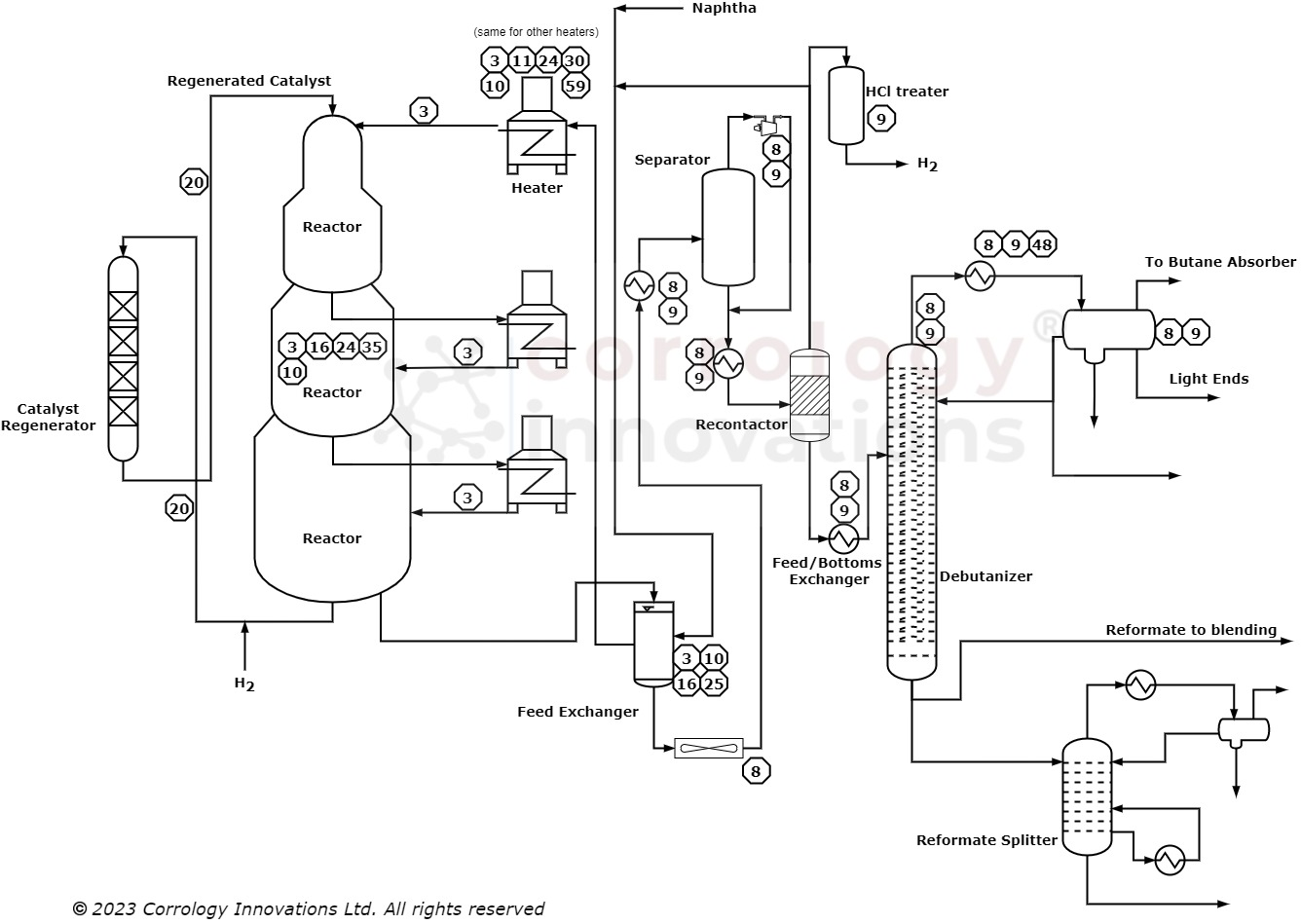
Figure 1 Catalytic Reforming (CCR - Continous Catalyst Regeneration) Unit diagram with typical damage mechanisms.after API RP 571
Legend: 3 - Creep/Stress Rupture; 8 – NH4Cl Corrosion; 9 – HCl Corrosion; 10 - High Temperature Hydrogen Attack; 11 - Oxidation; 16 - Temper Embrittlement; 20 - Erosion / Erosion-Corrosion; 24 - Carburization; 25 - Hydrogen Embrittlement; 30 – Short term overheating – Stress rupture; 35 – Stress Relaxation Cracking; 54 – Mechanical Fatigue; 59 – Metal Dusting;
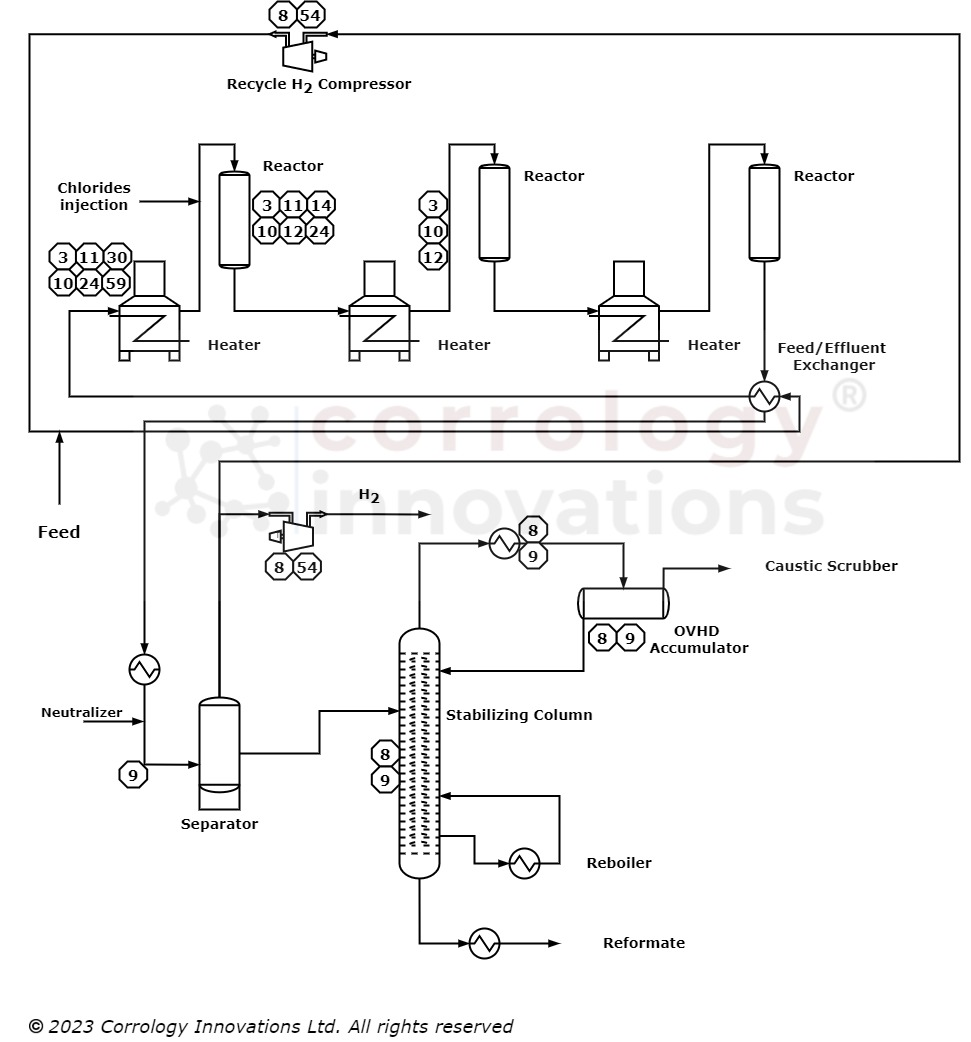
Figure 2 Catalytic Reforming (fixed bed) Unit diagram with typical damage mechanisms.after API RP 571
Legend: 3 - Creep/Stress Rupture; 8 – NH4Cl Corrosion; 9 – HCl Corrosion; 10 - High Temperature Hydrogen Attack; 11 - Oxidation; 12 - Thermal Fatigue; 14 - Refractory Degradation; 24 - Carburization; 30 – Short term overheating – Stress rupture; 54 – Mechanical Fatigue; 59 – Metal Dusting;