Caustic Treatment
Caustic treatment, specifically Gasoline/LPG Sweetening using caustic, stands as a popular method for removing traces of H2S and mercaptans from these process streams. Several variants of this process exist, with one of the most common involving caustic washing followed by catalytic oxidation of sulfides and thiosulfates, thereby returning regenerated caustic to the process. This chapter highlights key process parameters and areas prone to caustic-related corrosion.
Unit Operation Description
The process of gasoline/LPG sweetening using a caustic solution is relatively straightforward. Initially, the hydrocarbon stream undergoes contact with caustic in a countercurrent flow to remove traces of H2S, and other acidic components, such as naphthenic acids. Subsequently, the hydrocarbons proceed to the second stage for the removal of mercaptans (reaction 1).
\(\ce{RSH + NaOH <=> RSNa + H2O}\) (1)
The sodium sulfides formed are converted into disulfides in the oxidation section in the presence of a catalyst, as described by reaction (2), thereby regenerating the caustic solution.
\(\ce{2RSNa + 0.5O2 + H2O -> RSSR + 2NaOH}\) (2)
The effluent from the oxidation section, containing caustic, catalyst, air, and disulfides, enters the separator to remove disulfides, while the regenerated caustic returns to the process. Typically, this process is conducted at elevated pressure (approximately 15-20 bar) and a temperature range of about 40-50°C (104-122°F). The elevated pressure enables oxygen dissolution in the hydrocarbon fraction, allowing direct oxidation of mercaptans to disulfides (reaction 3).
\(\ce{2RSH + 0.5O2 -> RSSR + H2O}\) (3)
Corrosion in the gasoline/LPG caustic treatment is primarily limited to caustic stress corrosion cracking (SCC) - refer to Figure 2. Carbon steel operating at temperatures around 40°C has a low likelihood of caustic stress corrosion cracking, even without stress relief (section A in the Caustic Service Chart – Figure 1)
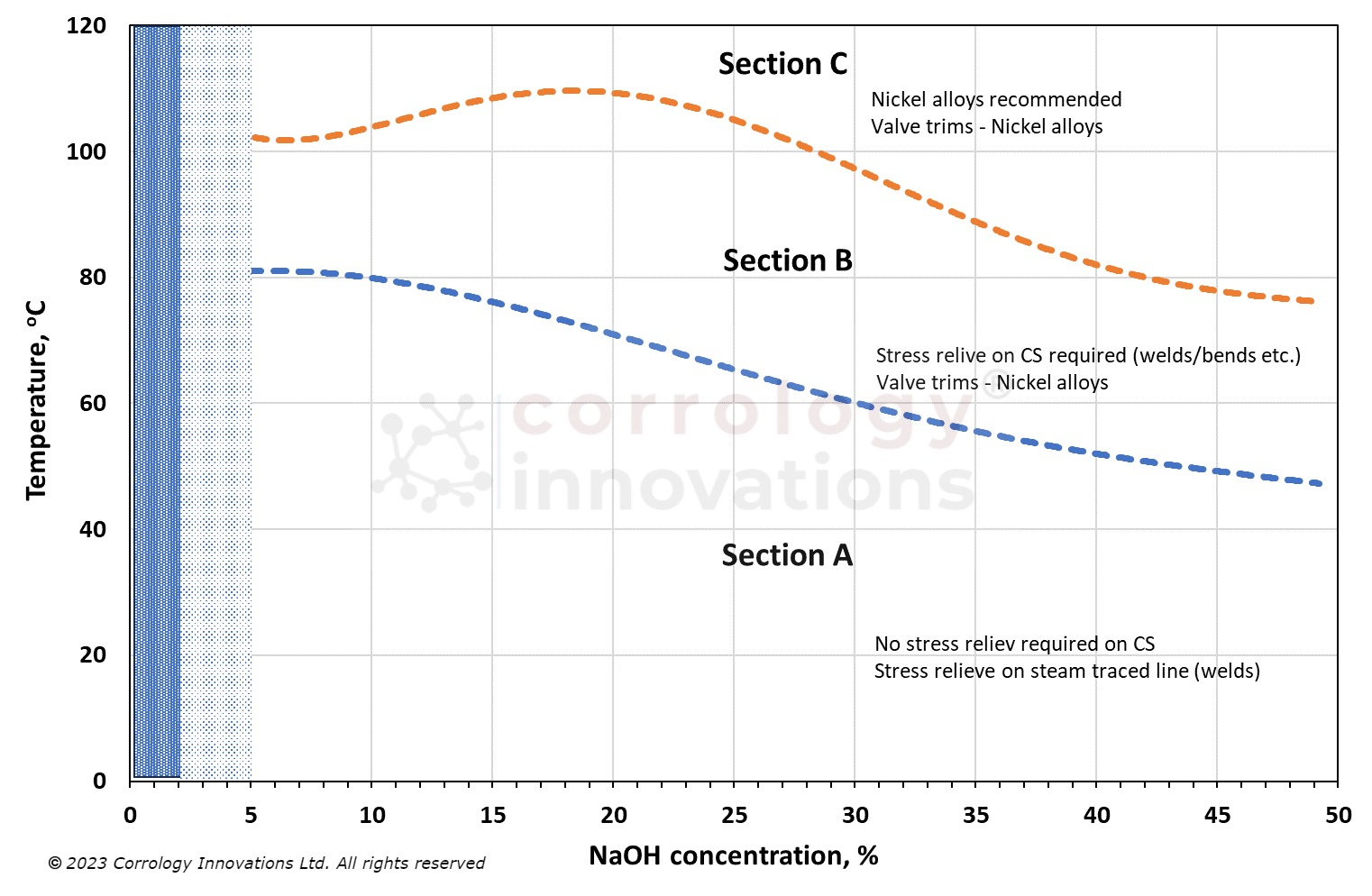
Additionally, many users prefer carbon steel to be stress relieved to further minimize the likelihood of caustic SCC. Austenitic stainless steel, preferably 316L, may also be considered with precautions taken regarding weld sensitization.
Potential Damage Mechanisms
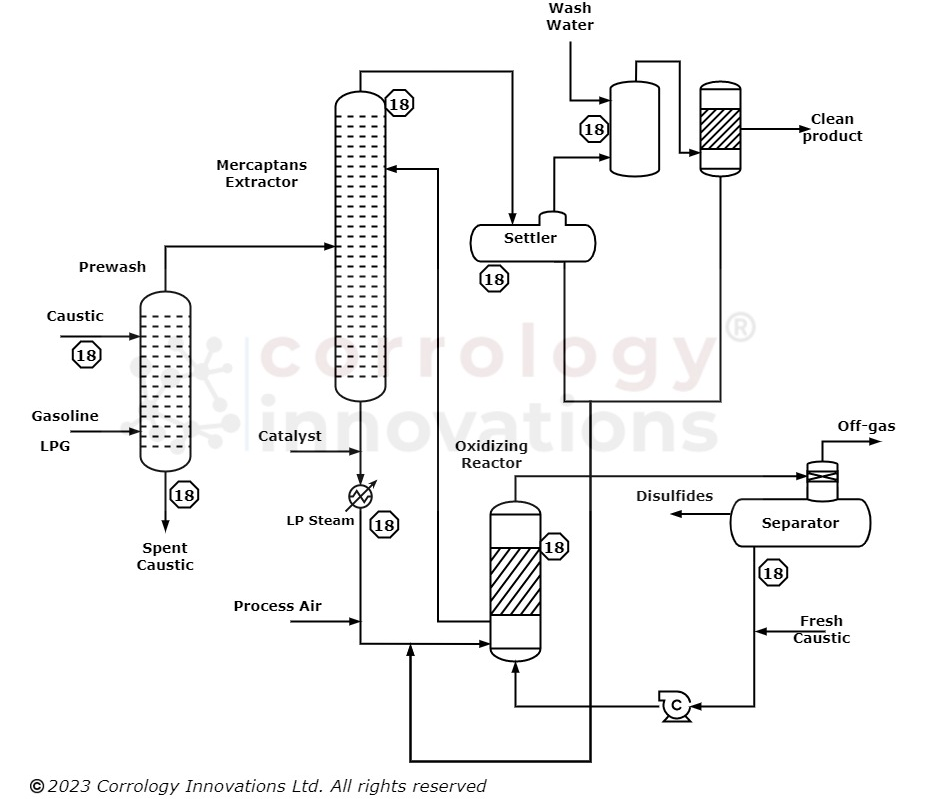
Figure 2 Caustic Treatment Unit diagram with typical damage mechanisms.after API RP 571
Legend: 18 - Caustic Stress Corrosion Cracking;