Crude Oil Distillation (CDU/VDU)
The crude oil distillation unit, encompassing both atmospheric and vacuum sections, is one of the most critical process units in a refinery. With the increasing sulfur and acid content in processed crude slates, it becomes essential for the distillation unit to remain adaptable and flexible enough to handle a wide range of feedstocks. However, such variability in feed composition can exacerbate corrosion damage mechanisms, including sulfidation, naphthenic acid corrosion, and under-deposit corrosion, particularly in high-temperature zones such as furnace tubes, transfer lines, and vacuum resid sections. Additionally, areas such as column overhead lines and overhead condensers are susceptible to acidic corrosion caused by hydrogen chloride, or under-deposit corrosion originating from ammonium chloride or amine hydrochloride deposits.
#Corrosion Monitoring in CDU;#Sulfidation; #NAP Acid Corrosion; #HCl Corrosion; #NH4Cl Corrosion
Unit Operation Description
Crude oil after blending in storage area is pumped to the pre-heating train where it recovers heat from overhead and product side-cuts. Before entering pre-heat train, water with demulsifier is typically injected. Once heated to approximately 115-130°C (239–266°F), a second injection of water/demulsifier is commonly applied to further dissolve inorganic salts, preparing the oil-water mixture for the desalting process. The quantity of added wash water will vary based on the crude type, as outlined in Table 1.
Table 1 Typical parameters for desalting system
| Crude API° | Water added, vol% | Demulsifier, ppm | Desalting Temp. °C (°F) |
|---|---|---|---|
| >40 | 3-7 | <6 | 110-125 (230-257) |
| 30-40 | 4-7 | 6-10 | 120-135 (248-275) |
| <30 | 7-10 | 10-20 | 137-148 (280-300) |
Typically, two stage desalting system is employed to reduce inorganic salts level in crude to approximately 1-3.5ppm (<1ptb) and BS&W (bottom sediments and water) below c.a. 0.3vol%. The brine after desalting is directed to Sour Water Stripping Unit (SWS) while the desalted crude, if its salt content remains above c.a. 6-7ppm, is subject to caustic injection of max. 10ppm caustic. Injection area may be subject to caustic stress corrosion cracking and caustic corrosion, hence injection system should be carefully selected and operated. Desalted and caustic-treated crude enters the hot-section of preheat trains where is heated using side-cuts streams and/or atmospheric column pumparound (PA). Desalted and caustic-treated the crude enters the hot-section of preheat trains where is heated using side-cuts streams and/or atmospheric column pumparound (PA). Depending on Unit configuration the heated crude may enter a pre-flash column to remove light components or proceed directly to atmospheric heaters where is heated to c.a. 320-370°C (608-698°F). Once the crude exceeds temperature of c.a. 230-240°C (446-464°F) the sulfidation corrosion will start to progress followed by naphthenic acid corrosion. Partially vaporized crude enters the flash-zone in atmospheric column where it is separated into specific side-cuts. The overhead (OVHD) LPG and Naphtha vapors are cooled in OVHD-exchangers and routed to a top separator. The sour water from OVHD separator is directed to SWS while a portion of naphtha typically returns as a reflux to the top section of atmospheric column. The OVHD section typically suffers due to aqueous HCl and NH4Cl corrosion damage mechanisms. Products such as Kerosene and Diesel are withdrawn from the column, usually stripped in side-strippers, and leave the unit through the crude pre-heat exchangers. Atmospheric residue bottom stream is routed to vacuum heater. Bottom atmospheric section, transfer lines to vacuum heater are subject to Sulfidation and Naphthenic Acid Corrosion. Lines made of austenitic stainless steels may also suffer from polythionic acid stress corrosion cracking. Other potential damage mechanisms are detailed in Figure 1 in the following chapter.
The heated atmospheric residue enters the flash-zone in the vacuum tower where it is separated into heavy diesel, vacuum gas oils (LVGO, MVGO and HVGO – depending on operating profile) and vacuum residue. The heat from the product’s side-streams and column PAs is utilized in crude pre-heat exchangers. Vacuum feed lines, the vacuum tower and side-cut lines are subject, almost exclusively, to Sulfidation and Naphthenic Acid Corrosion. Lines made of austenitic steels can be subject to polythionic acid stress corrosion cracking.
Potential Damage Mechanisms - CDU
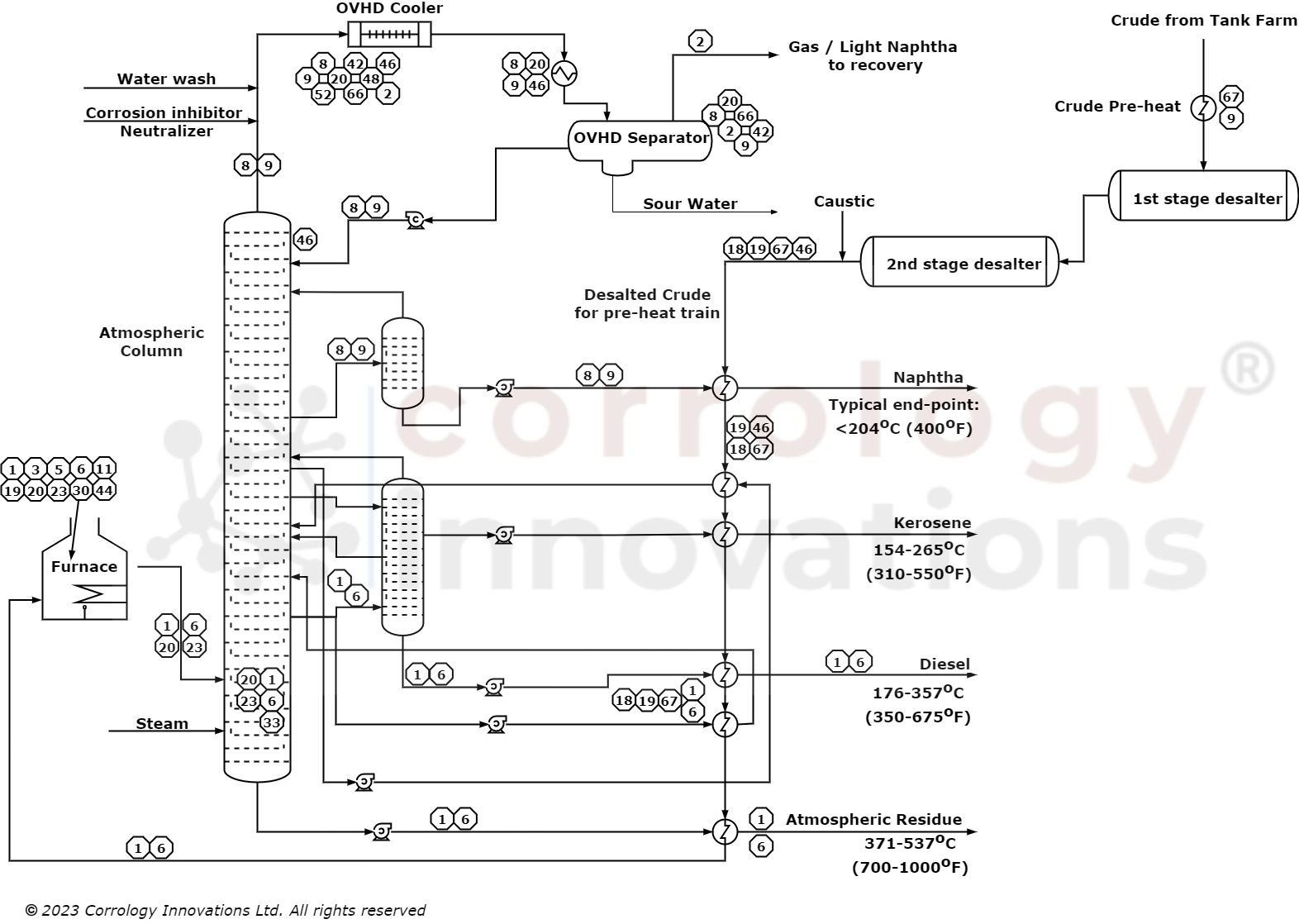
Figure 1 CDU diagram with typical damage mechanisms.after API RP 571
Legend: 1 - Sulfidation; 2 - Wet H2S Damage (H2 Blistering/HIC/SOHIC/SSC); 3 - Creep/Stress Rupture; 5 - Polythionic Acid SCC; 6 – Naphthenic Acid Corrosion; 8 – NH4Cl Corrosion; 9 – HCl Corrosion; 11 - Oxidation; 18 – Caustic Stress Corrosion Cracking; 19 - Caustic Corrosion; 20 - Erosion / Erosion-Corrosion; 23 - Chloride SCC; 30 – Short term overheating – Stress rupture; 33 - 885°F (475°C) Embrittlement; 39 – Dissimilar Metal Weld Cracking; 42 – CO2 Corrosion; 44 – Fuel Ash Corrosion; 46 – Corrosion Under Insulation; 48 – Ammonia Stress Corrosion Cracking; 52 – Liquid Metal Embrittlement; 66 – Aqueous Organic Acid Corrosion; 67 – Brine Corrosion;
Potential Damage Mechanisms - VDU
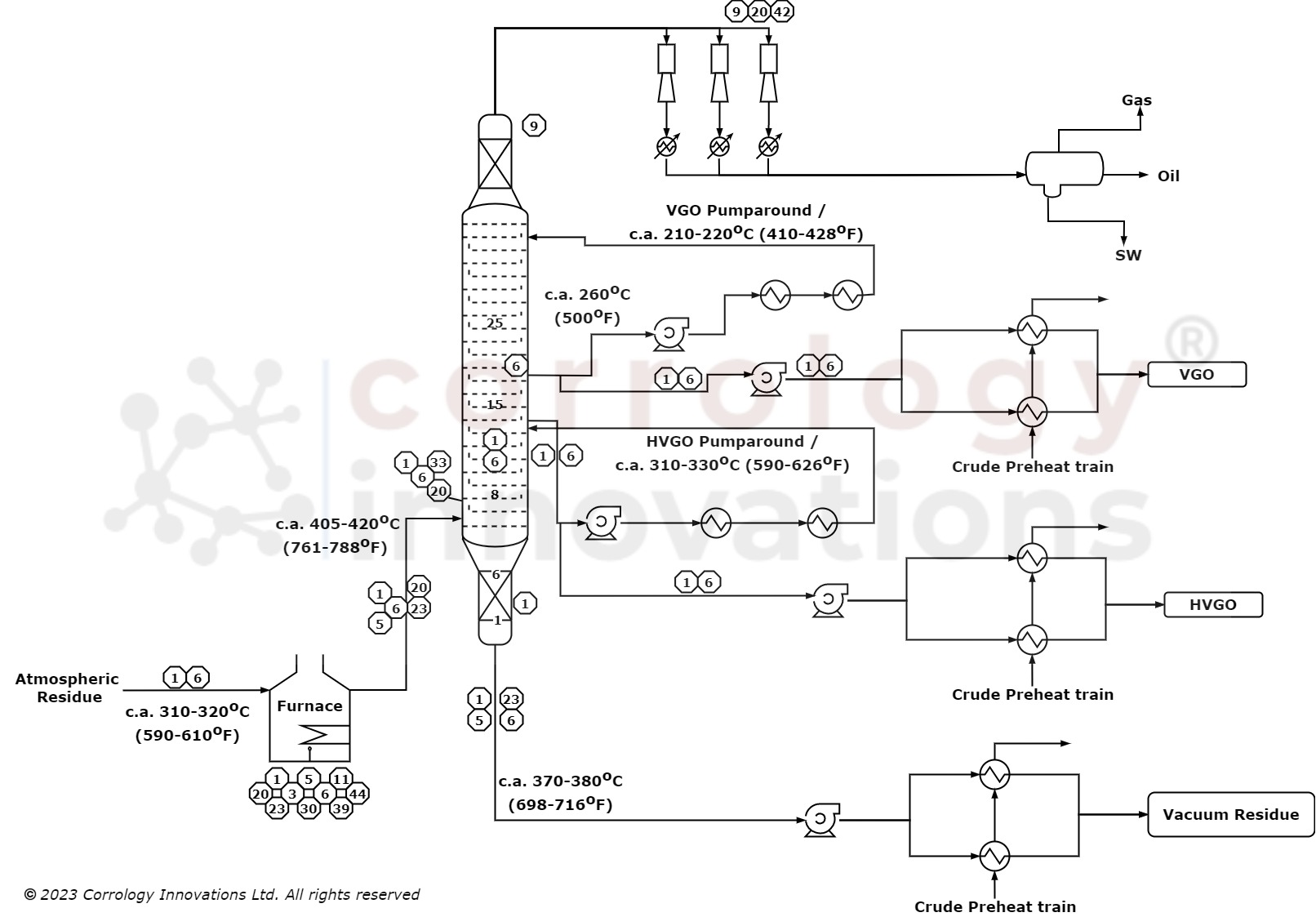
Figure 2 VDU diagram with typical damage mechanisms.after API RP 571
Legend: 1 - Sulfidation; 3 - Creep/Stress Rupture; 5 - Polythionic Acid SCC; 6 – Naphthenic Acid Corrosion; 9 – HCl Corrosion; 11 - Oxidation; 20 - Erosion / Erosion-Corrosion; 23 - Chloride SCC; 30 – Short term overheating – Stress rupture; 33 - 885°F (475°C) Embrittlement; 39 – Dissimilar Metal Weld Cracking; 42 – CO2 Corrosion; 44 – Fuel Ash Corrosion;