Delayed Coking Unit (DCU)
Delayed coking, along with steam cracking, visbreaking, and thermal cracking, is a thermal refining process in which hydrocarbons are converted through thermally initiated radical reactions. Delayed coking primarily produces petroleum coke from heavy fractions, with gasoline and lighter fractions as by-products.
As a downstream unit, the delayed coking unit (DCU) processes residual feedstocks from upstream refining. These feeds, which are rich in sulfur species, heavy metals (e.g., vanadium and nickel), olefins, and nitrogen compounds, tend to accumulate contaminants that exacerbate operational challenges and accelerate equipment degradation.
In the high-temperature sections of the DCU, common damage mechanisms include creep, thermal fatigue, and temper embrittlement. Additionally, low-temperature areas, such as the overhead systems of the main fractionator, are prone to corrosion caused by sulfur or chloride compounds.
#High Temperature Corrosion; #Sulfidation; #HCl Corrosion; #NH4Cl Corrosion
Unit Operation Description
The reactions involved in delayed coking are intricate, demanding precise control of process parameters to attain the desired conversion rate and ensure safe operation. Typically, the delayed coking unit (DCU) receives feed, often vacuum residue, or reduced crude, entering the bottom section of the fractionator where it blends with the bottom effluent. This diluted feed is then swiftly heated in the charge heater to approximately 482-510°C (900-950°F) before entering the coke drums. The term ‘delayed coking’ refers to the coking process itself, occurring within the coke drums rather than in the furnace. Water or steam is introduced in the furnace to further ‘delay’ coke formation.
Within the coke drum, under adiabatic conditions, the liquid feed transforms into coke particles and light hydrocarbon vapors. Vapors exit from the drum’s top while the coke settles within it. These overhead vapors proceed into the fractionator for condensation and separation, yielding Coker gas oil, Coker gas, and cracked naphtha. Post-process, the coke drum cools down, and the coke is removed. While delayed coking involves a significantly more complex process, a detailed description exceeds the scope of this chapter.
As a downstream unit, the DCU feed may accumulate various contaminants such as sulfur species, heavy metals, or olefins. This accumulation can significantly impact corrosion processes within the DCU, accelerating damage mechanisms like Sulfidation, Carburization, and Naphthenic Acid Corrosion. Furthermore, cyclic operation can induce mechanical failures due to fluctuating temperatures, leading to thermal fatigue or temper embrittlement. Low-temperature corrosion mechanisms like Wet H2S Damage (H2 Blistering/HIC/SOHIC/SSC), NH4Cl Corrosion, or NH4HS Corrosion are also prevalent in various parts of the DCU operating below temperature of about 200°C (392°F).
Addressing this variety of damage mechanisms necessitates a comprehensive approach to DCU metallurgy, accounting for both current and anticipated changes in feed composition, particularly concerning sulfur species concentration, chlorides accumulation, presence of ammonia etc. While 5Cr-0.5Mo steel serves as the default material for hot section piping and heater tubes, it is frequently substituted by 9Cr-1Mo steel, offering improved resistance to sulfidation. However, 9Cr steel may not suffice for high-sulfur feed, especially in the presence of naphthenic acids. Notably, naphthenic acids are less concerning in high-temperature sections as they decompose above 400°C (752°F) but in preheat section may play a crucial role. Coke drums, on the other hand, might be made of 1-1/4Cr-1Mo steel with 410 clad.
In summary, corrosion control in the DCU poses a complex challenge where proper material selection and process control plays a pivotal role in mitigating corrosion processes.
Potential Damage Mechanisms
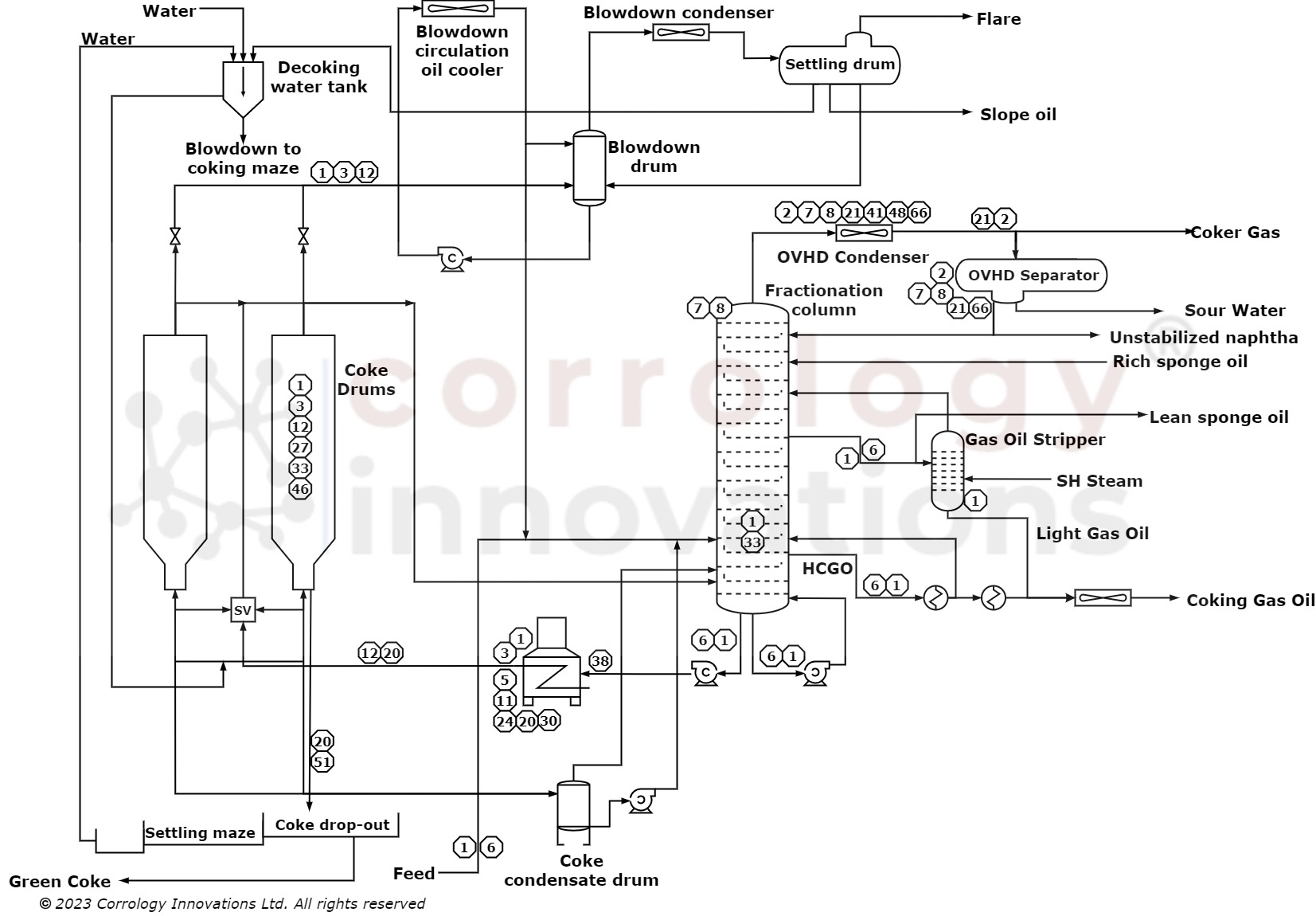
Figure 1 Delayed Coking Unit diagram with typical damage mechanisms.after API RP 571
Legend: 1 - Sulfidation; 2 - Wet H2S Damage (H2 Blistering/HIC/SOHIC/SSC); 3 - Creep/Stress Rupture; 5 - Polythionic Acid SCC; 6 – Naphthenic Acid Corrosion; 7 – NH4HS Corrosion; 8 – NH4Cl Corrosion; 11 - Oxidation; 12 - Thermal Fatigue; 20 - Erosion / Erosion-Corrosion; 21 - Carbonate Stress Corrosion Cracking; 24 - Carburization; 27 - Thermal Shock; 30 – Short term overheating – Stress rupture; 33 - 885°F (475°C) Embrittlement; 41 – Dealloying; 46 – Corrosion Under Insulation; 48 – Ammonia Stress Corrosion Cracking; 51 – Microbiologically Influenced Corrosion; 66 – Aqueous Organic Acid Corrosion;