Fluid Catalytic Cracking (FCC)
Fluid catalytic cracking (FCC) is one of the most pivotal catalytic processes in modern refineries. Fixed-bed catalytic cracking was developed in the early 20th century, while its fluidized-bed variant emerged later, gaining prominence in the 1950s. The FCC process exists in various forms, utilizing diverse catalysts and feedstocks, resulting in varying effluent compositions. Alongside crude distillation units (CDU), vacuum distillation units (VDU), hydrotreating, and catalytic reforming, FCC remains a cornerstone of modern refining operations.
FCC units are subject to a variety of corrosion damage mechanisms. In the pre-heat section, sulfidation and naphthenic acid corrosion are prevalent due to the characteristics of the feedstocks. High-temperature sections are vulnerable to damage mechanisms such as creep, thermal stress cracking, and carburization. In the fractionation and wet gas compression sections, common corrosion challenges include carbonate stress corrosion cracking, wet-H₂S cracking, and ammonium bisulfide corrosion.
#High Temperature Corrosion; #Sulfidation;#NH4HS Corrosion
Unit Operation Description
The primary objective of Fluid Catalytic Cracking (FCC) has remained consistent since its inception: gasoline production. However, in recent decades, process adaptations have emphasized increasing olefin production, particularly propylene. Despite various licensors and commercially available configurations, the fundamental unit core — comprising fluid-bed reaction and regeneration sections — remains unaltered. Irrespective of the reactor’s configuration, the fractionation section and light-ends recovery typically maintain similar setups. The complexity of the FCC process exceeds the scope of this chapter, permitting only general highlights in the following sections:
Feed Preheating: Various feeds such as light and heavy vacuum gas oil (LVGO & HVGO), atmospheric gas oil (AGO), and coker gas oil (CGO) are commonly used. These feeds are blended and directed into the surge drum to maintain consistent feed delivery. Within the surge drum, trace amounts of water or light hydrocarbon vapors may be separated. The liquid stream undergoes preheating, reaching temperatures of approximately 260-370°C (500-700°F) through the reactor’s effluent stream, fractionator pumparounds, and finally, a fired heater — where the risk of Sulfidation and Naphthenic Acid Corrosion heightens.
Processing crude oils with elevated total sulfur and total acid number (TAN) poses such risks, particularly crucial in pre-heat trains and heater tubes typically made of low alloy steels, rarely of 9Cr-1Mo for furnace tubes. The elevated operating temperatures exacerbate the risk, demanding proper mitigation strategies for sulfidation and naphthenic acid corrosion.
Riser-Reactor-Stripper: The riser-reactor plays a pivotal role in the FCC unit. Preheated feed mixes with hot (670-730°C / 1238-1346°F) regenerated catalyst in the riser section. This catalyst heat is essential for vaporizing the liquid and sustaining endothermic catalytic cracking reactions. The ratio of catalysts to oil ranges from 4:1 to 9:1. The vaporization triggers the cracking process, propelling the catalyst and hydrocarbon vapors through the riser at a velocity of about 20 m/s (65.6 ft/s). With modern zeolite-type catalysts, cracking completes within 1-2 seconds. At the riser’s end, the reactor section separates catalyst from hydrocarbon vapors using specialized cyclones, achieving over 99.995% separation efficiency. This separation is essential to reduce non-selective cracking of FCC products. Catalyst carrying absorbed hydrocarbons moves to the stripper section for hydrocarbon stripping with steam.
Regenerator: The spent catalyst moves to the regenerator through a slide valve, controlled by the catalyst level in the stripper. Slide valve damage is commonly attributed to erosion from zeolite particles, mitigated by lining the valve with refractory material. In the regenerator, catalyst containing approximately 0.4-2.5% coke is burned using oxygen supplied by air blowers, reducing the coke content in regenerated catalyst to approximately 0.05%.
Main Fractionator: The fractionator removes heat and separates liquid products from the reactor’s vapor stream, akin to a distillation column. Typically, the fractionator yields three side cuts: heavy cycle oil (HCO), light cycle oil (LCO), and heavy naphtha. Unstabilized gasoline and light hydrocarbons exit the fractionator overhead as a gaseous form. A portion of the overhead gasoline is condensed and returned as reflux to the fractionator, while the remainder enters the Gas Plant or Light-ends Recovery unit.
FCC Light-ends Recovery (Gas Plant): The unstabilized gasoline undergoes fractionation into fuel gas, C3-C4 fractions, and gasoline. In numerous modern FCC units, the C3 fraction is a principal source of propylene. The gas from the main fractionator undergoes wet gas compression (2-stages), enters separators, and respective fractionation columns. Detailed information on light-ends separation is available in specialized literature.
Corrosion problems in wet gas compression predominantly stem from Wet H2S Damage — mainly blistering and hydrogen-induced cracking (HIC). Particularly significant during co-processing when the FCC feed contains high levels of nitrogen compounds forming cyanides. Cyanide ions are known to accelerate wet-H2S damage. The presence of ammonia can also induce NH4Cl Corrosion (low likelihood) and NH4HS Corrosion corrosion (high likelihood). To mitigate a high concentration of corrosive species, water wash is introduced after each compression stage. Water injection methods, forward or reverse cascade, each have their schematic representations (Figure 1).
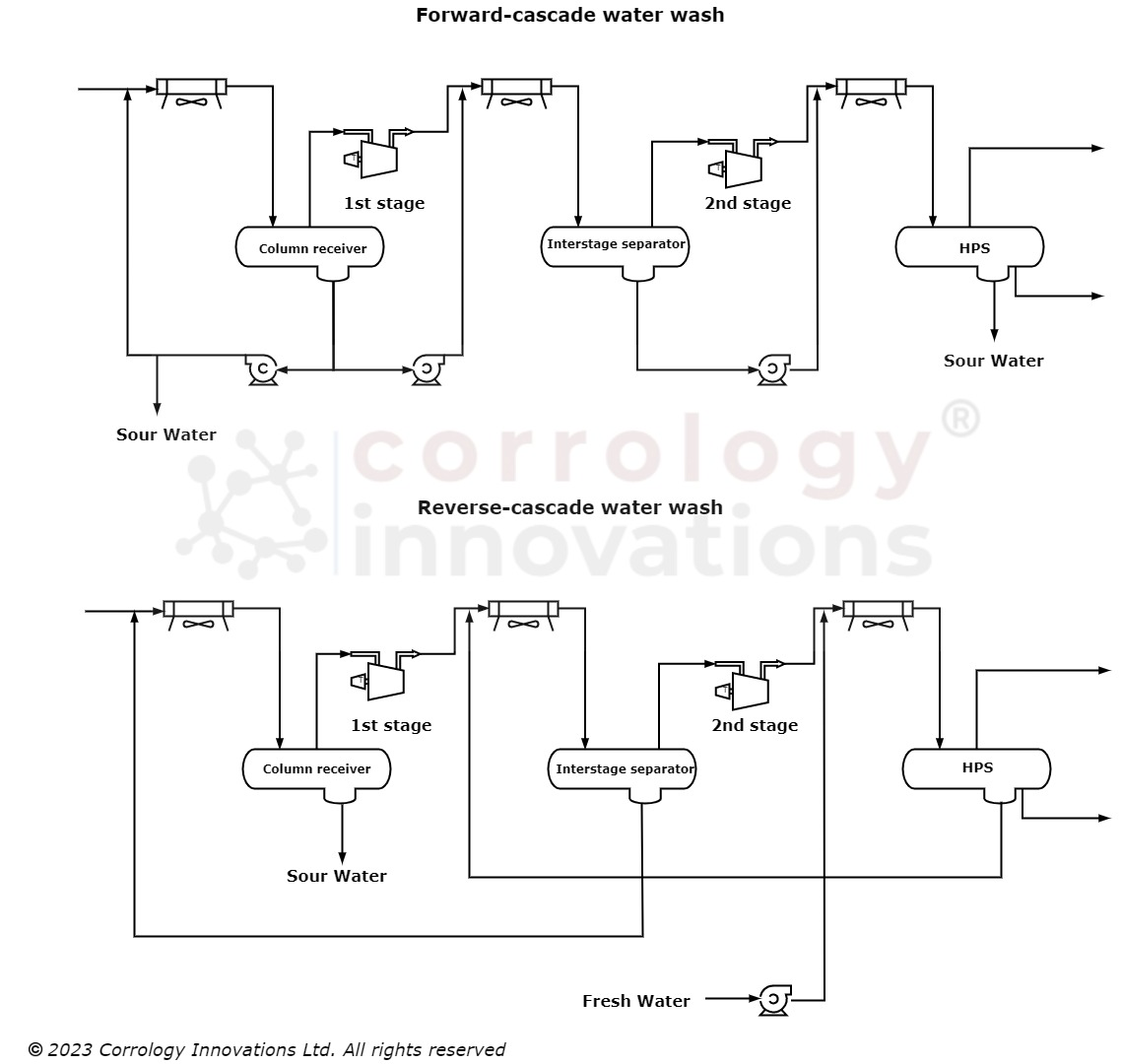
Figure 1 Example of feed forward and cascade water wash configurations. after 1
The operational advantage of the reverse cascade system requires less pumps; however, from a corrosion standpoint, it leads to accumulation of corrosive species, accelerating both ammonium bisulfide corrosion and wet H2S cracking. Polysulfides are occasionally added to minimize cyanide action.
Potential Damage Mechanisms - FCC
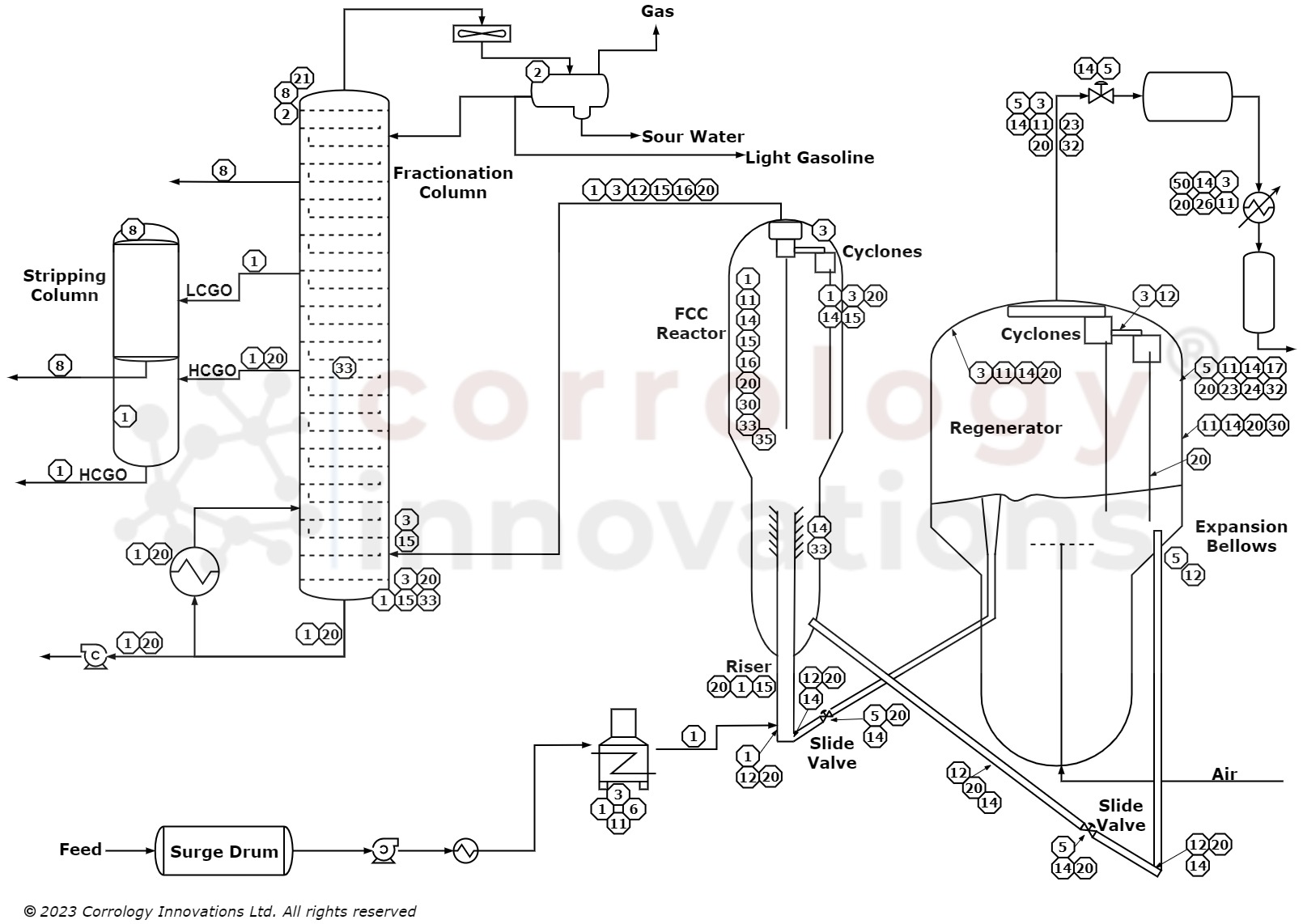
Figure 2 FCC Unit diagram with typical damage mechanisms.after API RP 571
Legend: 1 - Sulfidation; 2 - Wet H2S Damage (H2 Blistering/HIC/SOHIC/SSC); 3 - Creep/Stress Rupture; 5 - Polythionic Acid SCC; 6 – Naphthenic Acid Corrosion; 8 – NH4Cl Corrosion; 11 - Oxidation; 12 – Thermal Fatigue; 14 - Refractory Degradation; 15 - Graphitization; 16 - Temper Embrittlement; 17 - Decarburization; 20 - Erosion / Erosion-Corrosion; 21 - Carbonate Stress Corrosion Cracking; 23 - Chloride SCC; 24 - Carburization; 26 - Steam Blanketing - go to 30; 30 – Short term overheating – Stress rupture; 32 – Sigma Phase Embrittlement; 33 - 885°F (475°C) Embrittlement; 35 – Stress Relaxation Cracking; 50 – Boiler Water-Condensate Corrosion;
Potential Damage Mechanisms - FCC Light Ends Recovery
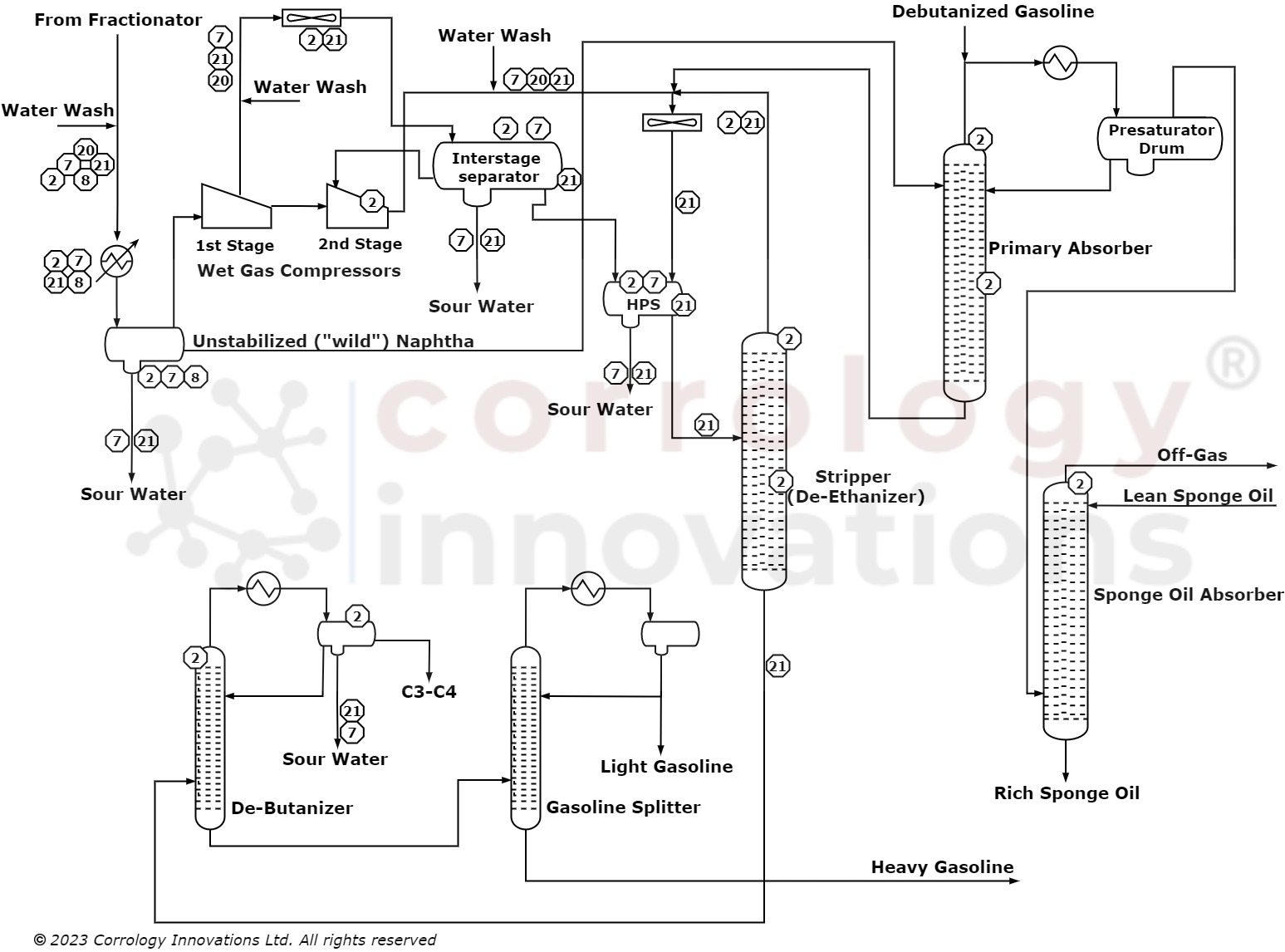
Figure 3 FCC Light Ends Recovery Unit diagram with typical damage mechanisms.after API RP 571
Legend: 2 - Wet H2S Damage (H2 Blistering/HIC/SOHIC/SSC); 7 – NH4HS Corrosion; 8 – NH4Cl Corrosion; 20 - Erosion / Erosion-Corrosion; 21 - Carbonate Stress Corrosion Cracking;
References
This Article has 1 references.
1:R. Sadeghbeigi ed. - Fluid Catalytic Cracking Handbook - Gulf Professional Publishing, 2000.