Sulfuric Acid Alkylation
Sulfuric acid alkylation represents one of the two common processes (second is HF alkylation) used in the refining industry to produce high-octane products for gasoline blending. This process involves the reaction of isobutane with olefins, primarily propylene or butylene, resulting in the formation of branched, long-chain paraffins. Alkylate boasts not only a high-octane number but also possesses a low vapor pressure, making it a highly valuable component in gasoline blending.
#H2SO4 Corrosion
Unit Operation Description
Concentrated sulfuric acid (88-95%) serves as a catalyst in reaction between isobutane (or occasionally used isopentane) with olefins. Normally, propylene and butylene sourced from catalytic cracking or coking units are utilized as the olefin feed. Isobutane and olefins are introduced into the reactor’s mixing section to ensure optimal contact surface and even distribution of the heat of reaction. Sulfuric acid alkylation is sensitive to temperature fluctuations; therefore, it is typically conducted at relatively low temperatures, commonly between 2 and 16°C (35-60°F).
Maintaining an acid concentration of around 88% or higher is crucial as weaker acid accelerates the undesirable polymerization of olefins. Hence, when acid strength drops below 88%, fresh acid (approximately 98-99%) is added to sustain the catalyst’s strength. Following separation in the settler, the reactor’s effluent, containing alkylate, undergoes caustic wash (neutralization) before moving to fractionation. In this stage, isobutane is recycled into the process, while the alkylate is directed to blend stock. Most of the acid is recycled to the reaction section, while a portion, termed ‘spent acid,’ is removed and sent for regeneration in a separate process unit. Typical operating parameters for sulfuric acid alkylation are detailed in Table 1.
Table 1 Basic parameters of H2SO4 alkylation process.
| Parameter | Range |
|---|---|
| Isobutane conc. vol% in reaction section | 40-80 |
| Olefins space velocity, v/hf/v | 0.1-0.6 |
| Reaction temperature, °C | 2-16 (preferrable 5-9) |
| Acid concentration, % | 88-95 (preferable 90-92) |
| Isobutane to olefins ratio | 3-12 (preferable 6-9) |
Corrosion processes in sulfuric acid alkylation primarily stem from H2SO4 Corrosion (concentrated acid) which is accelerated by the temperature in reaction section. Disturbances in neutralization may also create issues with H2SO4 corrosion (diluted acid) and caustic stress corrosion cracking.
Potential Damage Mechanisms
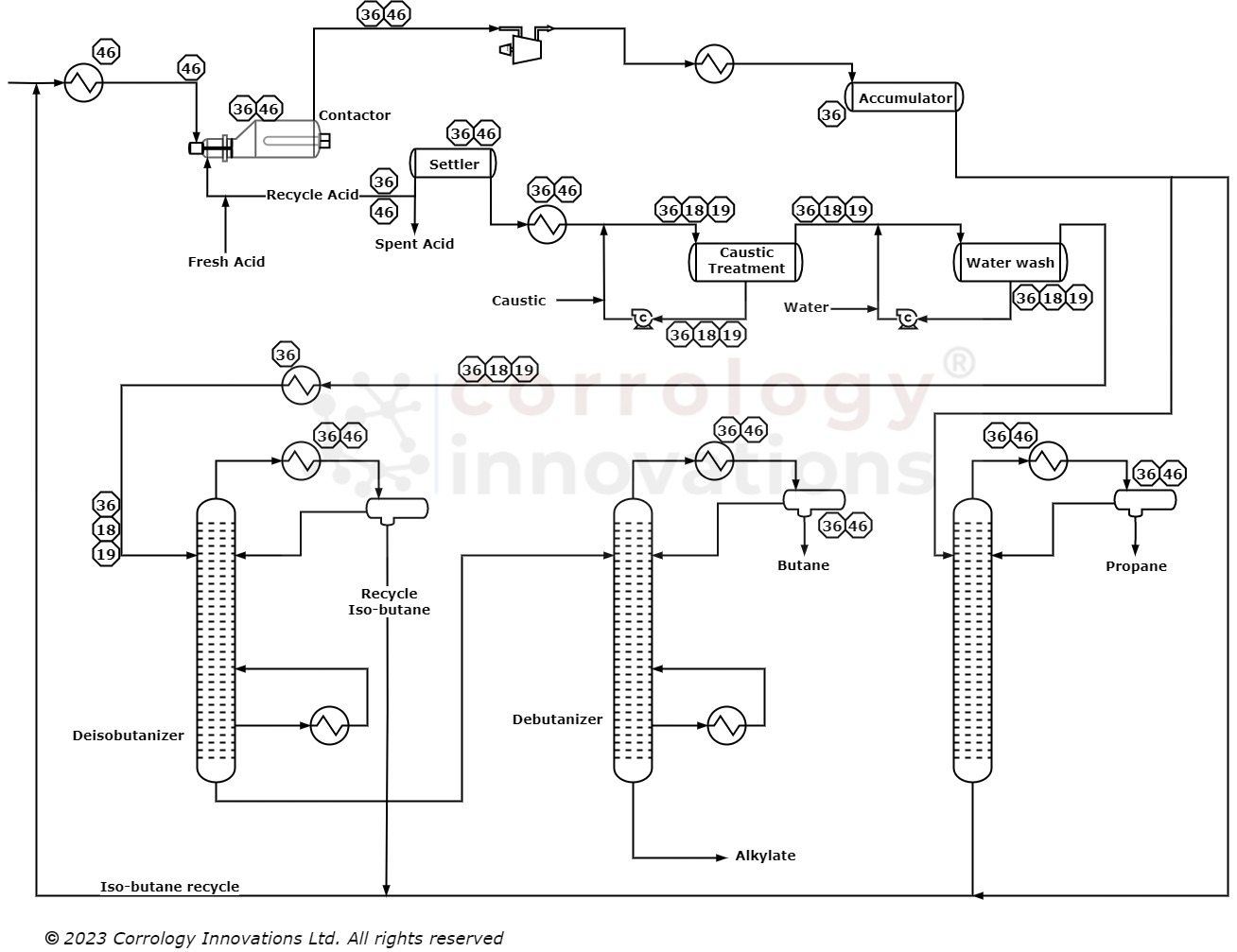
Figure 1 Alylation Unit (VBU) Unit diagram with typical damage mechanisms.after API RP 571
Legend: 18 - Caustic Stress Corrosion Cracking; 19 - Caustic Corrosion; 36 - Sulfuric Acid Corrosion; 46 - Corrosion Under Insulation;