HF Alkylation
Utilizing hydrofluoric acid as the catalyst for alkylation constitutes the alternative method for producing high-octane hydrocarbon streams essential for gasoline blending. HF alkylation offers several advantages compared to sulfuric acid alkylation, such as reduced acid consumption and the absence of a refrigeration section required in the H2SO4 process to maintain lower process temperatures. However, the primary drawback of employing HF is associated with process safety due to its highly corrosive and toxic nature.
#HF Corrosion
Unit Operation Description
The fundamental concept of HF alkylation parallels the method employing H2SO4 as a catalyst. Initially, olefins and isobutane streams undergo drying before being mixed with HF within the alkylation reactor. Unlike the H2SO4 process, the alkylation in the presence of HF is less sensitive to temperature variations. Therefore, the reaction can occur within a range of 21-38°C (70-100°F), which is higher compared to the H2SO4 process. Typically, the strength of HF acid used in the alkylation process ranges from 83% to 92%, with water content maintained below 1%.
Following the reaction, the effluent is directed to the settler where the acid is separated from hydrocarbons and withdrawn from the bottom of the settler. Whenever necessary, fresh acid is introduced into the reaction loop to maintain acid strength. Part of the HF stream is sent to the rerun unit (or acid regeneration) to distill HF from ASO (acid-soluble oil) and produce fresh acid returned to the process.
The hydrocarbon layer, containing unreacted hydrocarbons, alkylate, water and traces of HF, enters the separation unit for recovering isobutane, which is then recycled back into the process.
In HF units, carbon steel serves as the primary material of construction if the operating temperature remains below approximately 65°C (149°F), as the presence of free HF allows the formation of a protective iron fluoride scale. It is essential to note that Si inclusions in carbon steel, originating from manufacturing or welding, may be susceptible to rapid HF attack. HIC-resistant carbon steels are preferable to minimize the risk of hydrogen attack (cracking, blistering).
For sections operating above this temperature limit (65°C), Alloy 400 (UNS N04400) is used as the base metal or cladding. Typically, columns such as isostripper, debutanizer, depropanizer, and HF stripper are made of carbon steel with Alloy 400 cladding in the hotter sections. Column trays and internals are either carbon steel in dry sections (hydrocarbons only) or Alloy 400 in HF-exposed parts. The hot regions of the HF rerun/regeneration column are made of Alloy 400. In certain areas like the reactor and heat exchanger tubing exposed to HF, Alloy 400 is combined with a 70/30 Copper-Nickel alloy (UNS C71500).
The primary corrosion issues involve HF corrosion and hydrogen damage (HIC - hydrogen-induced cracking, SOHIC - stress-oriented hydrogen-induced cracking, and blistering). Typical areas susceptible to HF corrosion include feed lines and overhead sections of fractionation columns, along with the acid regeneration/rerun system. High acid concentration and low water content (<2.5% H2O and >80% HF) tend to result in low overall carbon steel corrosion. However, diluted HF accelerates carbon steel corrosion and increasing the likelihood of hydrogen attack
Potential Damage Mechanisms
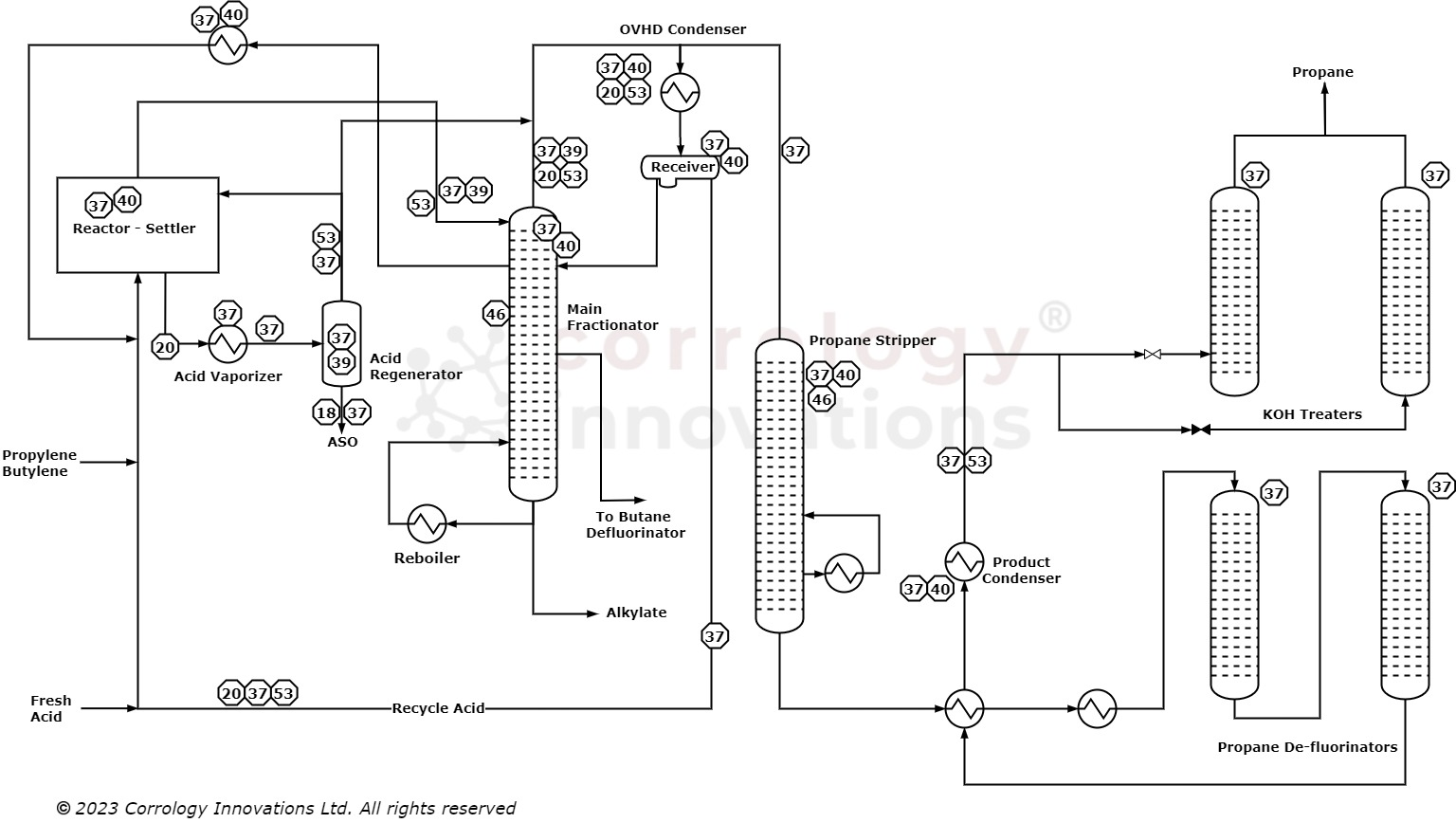
Figure 1 HF Alylation Unit Unit diagram with typical damage mechanisms.after API RP 571
Legend: 18 - Caustic Stress Corrosion Cracking; 20 - Erosion / Erosion-Corrosion; 37 - Hydrofluoric Acid Corrosion; 39 – Dissimilar Metal Weld Cracking; 40 - Hydrogen Stress Cracking in HF Acid; 46 – Corrosion Under Insulation; 53 – Galvanic Corrosion;