Isomerization
Isomerization, along with Catalytic Reforming and Alkylation, constitutes one of the processes used to enhance the octane number of gasoline by transforming straight-chain (n-paraffinic) hydrocarbons (C4-C6) into their branched (iso) counterparts. The isomerization unit operates within a relatively straightforward, hydrocarbon-dominant process environment, where HCl and caustic eventually act as the primary corrosive agents.
Unit Operation Description
Isomerization reactions are ubiquitous across refinery processes, yet within the Isomerization unit, they are specifically dedicated to branching C4-C6 n-alkanes. This process occurs at relatively low temperatures (100-200°C / 212-392°F) on a fixed catalyst bed. Depending on the feed type, various catalysts find application:
- Platinum on alumina with chloride as an activator, the most prevalent choice, is typically used for n-butane isomerization.
- Platinum on alumina or zeolite for C5-C6 isomerization conducted at higher temperatures.
- Platinum on mixed oxides (Nb/Ti/Ta, etc.).
The Pt/alumina/Cl system stands as the most popular isomerization catalyst. Like catalytic reforming catalysts, it necessitates activation by chlorine, continuously introduced in the form of chlorinated hydrocarbons like CCl4. To maintain catalyst activity and prolong its service life, the feed into the isomerization unit must be desulfurized and dewatered, as sulfur and water can significantly impair both (S) catalyst activity and its service life/deactivation rate (H2O). Additionally, small amounts of hydrogen are introduced with the feed to prevent coke formation.
Typically, two isomerization reactors are employed to ensure uninterrupted operation, especially during catalyst replacement in one reactor. The effluent from these reactors is cooled and directed to a stabilization column. The off gas from the stabilization overhead (OVHD) contains HCl, necessitating neutralization in a caustic treatment process. The bottom product from the stabilizer (isomerized product) can be directly sent for gasoline blending, or alternatively, the n- and iso-paraffins are initially separated, allowing n-paraffins to return to the process.
Given the low temperature, requirement for a clean (desulfurized) feed, and the absence of aggressive corrosive agents except hydrogen chloride, HCl Corrosion emerges as the most common phenomenon observed specifically in the OVHD of the stabilizer column. Caustic cracking may occur in the caustic scrubbing section, but using properly stress-relieved carbon steel can mitigate this damage mechanism. Corrosion Under Insulation might also become significant as the unit operates within temperature range 90-200°C making conditions conducive to local boiling/condensation on the external metal surface highly likely when the insulation cladding is compromised.
Potential Damage Mechanisms
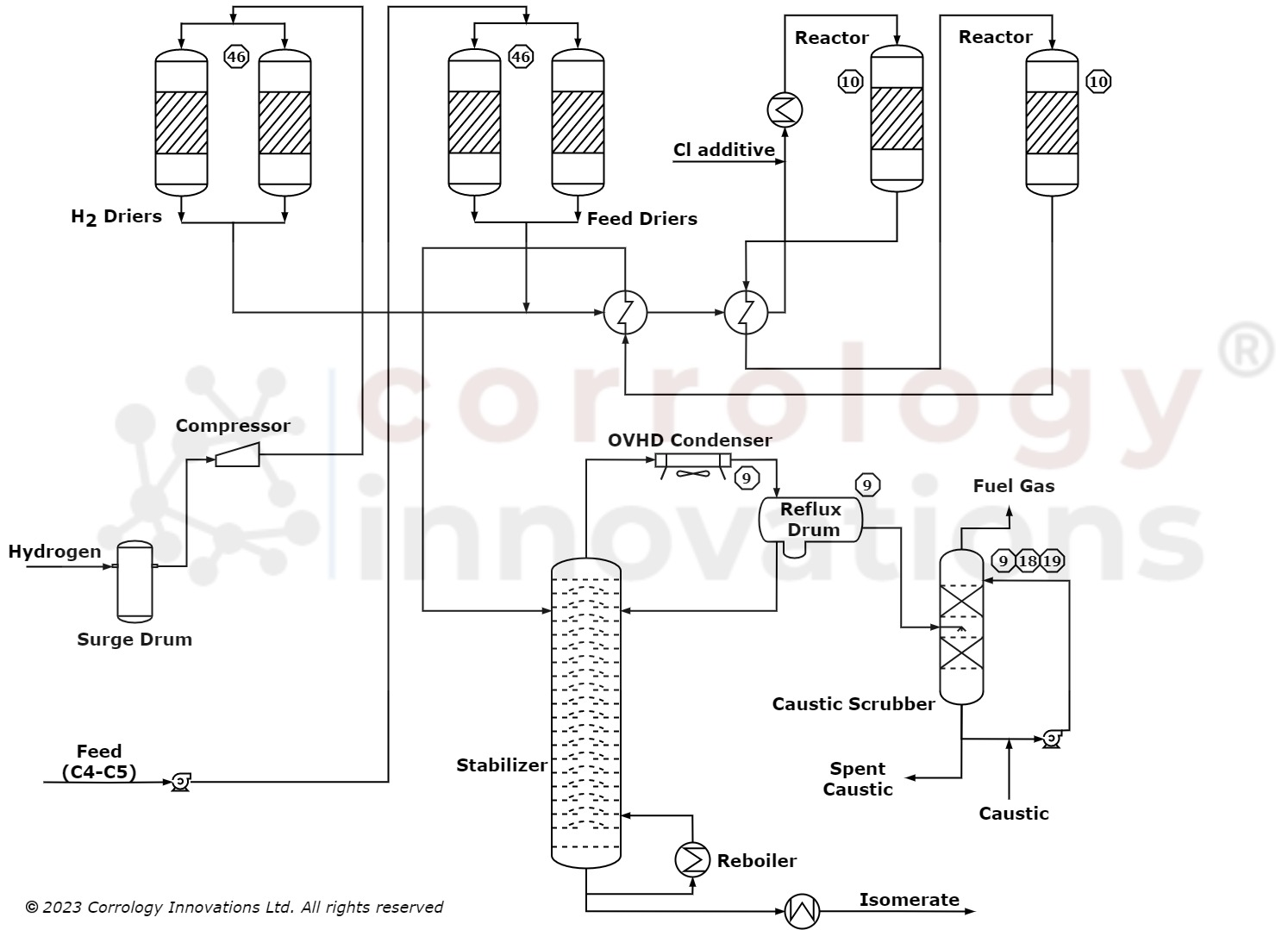
Figure 1 Isomerization Unit diagram with typical damage mechanisms.after API RP 571
Legend: 9 – HCl Corrosion; 10 - High Temperature Hydrogen Attack; 18 – Caustic Stress Corrosion Cracking; 19 - Caustic Corrosion; 46 – Corrosion Under Insulation;