Sour Water Stripping (SWS)
Many refinery process units, such as crude distillation, Hydroprocessing, the amine unit, or delayed coking unit, generate sour wastewater streams that typically contain dissolved NH3, H2S, and NH4HS. Proper treatment of these sour water streams is a crucial aspect of refinery water management. It enables the return of some water to the process, reducing the operational costs of water treatment plants and overall water consumption.
The sour water stripping unit is particularly prone to issues such as Ammonium Bisulfide Corrosion and the phenomenon of Wet H2S Cracking.
#NH4HS Corrosion; #Corrosion Monitoring in SWS Units
Unit Operation Description
The sour water stripper is a relatively simple unit with a single stripping tower equipped with a typical overhead (OVHD) condensing-reflux system (some units operate without reflux), recirculation-reboiler and assisted heat exchangers for sour water heat conservation (refer to Figure 1).
The sour water feed typically contains 15-20k ppm of H2S and 5-10k ppm of NH3 with some content of dissolved and suspended hydrocarbons. Sour water streams from various units are collected and after degassing sent to skimming tank for removing remaining hydrocarbons. Proper selection of residence time in skimming tank plays important role in stripper column operation (reducing fouling). Water from skimming tank is pumped through the filtration system for removing suspended solids, which again prevents fouling and erosion processes in stripping column. Subsequently, the sour water undergoes preheating in the feed/bottoms exchanger before entering the top tray of the stripping column (at temperatures ranging from 90 to 96°C / 194-204°F). As the water ascends the column, dissolved gaseous contaminants are boiled off. The necessary heat is supplied through the reboiler loop, typically heated by LP steam.
The resulting sour water off-gas is combined with other sour gas streams and directed to the Claus unit. Stripped water can either be reintroduced into the process e.g., as a wash water in distillation unit OVHD or forwarded to the water treatment plant.
Potential Damage Mechanisms
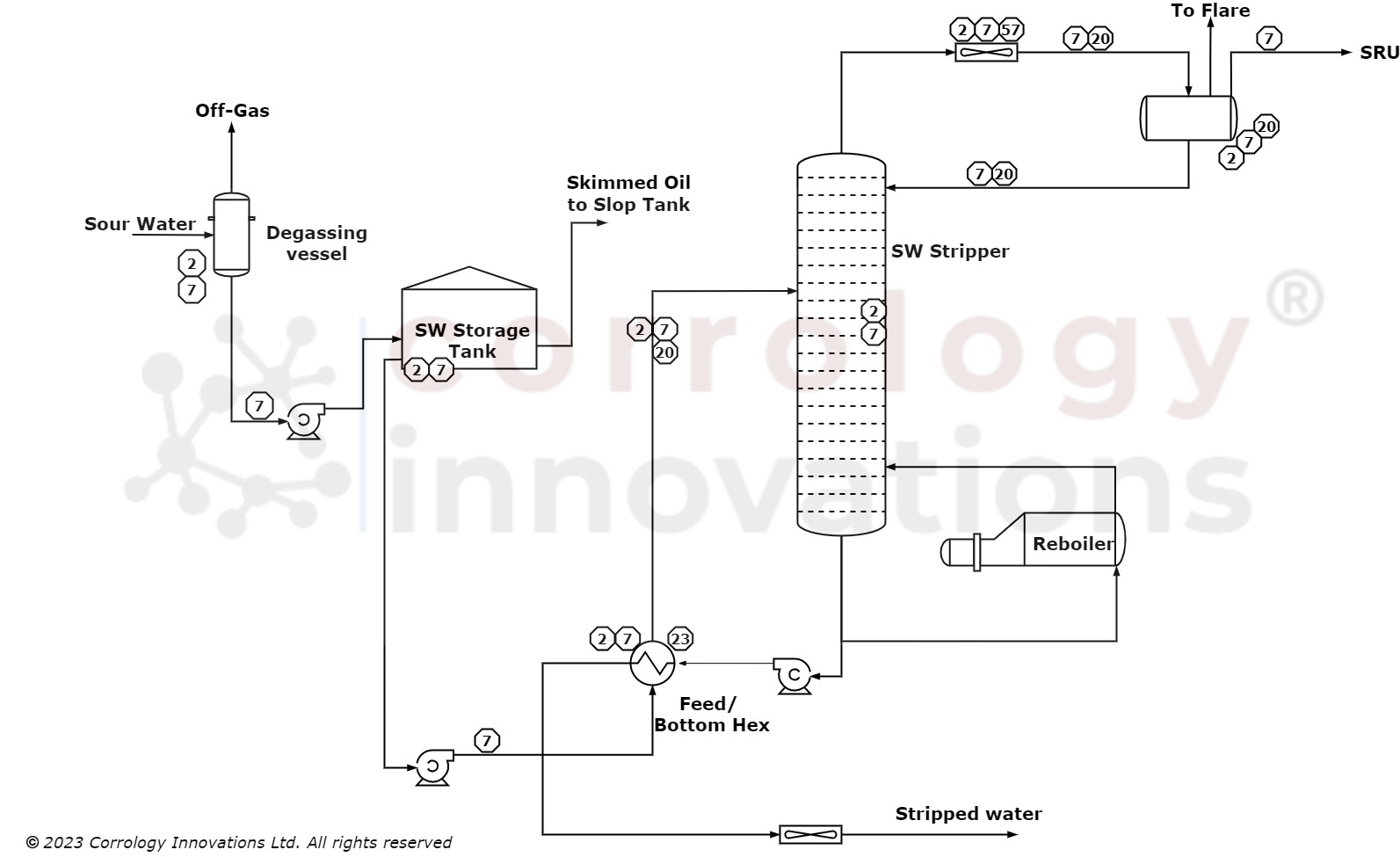
Figure 1 Sour Water Stripping (SWS) Unit diagram with typical damage mechanisms.after API RP 571
Legend: 2 - Wet H2S Damage (H2 Blistering/HIC/SOHIC/SSC); 7 – NH4HS Corrosion; 20 - Erosion / Erosion-Corrosion; 23 - Chloride SCC; 57 - Titanium Hydriting;