Steam Reforming
A modern refinery necessitates significant quantities of hydrogen to satisfy the growing demand for cleaner fuels, particularly in hydro-desulfurization processes. Conventional hydrogen sources, such as catalytic reforming, often fall short of meeting the required hydrogen volumes. Therefore, to offset this hydrogen deficit, the industry commonly adopts steam reforming as a supporting unit for hydrogen production. Steam reforming serves as the primary source of hydrogen, not only within the refining sector but also in petrochemical, automotive, and energy production industries. When used in energy or automotive contexts, it is commonly termed ‘brown’ hydrogen, while the term ‘grey’ is used when CO2 from the process is captured and stored.
Unit Operation Description
Steam reforming utilizes methane, which offers the lowest hydrogen cost, or higher hydrocarbons like fuel oils, which come with a higher hydrogen cost, as feedstock. Traditional steam reforming of methane (or natural gas) involves four steps: reforming, shift conversion, gas purification, and methanation (refer to Figure 1). However, modern refining processes typically encompass only reforming and shift conversion, followed by a PSA (pressure swing absorption) unit for hydrogen extraction from the outlet gas stream (Figure 2). The gas purification (removing CO2) and methanation are retained in older units.
- Reforming.
The catalytic reaction of methane and water (steam) occurs within a temperature range of 750-820°C (1382-1508°F) - see reaction 1. This reaction takes place on a fixed bed nickel-oxide/alumina-based catalyst. Critical to this process is feed desulfurization, as sulfur species can poison the nickel catalyst. Hence, steam reforming is typically preceded by a gas-treating system, commonly amine-based. The molar ratio of steam to carbon typically falls within the range of 3 to 6. A lower steam-to-carbon ratio necessitates a higher reaction temperature, translating to increased operating costs.
\(\ce{CH4 + H2O <=> CO + 3H2}\) (1)
The hot gas leaving the reformer recovers its heat in the waste heat reboiler (for superheated steam production) and in feed-preheat exchangers. After cooling to around 343-371°C (650-700°F), the gas enters the subsequent process step - the shift converter.
- Shift Conversion.
The shift converter’s role is the catalytic conversion of CO into CO2, conducted at a temperature of about 371°C (700°F) on a fixed bed of iron-chromium-copper oxides catalyst. Approximately 70-75% of CO is converted into CO2. To further enhance CO conversion, the gas, after cooling to about 210-220°C (410-430°F), enters the second shift converter (low temperature). In the low-temperature shift converter, remaining CO is converted to CO2 on a fixed bed of copper-zinc-alumina catalyst. Following the conversion of CO to CO2, in most modern refinery units, the H2-rich gas is directed to the PSA unit. Pure hydrogen from the PSA is processed while the CO2-rich gas is routed to the acid-gas treating unit (Amine Unit).
Alternatively, non-catalytic partial oxidation of liquid hydrocarbons (vacuum residue or asphaltic pitch) can be used for hydrogen production. This method offers advantages like feed flexibility, non-catalytic processing, and hydrogen produced at higher pressure than from natural gas reforming. However, partial oxidation requires pure oxygen, necessitating a costly oxygen plant and generating excess HP steam, which might not find easy utilization in typical refinery processes.
Corrosion in steam reforming primarily arises from the high operating temperature, leading to metallurgical-mechanical damages such as temper embrittlement, metal dusting, Stress Relaxation Cracking, sigma phase embrittlement, etc. In low-temperature sections of the traditional steam reforming setup, issues like CO2-related corrosion, Amine Corrosion, or carbonate stress corrosion cracking might appear.
Potential Damage Mechanisms
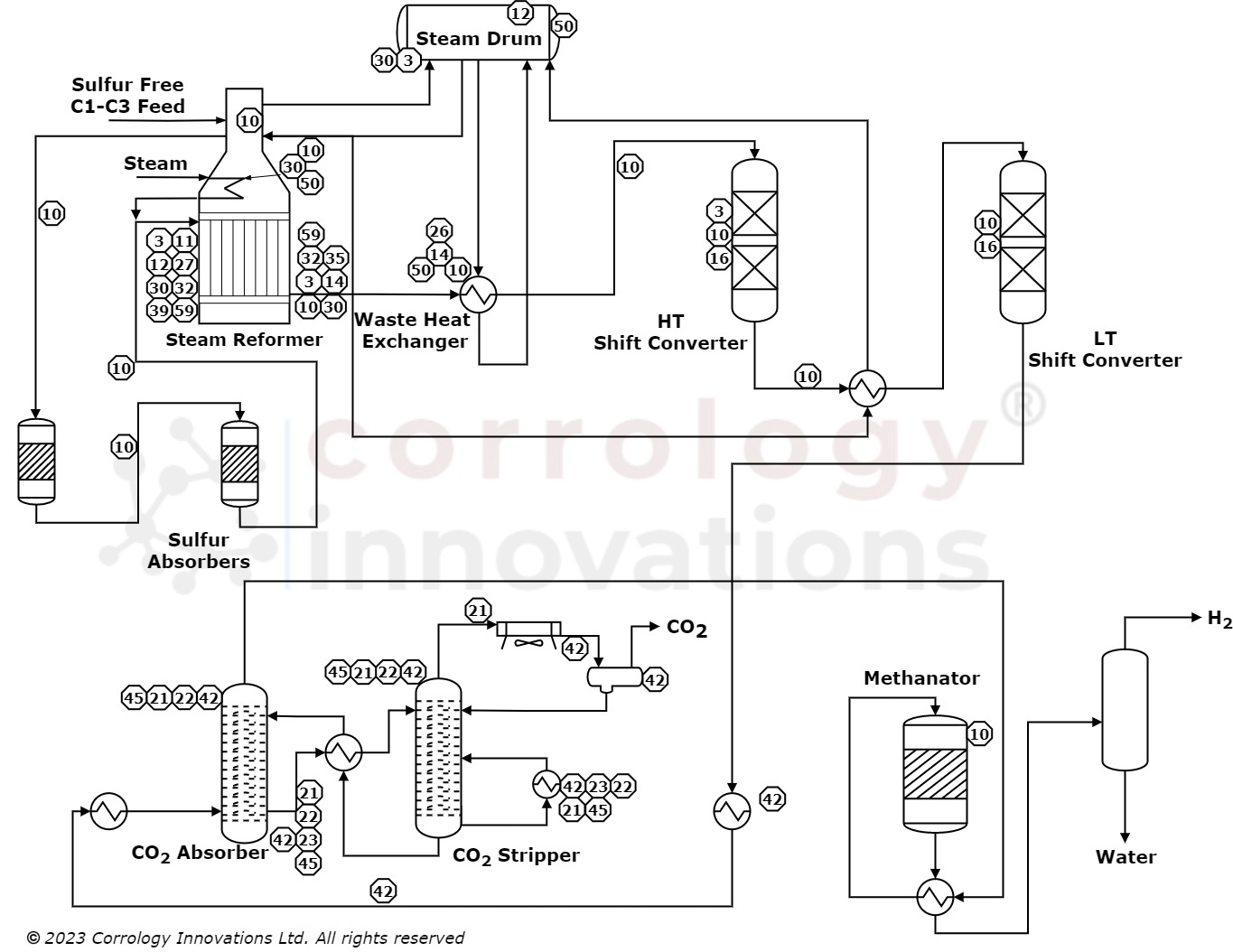
Figure 1 Steam Reforming Unit diagram with typical damage mechanisms.after API RP 571
Legend: 3 - Creep/Stress Rupture; 10 - High Temperature Hydrogen Attack; 11 - Oxidation; 12 - Thermal Fatigue; 14 - Refractory Degradation; 16 - Temper Embrittlement; 21 - Carbonate Stress Corrosion Cracking; 22 - Amine Stress Corrosion Cracking; 23 - Chloride Stress Corrosion Cracking; 26 - Steam Blanketing (30); 27 - Thermal Shock; 30 – Short term overheating – Stress rupture; 32 – Sigma Phase Embrittlement; 35 – Stress Relaxation Cracking; 39 – Dissimilar Metal Weld Cracking; 42 – CO2 Corrosion; 45 – Amine Corrosion; 50 – Boiler Water / Condensate Corrosion; 59 – Metal Dusting;
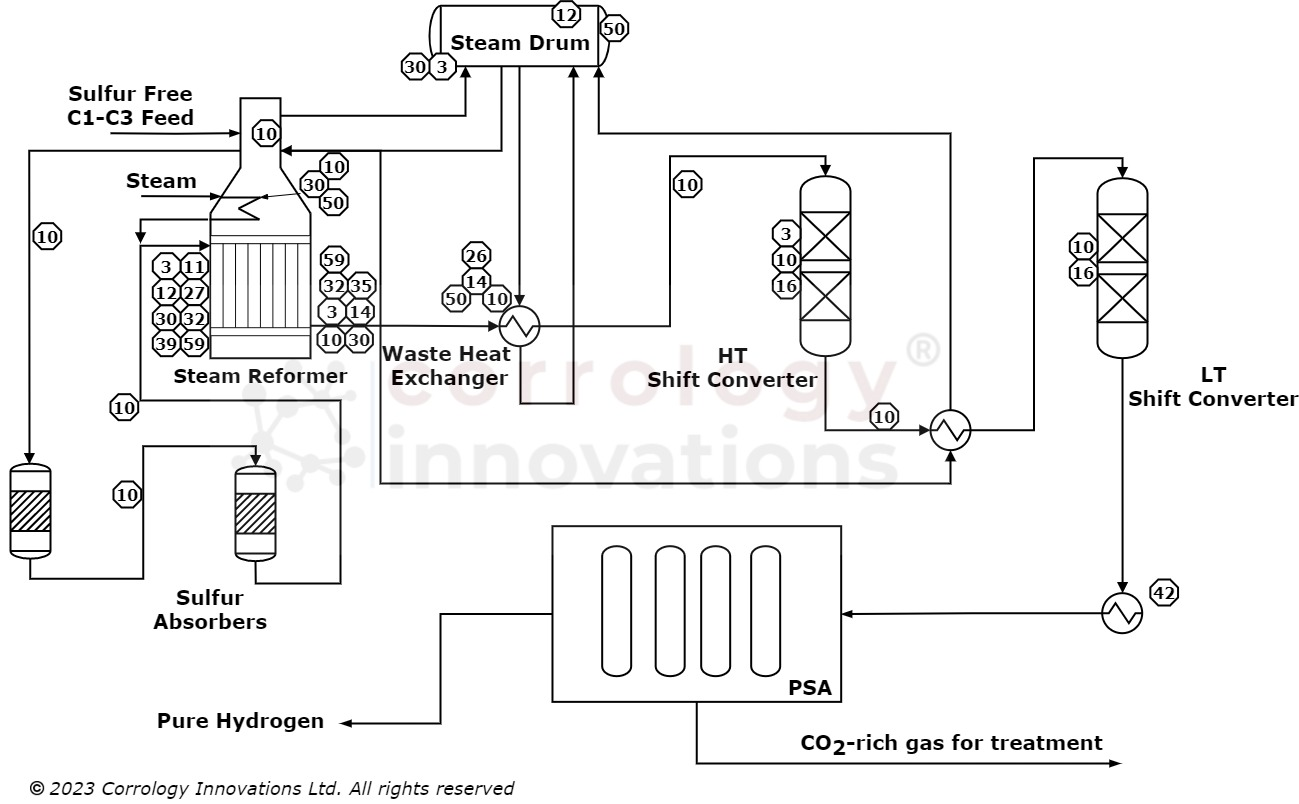
Figure 2 Steam Reforming Unit diagram w/PSA.after API RP 571
Legend: 3 - Creep/Stress Rupture; 10 - High Temperature Hydrogen Attack; 11 - Oxidation; 12 - Thermal Fatigue; 14 - Refractory Degradation; 16 - Temper Embrittlement; 26 - Steam Blanketing (30); 27 - Thermal Shock; 30 – Short term overheating – Stress rupture; 32 – Sigma Phase Embrittlement; 35 – Stress Relaxation Cracking; 39 – Dissimilar Metal Weld Cracking; 42 – CO2 Corrosion; 50 – Boiler Water / Condensate Corrosion; 59 – Metal Dusting;